
Photographing a Bluebell Woodland in Surrey
It’s no secret that one of the best times to visit the woodland is in spring. After months of stillness, things begin to change—slowly at first. Buds start to open, the light softens as fresh leaves form, and the forest floor begins to show the first signs of colour. With each visit, there’s a little more to see, until the woodland suddenly comes into full bloom, transforming almost overnight.
For a woodland photographer, there’s a relatively short window where everything comes together. The greens are still fresh and vibrant, the woodland floor is covered in bluebells and wild garlic, and that sense of a new beginning hasn’t yet given way to the heavier, more established canopy of summer. It’s a brief transition, where the woodland feels at its most open and responsive, before it settles into a more enclosed, leafy state.
So, during this transitional period, many woodland photographers find themselves checking weather forecasts, hoping for the right conditions to head out amongst the trees, and every now and then it all comes together—exactly what happened for me just a few weeks ago here in leafy Surrey.
A Foggy Morning in a Surrey Bluebell Woodland
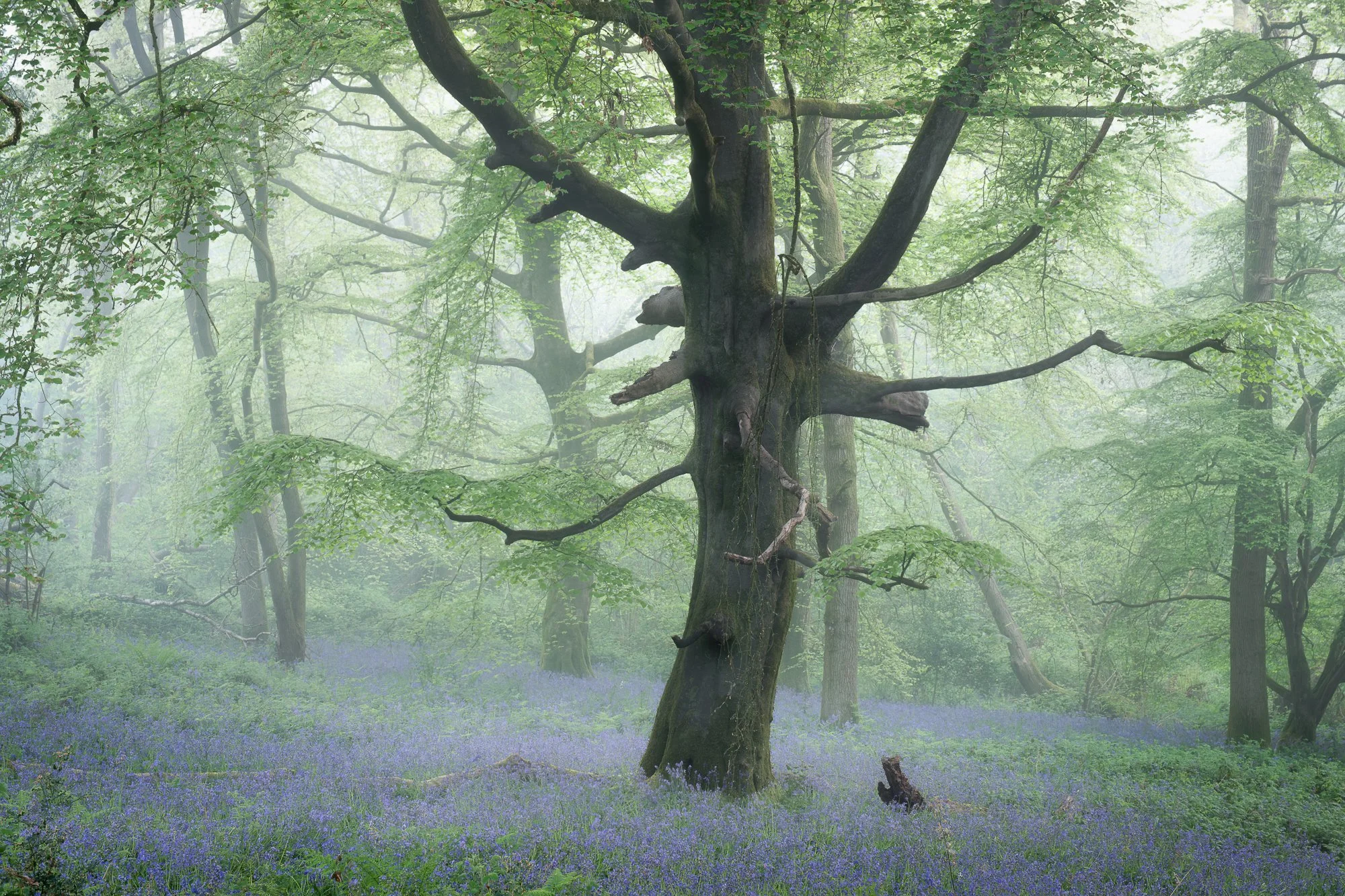
Fujifilm XT5 | XF16-55mm | 44mm | 2 Seconds | f/10 | ISO125
A few weeks ago in April, I met up with Nigel Danson while he was in the area for his Counties project, photographing across Surrey. In the days leading up to our meeting, the weather had been consistently clear, with bright blue skies each morning. Although it’s always good to be out in the landscape, clear conditions are rarely ideal for creating soft, atmospheric woodland photographs.
On the morning we arranged to meet, however, things changed. Instead of another bright, cloudless start, we were greeted with gentle fog and beautifully diffused light — exactly the conditions we were hoping for in this bluebell woodland.
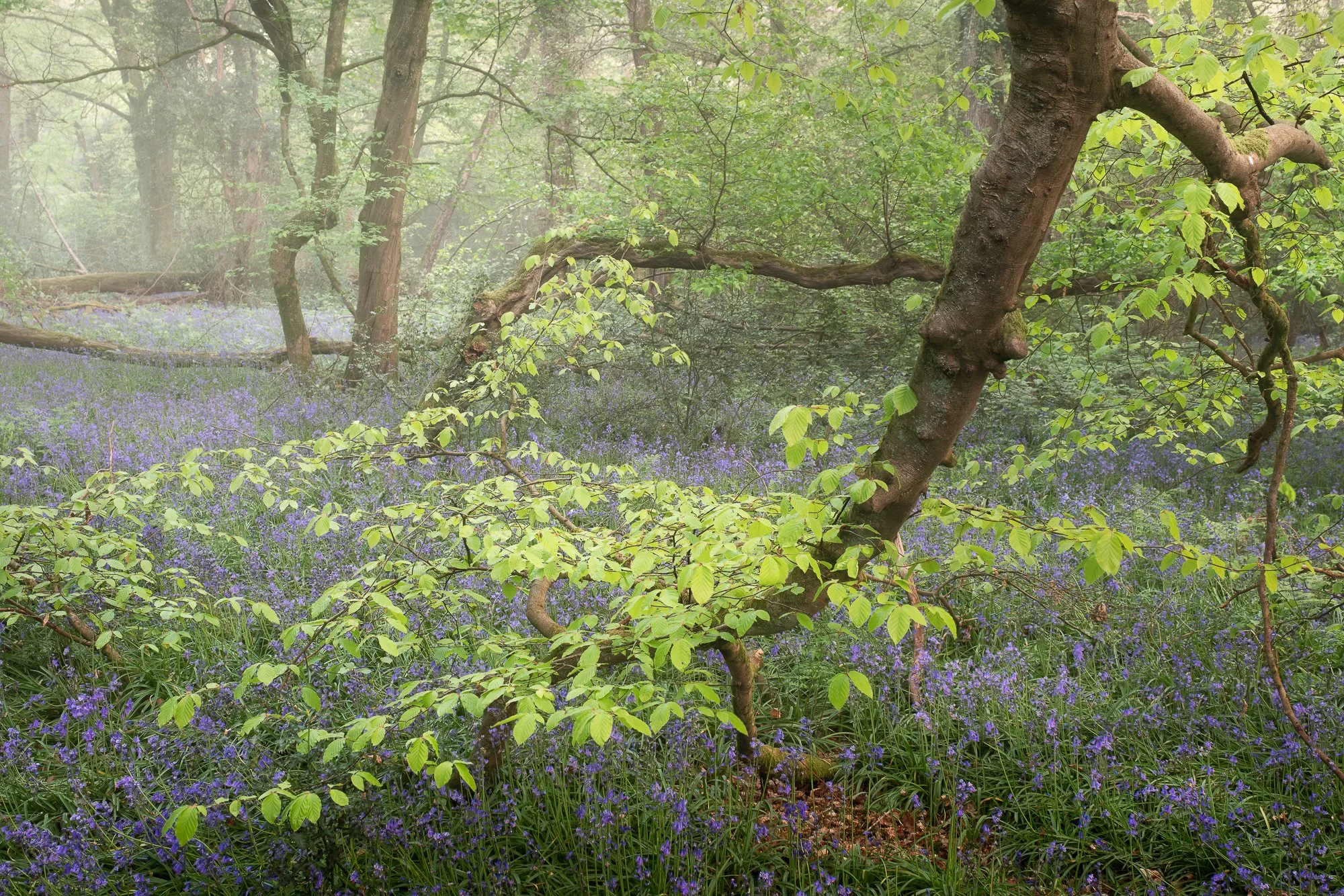
Fujifilm XT5 | XF16-55mm | 30mm | 1/3rd Second | f/7.1 | ISO400
Even with the right conditions, there’s always a sense that time is working against you. Fog like this is rarely static — it shifts, thins, and disappears without warning. So there’s a constant pull between moving quickly to make the most of it, and slowing down enough to really take in what’s in front of you.
In these moments, photographing familiar locations can make a real difference. Amid the inevitable rush that comes with fleeting conditions like this, I was able to return to a few compositions I had already discovered on earlier visits, balancing that urgency with a more considered approach.
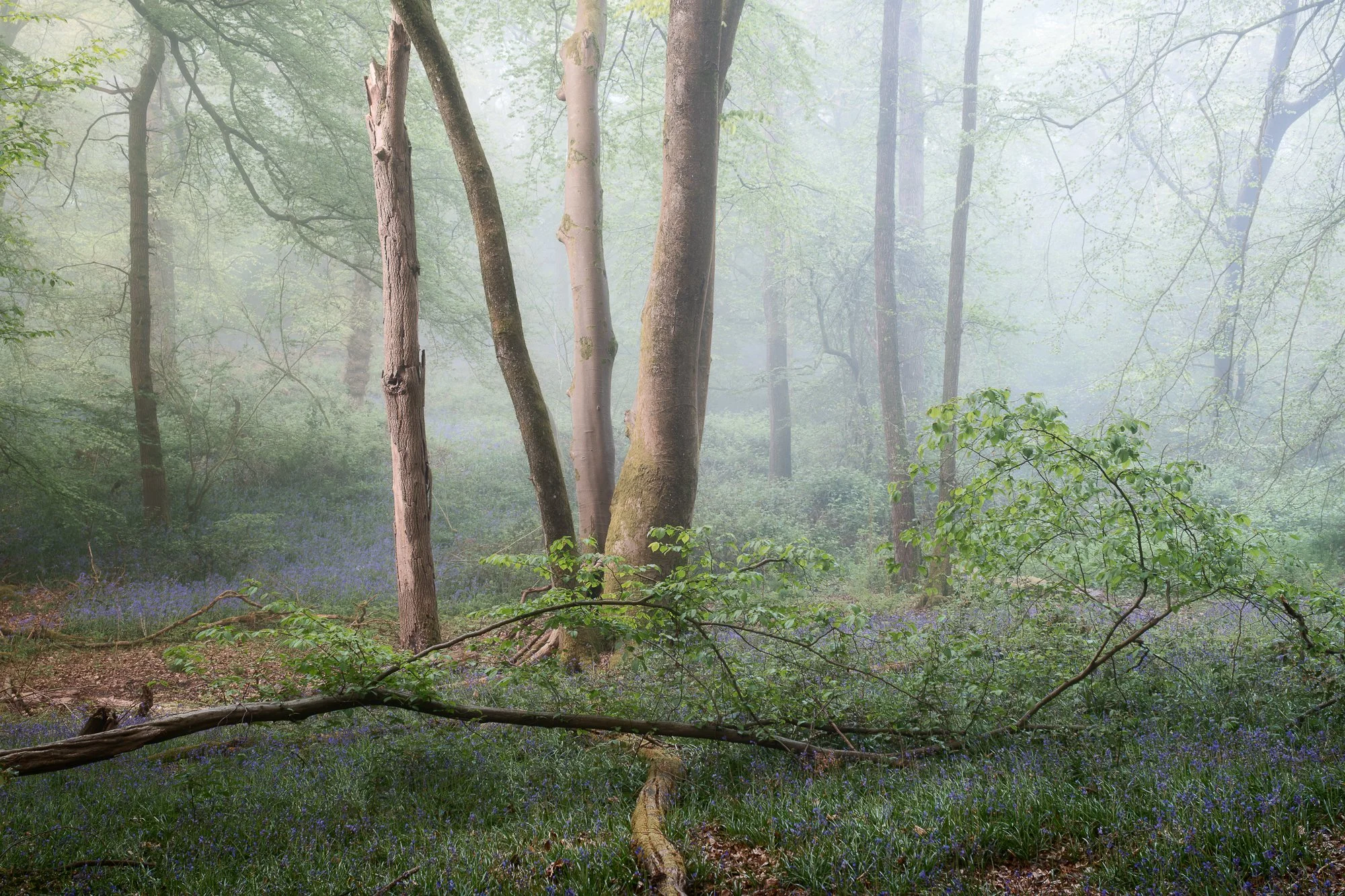
Fujifilm XT5 | XF16-55mm | 32mm | 1.3 Seconds | f/10 | ISO125
The images shared so far are all examples of compositions I had previously photographed, so capturing these early helped ease any anxiety about the fog disappearing before I had taken anything worthwhile. They also helped me settle into the process, allowing me to find my rhythm and gradually re-engage with familiar compositions.
It was Nigel who first photographed the composition below, and although I initially felt it carried too much visual weight on the left, it has gradually grown on me to the point where I now really appreciate the image. The leaning tree to the right adds just enough weight, helping to balance the heavier area on the left. That side of the frame is wonderfully chaotic, and as long as a sense of balance is retained, I often look to include these kinds of elements in my woodland photography, as they help demonstrate how unpredictable and fascinating woodland environments can be.
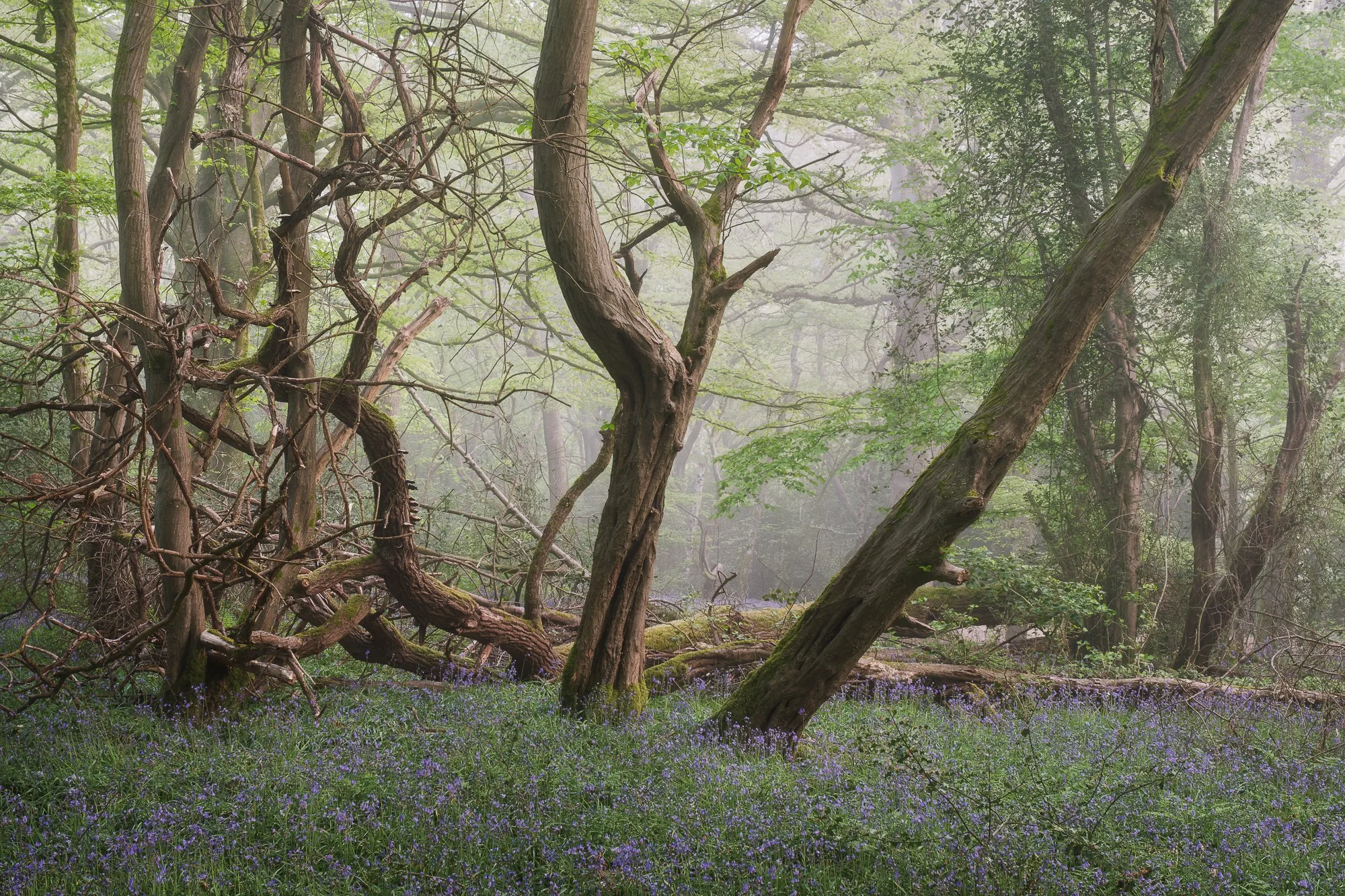
Fujifilm XT5 | XF16-55mm | 36mm | 2 Seconds | f/10 | ISO125
We continued to move through the bluebell woodland, talking about photography as we searched for new areas of interest and structure, with everything subtly shaped by the conditions we had been fortunate to be given. It was shaping up to be a very rewarding morning.
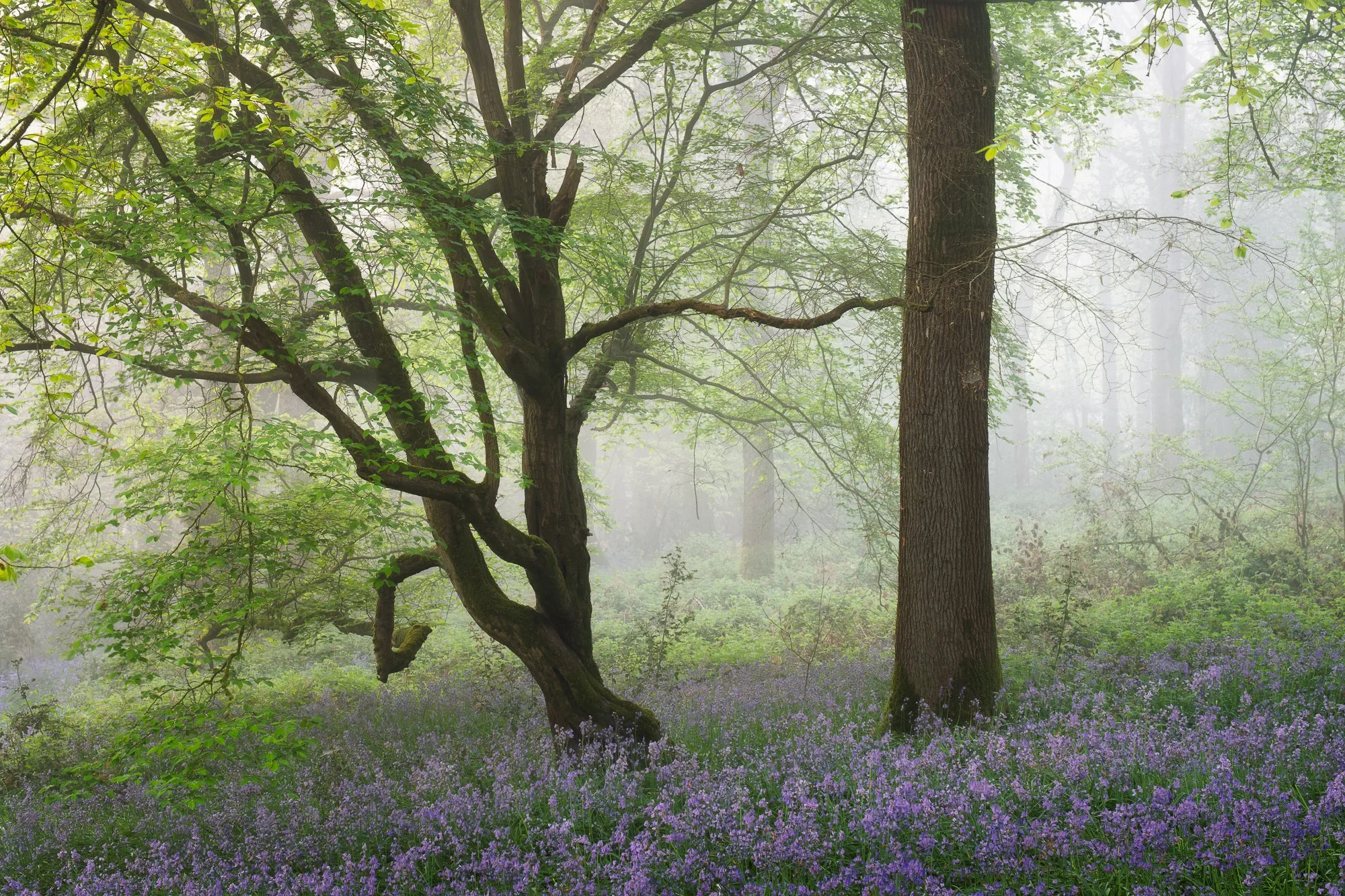
Fujifilm XT5 | XF16-55mm | 41mm | 1 Second | f/10 | ISO125
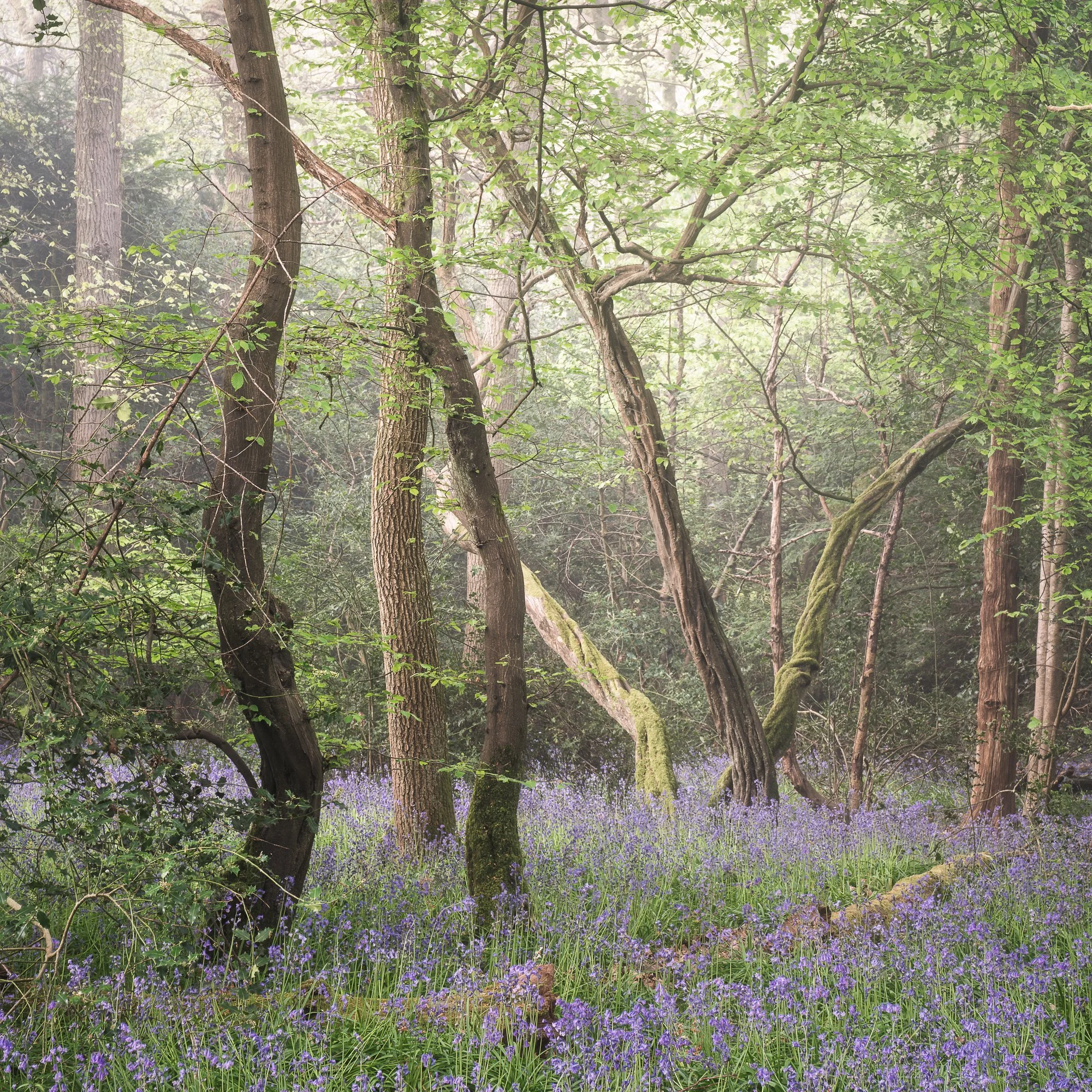
Fujifilm XT5 | XF16-55mm | 50mm | 0.8 Seconds | f/10 | ISO125
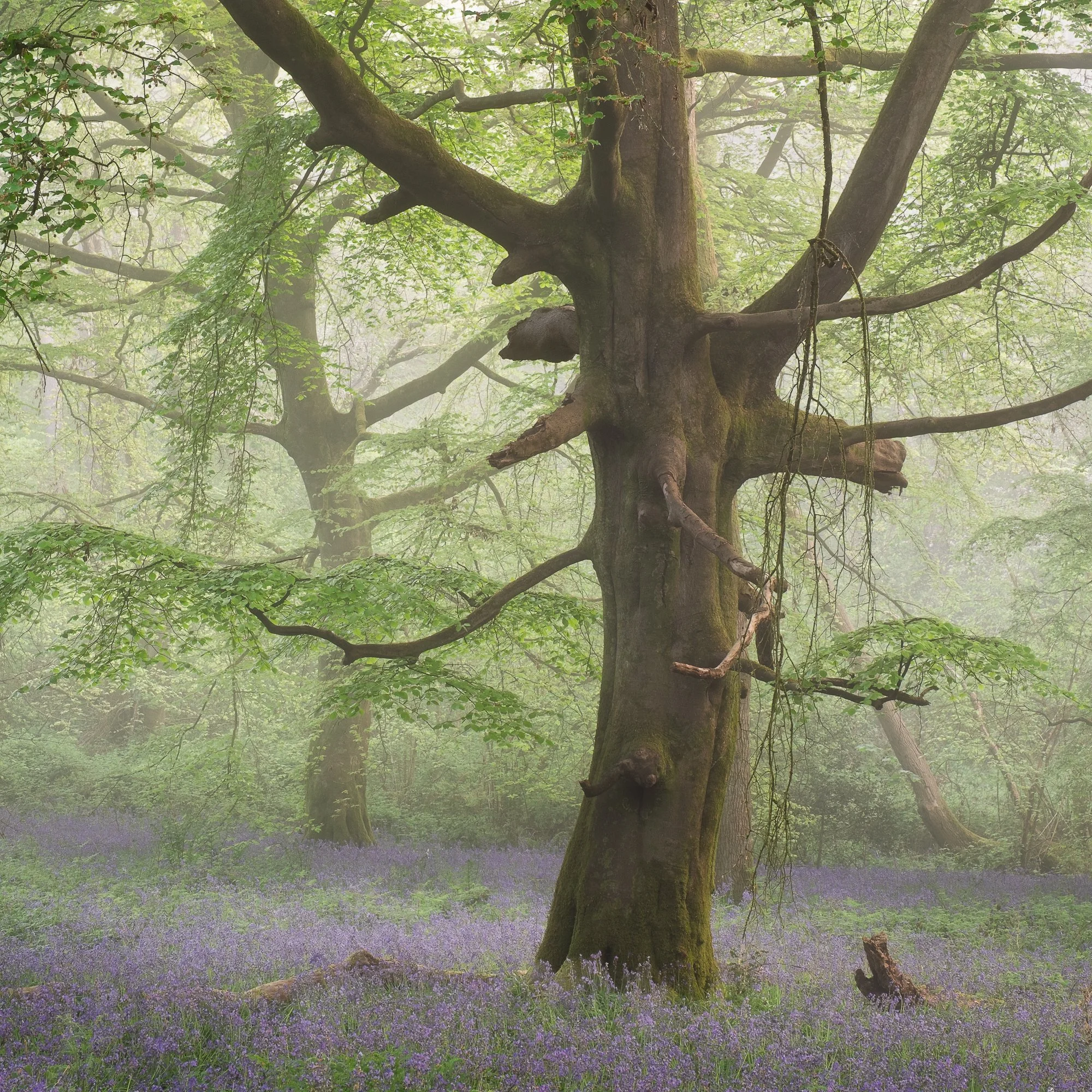
Fujifilm XT5 | XF16-55mm | 47mm | 0.6 Seconds | f/10 | ISO125
I would normally describe this as a “messy” woodland. By that, I mean there is a lot of natural fall across the ground, and the trees and shrubs tend to form a disorganised, naturally chaotic structure that requires more considered work to bring any compositional order to. I often find I prefer it this way. The clean, orderly bluebell scenes you sometimes see—tall straight beech trees and a perfect carpet of flowers—are undeniably beautiful, but I don’t find them as satisfying to photograph as discovering a strong composition within a woodland like this.
That said, the foggy conditions help enormously. They introduce natural separation and depth, simplifying some of the more distracting backgrounds and softening the overall scene, reducing strong contrast, which I tend to avoid.
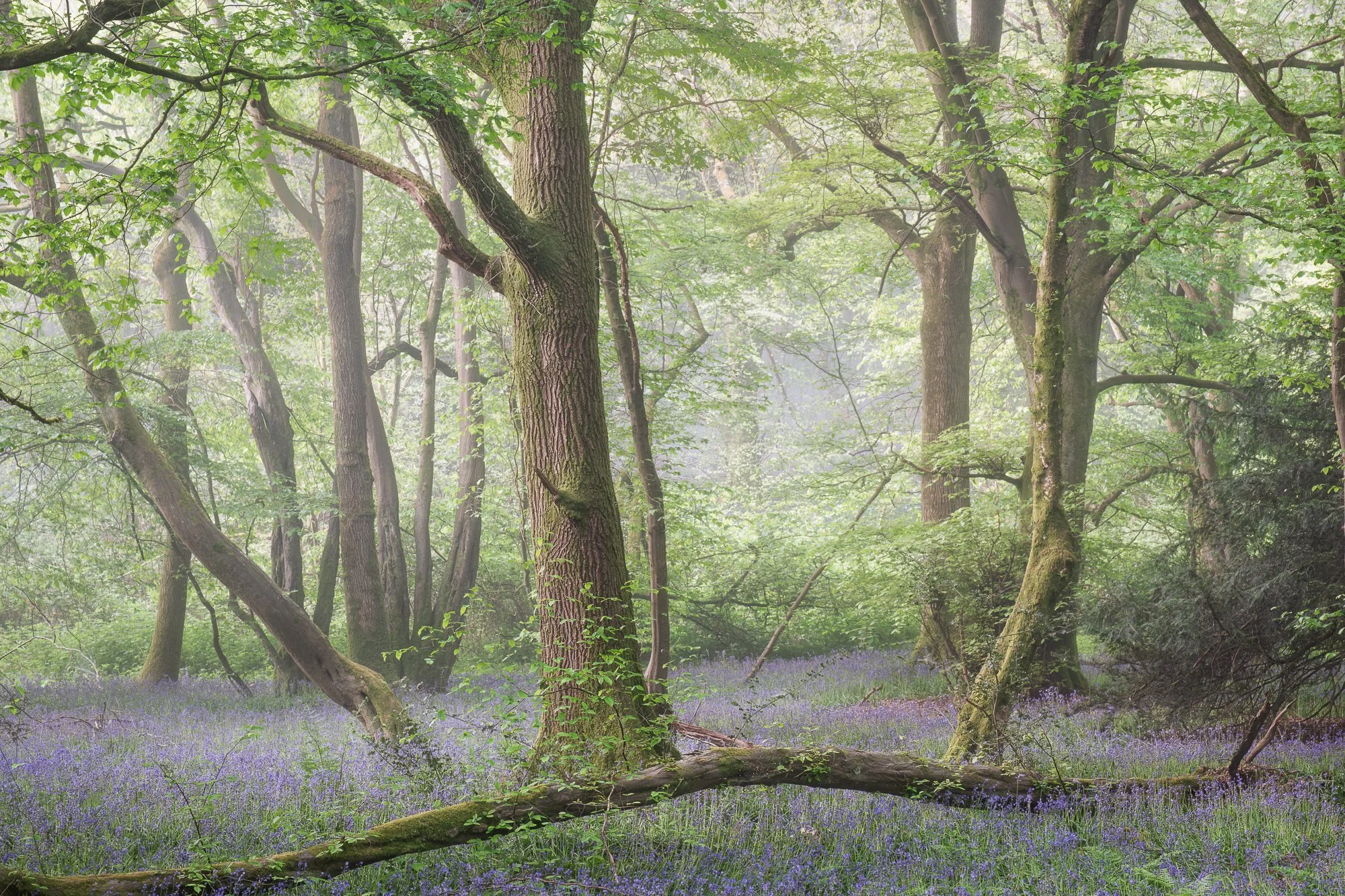
Fujifilm XT5 | XF16-55mm | 52mm | 0.6 Seconds | f/10 | ISO125
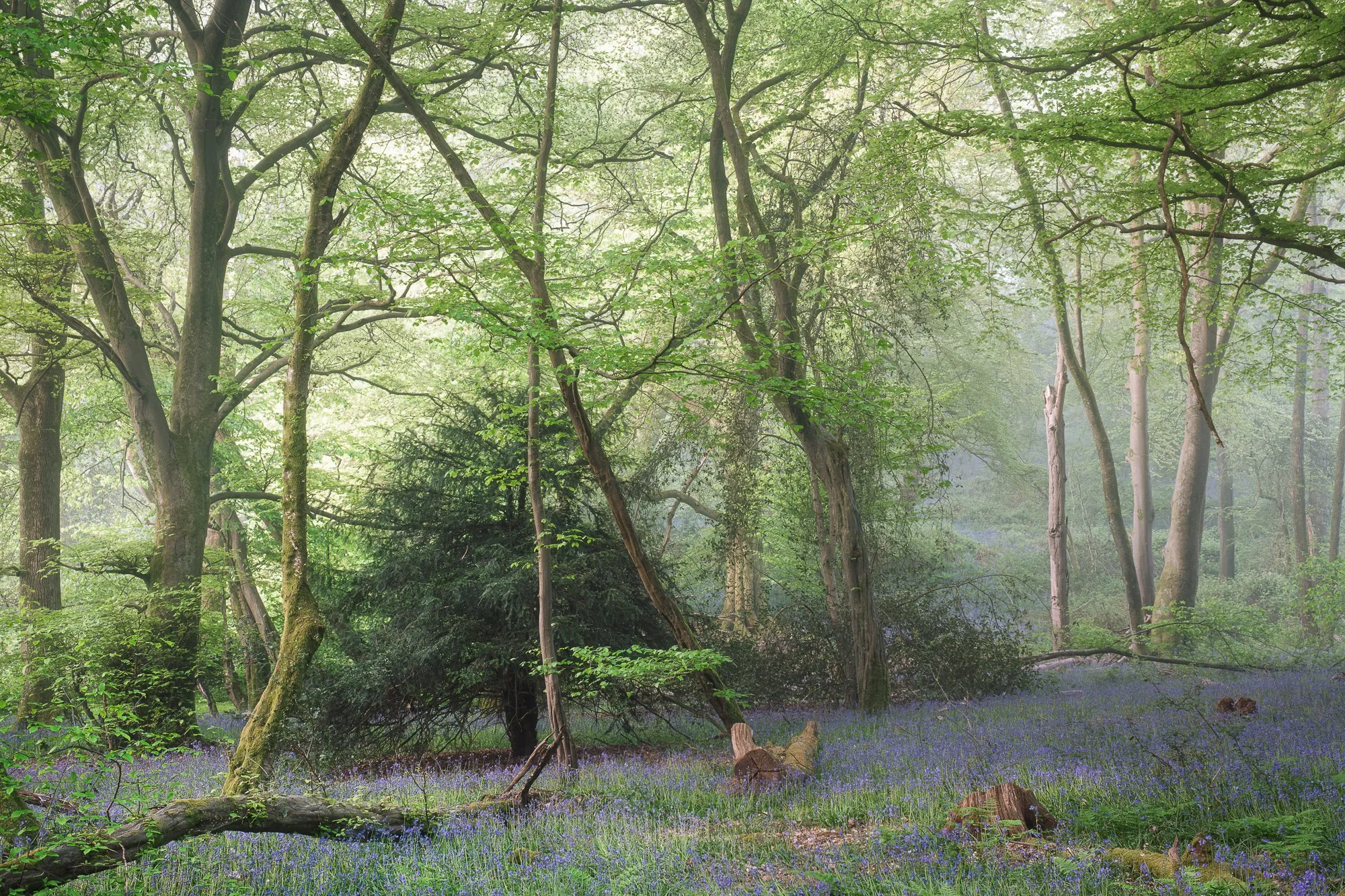
Fujifilm XT5 | XF16-55mm | 33mm | 0.8 Seconds | f/10 | ISO125
Below is a view I’ve returned to a number of times over the years in this woodland. The trees on either side frame a natural pathway into the distance, where the scene begins to catch some of the diffused light breaking through the mist. It’s a composition that continues to draw me back again and again.
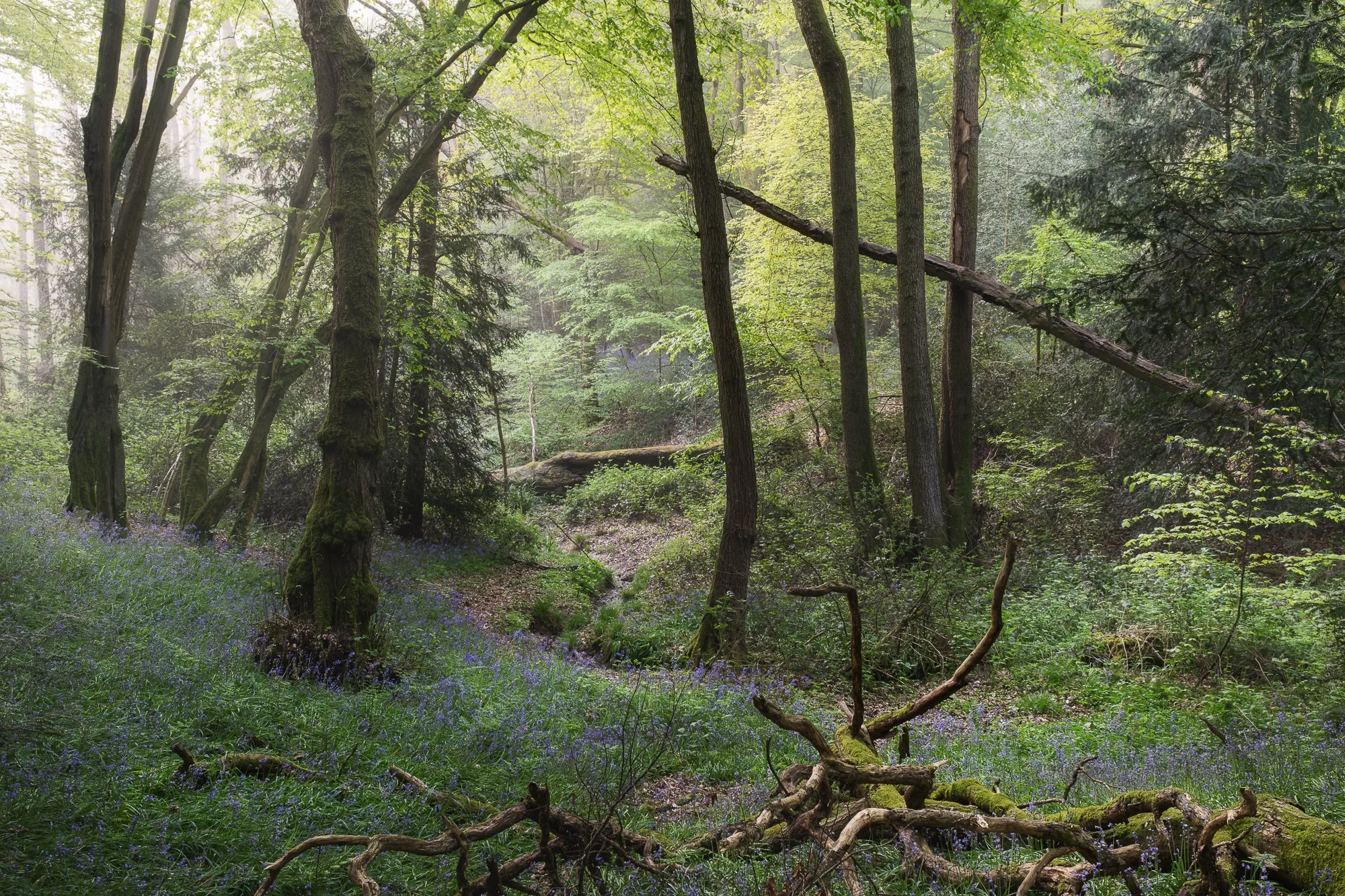
Fujifilm XT5 | XF16-55mm | 26mm | 1/2 Second | f/10 | ISO125
This is one of the images from the morning that I’m particularly drawn to. I like the arrangement of trees, with the main one in the foreground catching the diffused light breaking through the canopy, revealing its wonderful detail and character.
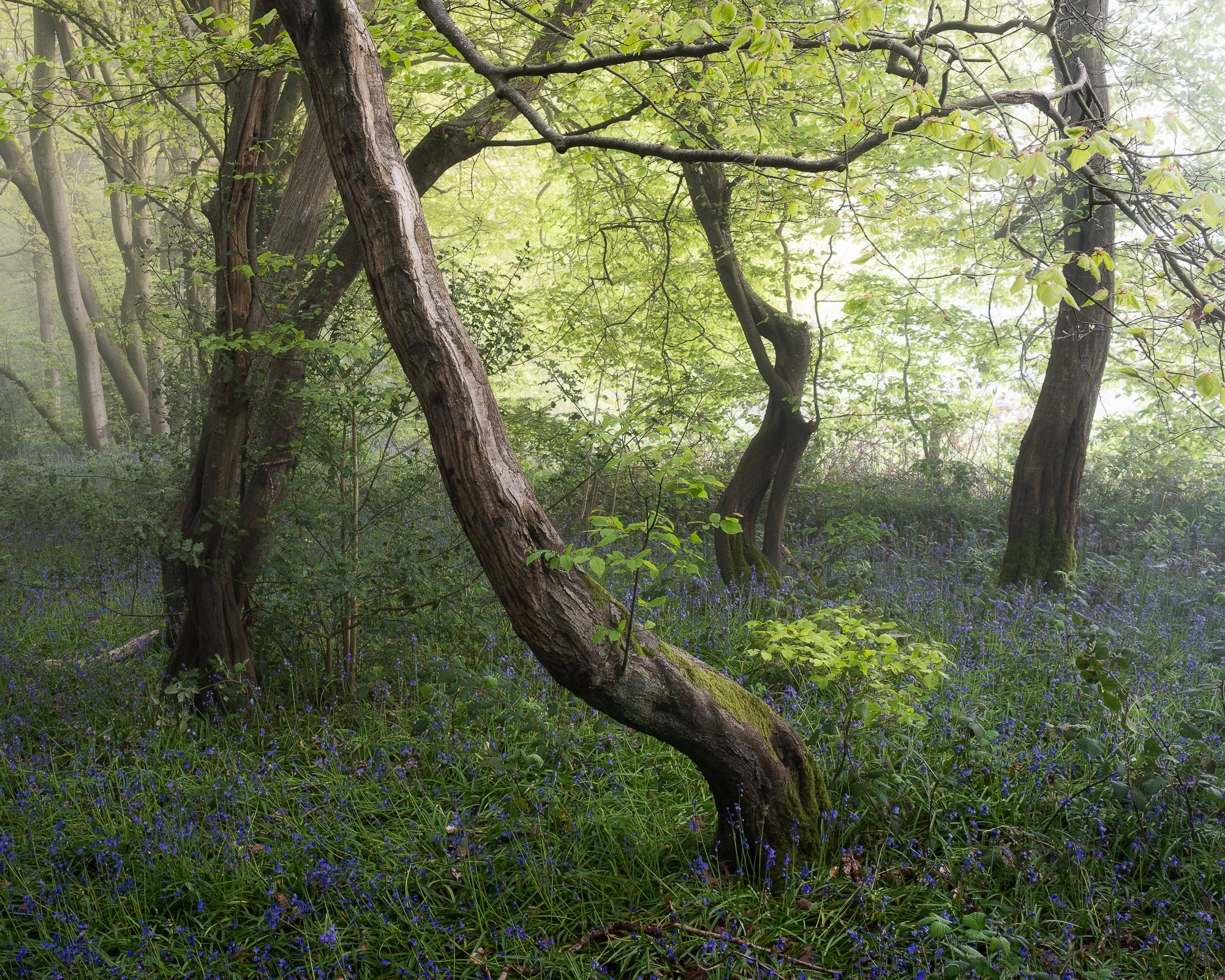
Fujifilm XT5 | XF16-55mm | 27mm | 1/4th Seconds | f/10 | ISO125
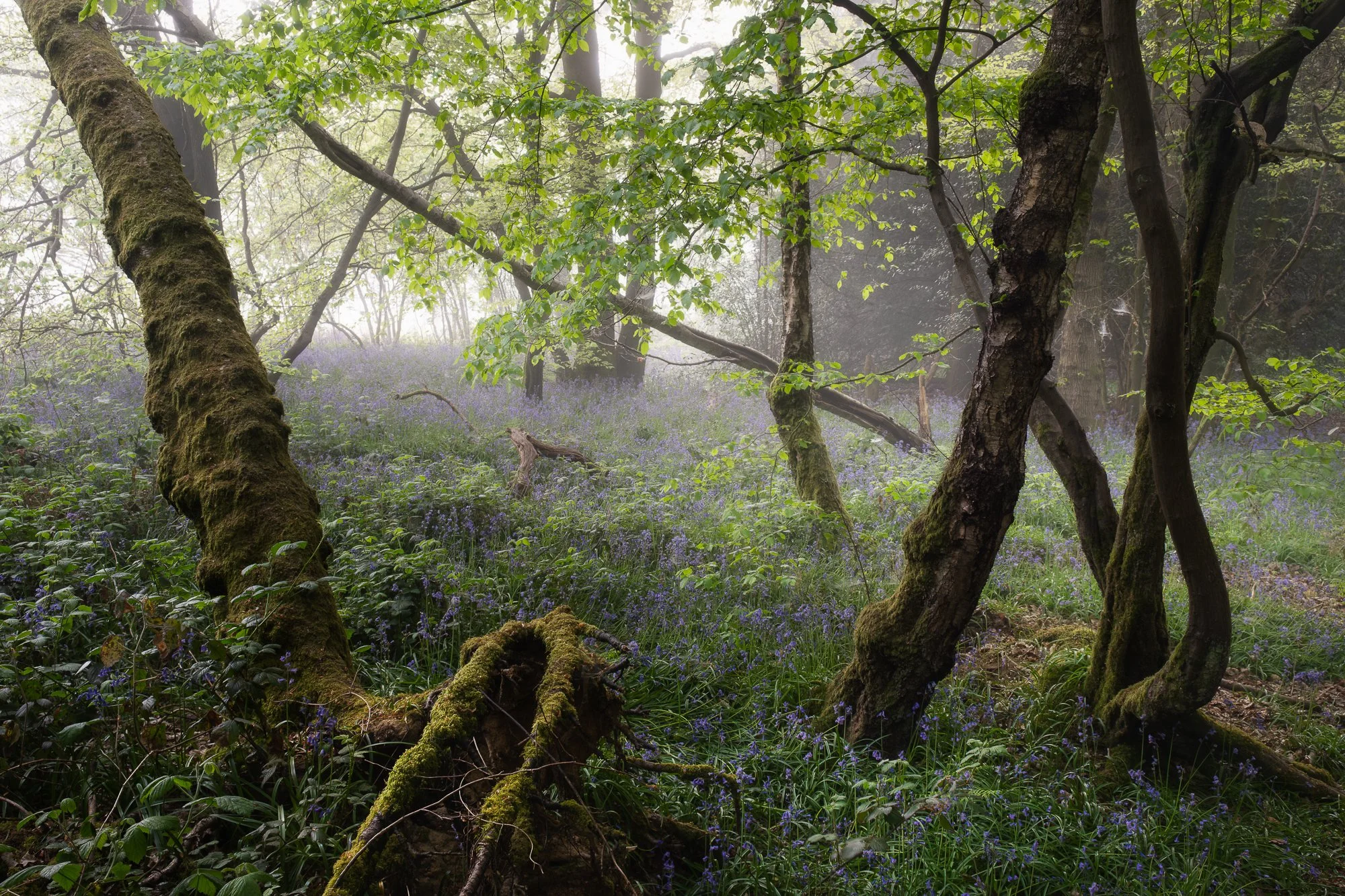
Fujifilm XT5 | XF16-55mm | 23mm | 1/8th Second | f/10 | ISO125
After a couple of hours, the fog began to clear, revealing patches of blue sky. By this point, we had moved into another part of the woodland, and with the sun now much higher, I only had time to capture a couple of images before the light broke through more strongly across the scene.
Although these lack the atmosphere and separation achieved in the earlier images, I’m still drawn to the freshness of the colours, with the new leaves and bluebells bringing a different quality to the woodland floor. As the light strengthened, the woodland began to lose some of that layered depth, and compositions that had felt effortless earlier suddenly required more thought. It became less about waiting for the scene to reveal itself, and more about deciding whether it was still worth pursuing.
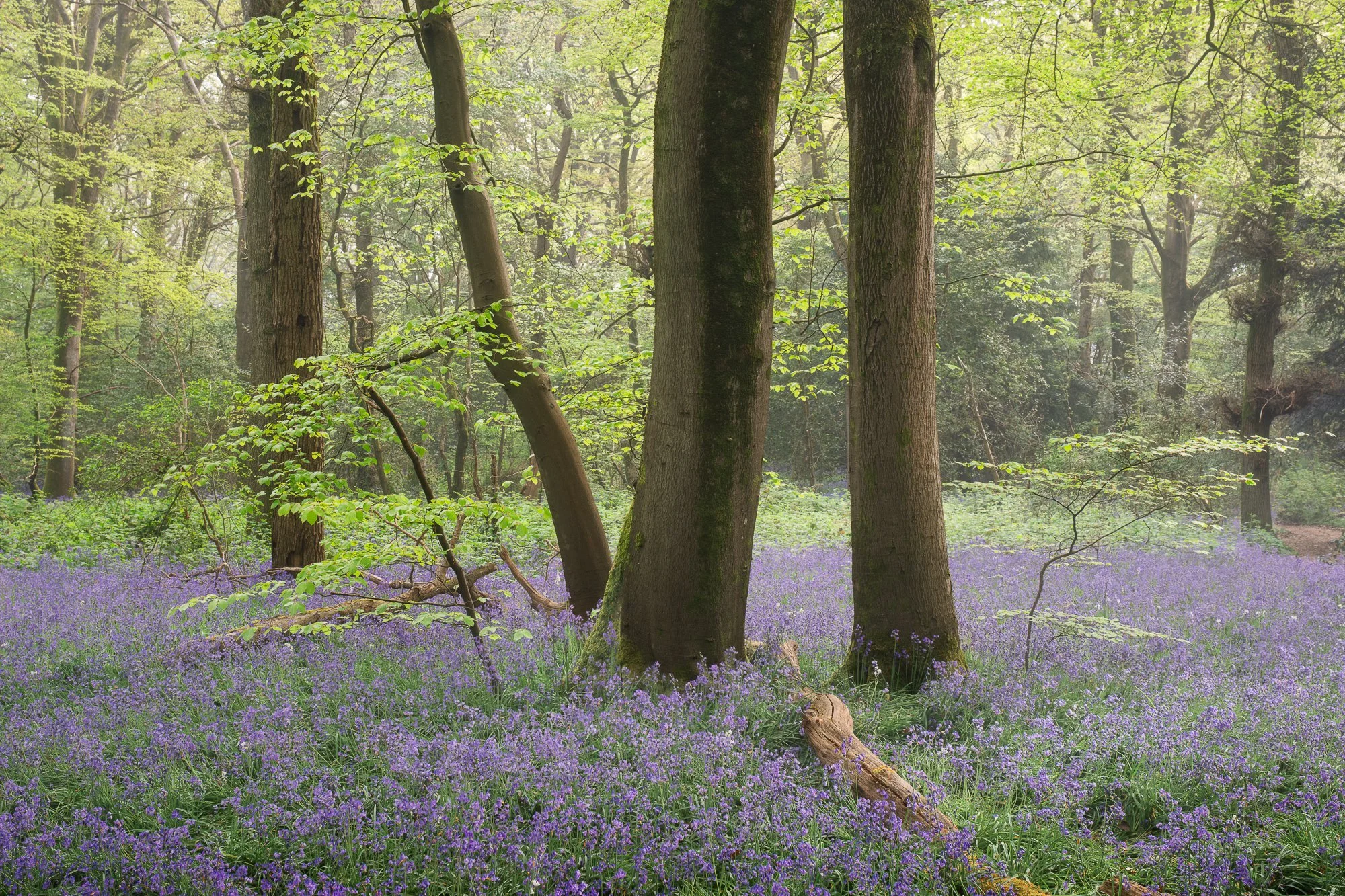
Fujifilm XT5 | XF16-55mm | 34mm | 1/5th Second | f/10 | ISO125
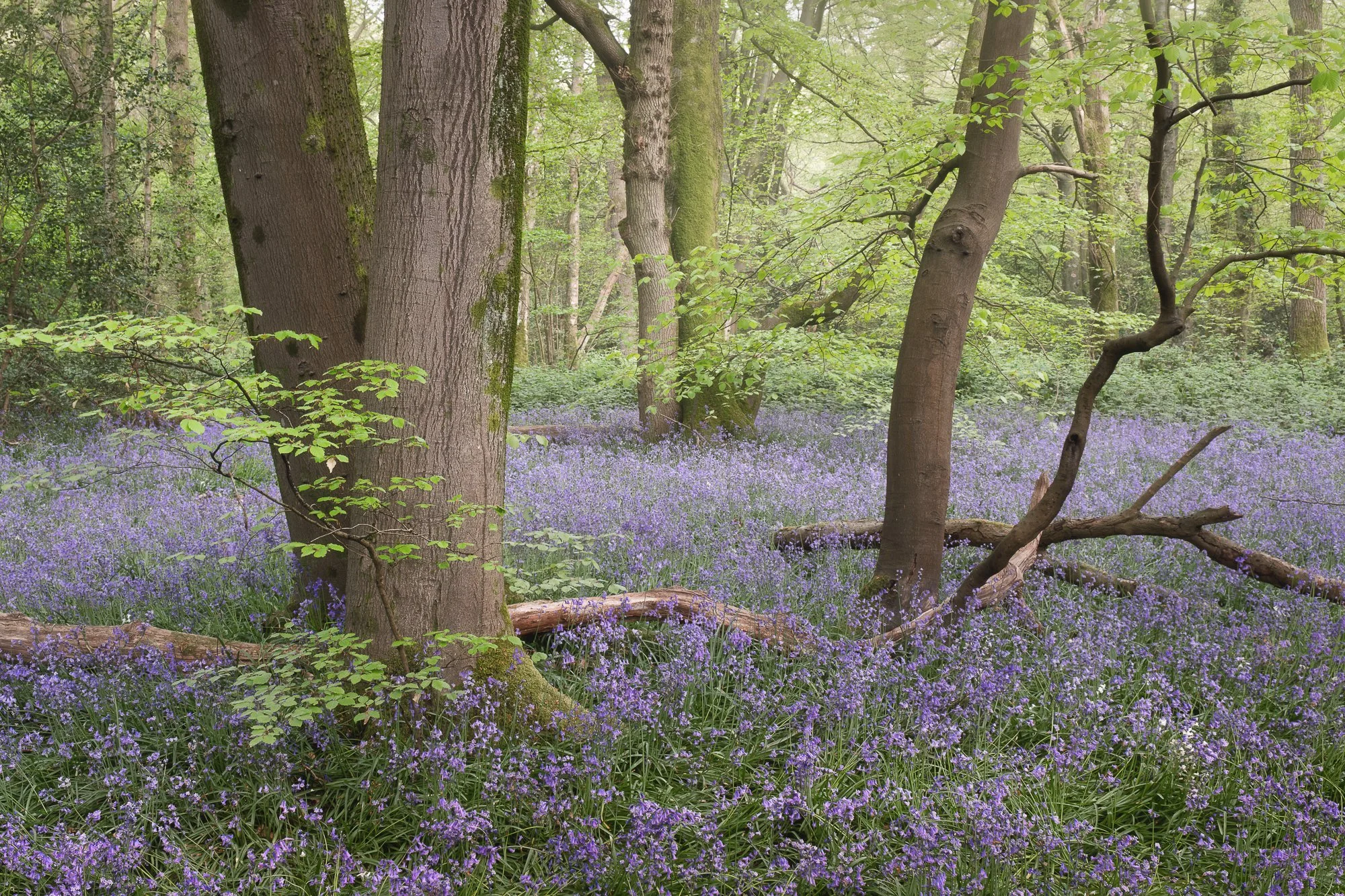
Fujifilm XT5 | XF16-55mm | 28mm | 1/5th Second | f/10 | ISO125
After the final image was taken, the cameras went back into our bags for the last time that morning, and we headed off for a coffee.
These conditions don’t come along every day, and when they do, there is often a natural pressure to make the most of them before they change. However, the advantage on this occasion was familiarity with the woodland, and having a number of established compositions already in mind meant I could work with a little more intention rather than urgency.
It was also great to meet Nigel and see him working while filming for his YouTube channel. Nigel has written an article about his springtime woodland photography in the Home Counties, available here.
Thanks for reading, and if you have any thoughts or questions, feel free to leave a comment below.
Until next time,
Trevor