
BLOG ARCHIVE

First Light by Joe Cornish | My Photo Bookshelf
First Light by Joe Cornish, a landscape photography book exploring light, composition, creative process, and photographic craft.
I feel it is important that anyone seeking to explore and educate themselves in the art and craft of landscape photography should spend time studying both contemporary work and the photographers who helped shape the genre. While Joe Cornish remains very much active today, he is widely regarded as one of the most influential figures in British landscape photography. His photographs, writings, and teaching have inspired countless photographers over the years, and whenever the opportunity arises, I find myself adding his books to my collection in an effort to better understand not only how he photographs the landscape, but also the philosophy and approach that underpin his work. One such book is First Light: A Landscape Photographer's Art, which draws upon more than two decades of Joe's photographic experience and offers a fascinating insight into both his images and the thought processes behind them.
Author’s synopsis
Drawing on decades of experience, Joe Cornish, one of Britain’s most distinguished landscape photographers, has distilled the key elements of his craft into a collection of thought-provoking essays accompanied by a stunning selection of his photographs.
From his beloved North Yorkshire, to the rocky canyons of the Colorado Plateau, the photos in First Light have been chosen to reflect the breadth of Joe’s work and to illustrate how he puts his working philosophy into practice.
Each picture is accompanied by text describing the conditions that must be taken into consideration before taking a photo; the composition of the image, including viewpoint, selection of film and filters; and post production treatments.
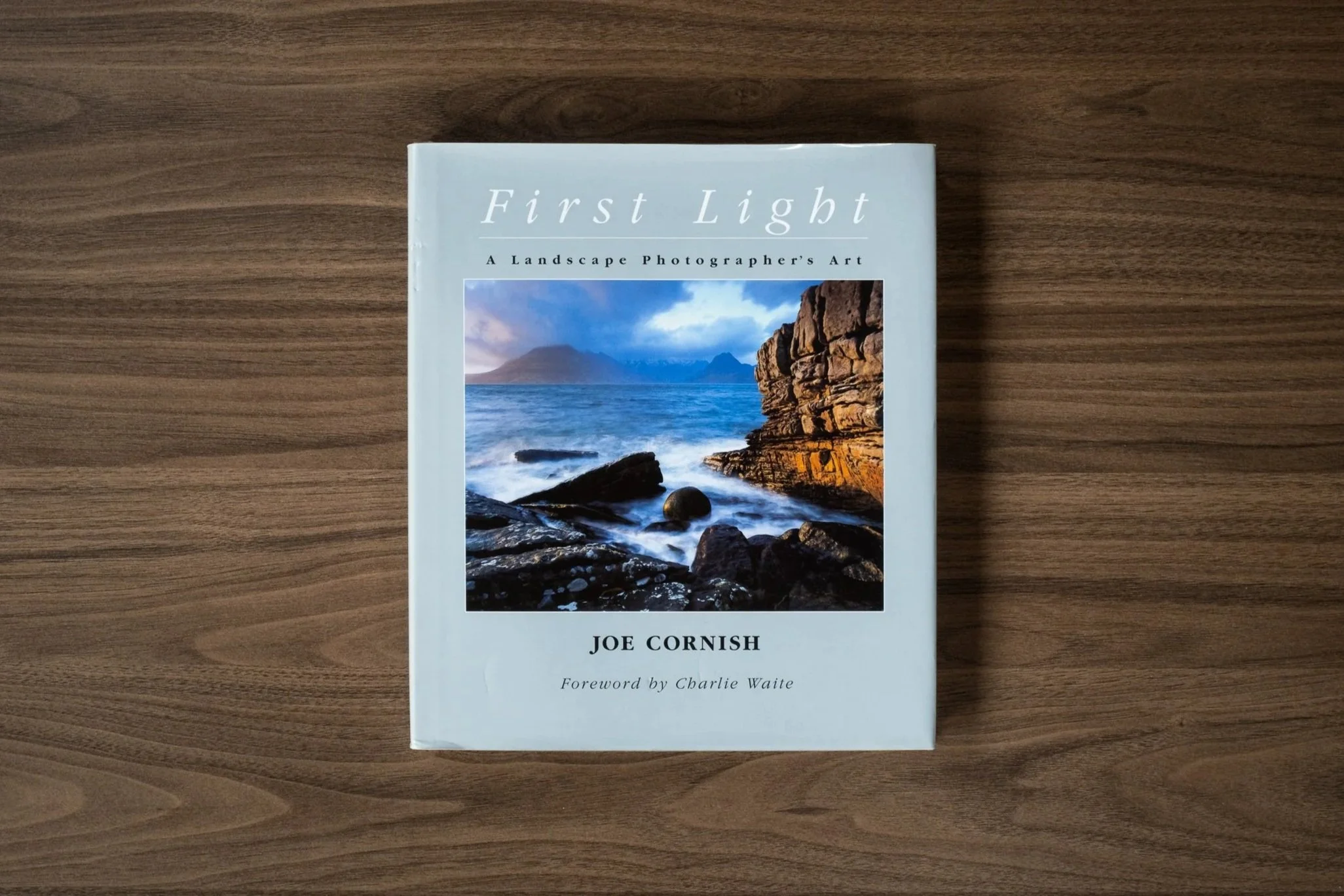
First Light is replete with supporting technical data and Joe’s own explanations of the thought processes that lay behind the creation of each of these wonderful photographs. These fluent and very personal accounts are full of practical advice on subjects ranging from anticipating changes in the weather or lighting conditions, to the relative advantages of using colour filters.
My thoughts about the book
First Light starts with a foreword by another of the UK's landscape photography greats, Charlie Waite, followed by the book's introduction, where Joe discusses the concept of light. It was here that the book's double meaning is explained. In landscape photography, "first light" refers to the first light of the day, one of the most sought-after times for making photographs. However, Joe introduces a different interpretation. Beyond the practical benefits of photographing at sunrise, he suggests that light should come before everything else; that it is the foundation upon which all successful landscape photography is built. First, light.
From the introduction, the book moves into the first of seven chapters, each exploring a different theme, technique, or influence that helps shape Joe's photographic craft and informs the way he approaches photography in the field. Amongst other topics, the chapters cover the importance of light, place, weather, composition, and visual design, with each section opening with an introductory essay before moving into the photographic work.
Within each chapter is a collection of photographs, each accompanied by a short essay. Depending on the image, Joe may discuss the location, conditions, compositional choices, or challenges involved in making the photograph. While image-led photobooks certainly have their place, I particularly enjoy books like this, where the photographer shares the thinking behind the work. For me, understanding the circumstances and decisions that shaped an image only deepens my appreciation of it.
What makes First Light even more valuable is that Joe doesn't simply present the finished photograph. Alongside each main image is a smaller alternative version, often one he considers less successful, together with an explanation of why. These comparisons offer a fascinating insight into how the photograph evolved and the decisions that led to the final result, providing lessons that are every bit as valuable as the images themselves.
The book concludes with an essay about the equipment Joe was using at the time, providing an interesting glimpse back to when film still offered the highest image quality available to landscape photographers. He discusses the cameras, lenses, and films used throughout the book and, despite the title First Light, there was certainly nothing lightweight about much of the equipment. The final pages include thumbnail versions of every image together with the technical information used to create them.
What I particularly like about First Light is that it feels less like a book showcasing Joe Cornish's photography and more like a book sharing the knowledge, experience, and thought processes behind it. While the photographs are reason enough to own a copy, it is the accompanying essays that make it such a valuable read. Despite being published in 2002, the lessons within remain just as relevant today. Cameras and technology may have changed, but the importance of light, composition, observation, and patience has not. As a result, I think First Light remains essential reading for any landscape photographer looking to grow their craft.
Book Details
Hardcover
Size: 252mm x 290mm
Pages: 160
Availability at the time of writing: No longer in print. Consider buying a used copy.
Until next time.
Trevor
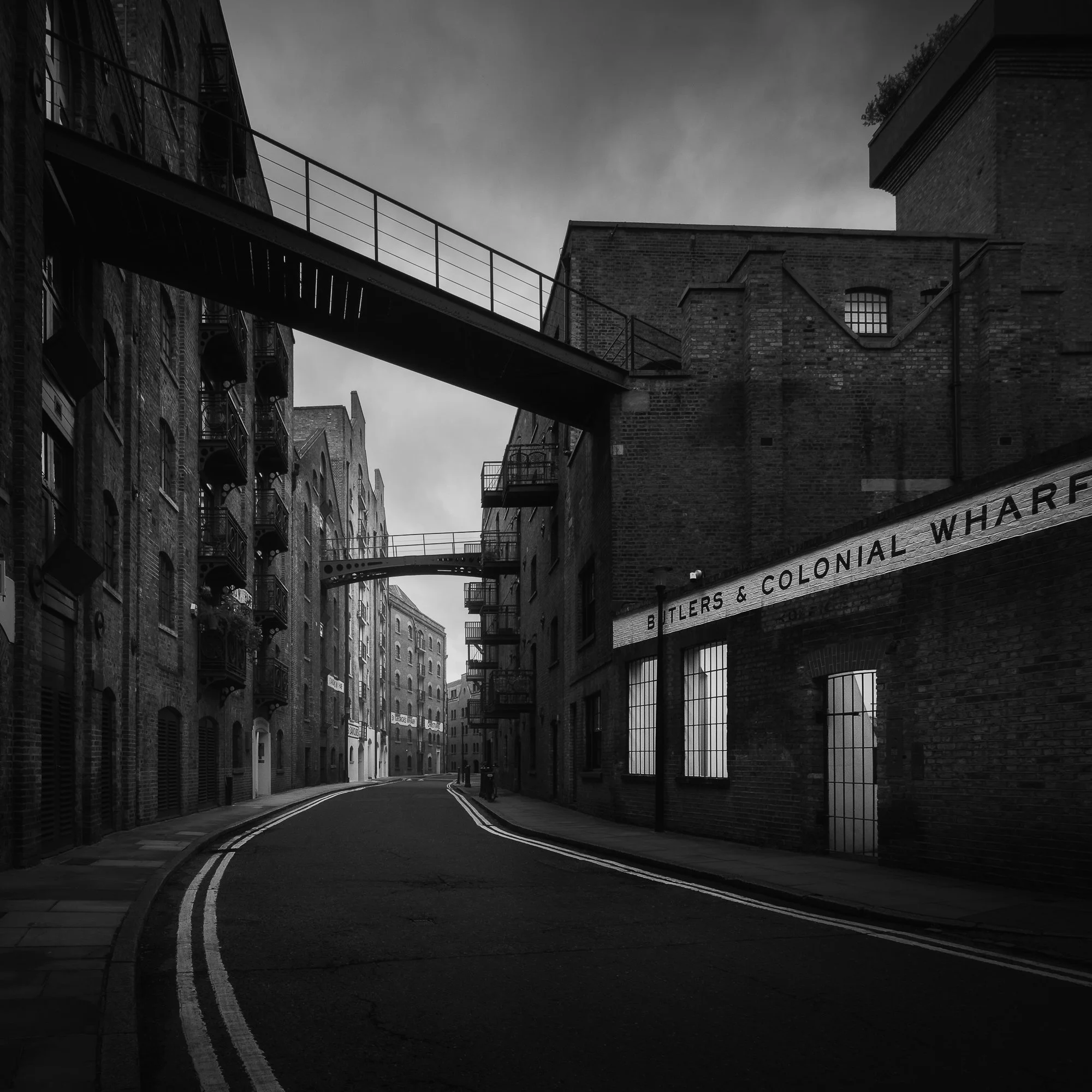
Colonial Echo
Exploring the history hidden among the warehouses of Shad Thames.
This article is part of Vignettes — Timeless City, a series of short reflections on individual photographs from my wider project. Each vignette looks beyond the finished image to explore the subject, inspiration, and ideas behind the work.
Much of Timeless City is about looking beyond the photograph itself and uncovering the stories woven into the city's fabric. Standing here in Shad Thames, it was easy to see why Colonial Echo felt like the right title for this image. The warehouses are quiet now, many having been converted into residential properties, but their former purpose still resonates through the architecture. Beneath the iron bridges and within this canyon of brick and steel remains an echo of the trade, industry and movement that once defined this corner of London.
While wandering along Shad Thames in search of a composition, it became clear that to capture some of the area's history, I needed to include those iron bridges overhead. Built to connect the warehouses on either side of the road, they were key to ensuring goods could move between the buildings with relative ease and, for me, offered the opportunity to significantly enhance the final image.
As I explored different viewpoints, I found myself lowering the camera to give greater prominence to the sweeping double yellow lines. Their gentle curve draws the eye into the frame, leading towards the warehouses and into the distance. Above, the iron bridge and the Butlers & Colonial Wharf sign reach in from opposite sides of the image, creating a balance that immediately caught my attention. Together, these elements give the photograph a sense of depth and flow, inviting the viewer to follow the scene along Shad Thames and into this historic corner of London.
Colonial Echo is a good example of what I hope to achieve with Timeless City. The photograph captures a visually interesting part of London, but understanding the history behind it adds another dimension to the image. For me, the project is about looking beyond the surface and taking the time to understand the places I photograph. In doing so, I often find that the story behind the photograph becomes just as interesting as the image itself.
Trevor

Parhelion by the Parhelion Group | My Photo Bookshelf
A varied and carefully sequenced collection of landscape and nature photography from across the Parhelion Group.
Having followed the work of several members of the Parhelion Group for a number of years, the release of a book bringing together work from across the collective immediately caught my attention. It wasn’t long before I had my own copy sitting on my bookshelf.
Author’s synopsis
Parhelion is a collective of photographers based in and around England's North and South Downs. Capturing images of the landscape, the ocean, flora and fauna, we share a passion for nature in all its glory. Our members are established outdoor photographers with a commitment to excellence whether it be by undertaking prestigious commissions, regular publication in magazines and books, as educators leading workshops and giving presentations, by achieving awards in national and international competitions, or exhibiting and selling fine art prints.

My thoughts about the book
Made up of seven photographers based in the south of England, the Parhelion Group is a collective comprising Jenifer Bunnett, Matthew Cattell, Lorraine Heaysman, David Southern, Carys Jones, Sarah Medway and Sue Oakford. While looking at the group’s website while writing this, it appears the membership has changed since the book was released, with the publication also including the work of Rachael Talibart and not featuring Sue Oakford, suggesting she may have joined the group after its release.
This softcover book begins with a short introduction to Parhelion, followed by a selection of photographs from across the group. Between the photographic sections, each member is given a dedicated page with a short biography. This is a nice way of introducing the photographers individually, offering a little context while also giving the reader a brief pause before moving on to the next collection of images.
The uncoated 150gsm paper feels very pleasant to hold, and the matte finish softens the colours throughout. This works particularly well for the work included, giving the book a calm, relaxed quality that suits the overall experience of browsing the images.
The photographs are sequenced by subject, genre, colour, and mood, rather than being grouped by photographer. This approach feels appropriate for a collective publication, and if you want to identify individual images, there is a useful index towards the back of the book.
Not including information alongside the images feels like a deliberate choice. The photographs are given space on the page, with a modest border along the longer edge. It doesn’t feel too tight, but had titles or image data been included, the layout would likely have felt more cluttered. As it stands, the design strikes a good balance between maximising the available space and allowing the images to breathe.
Overall, this is a thoughtfully produced book showcasing the varied work of a group of talented photographers. If you have the opportunity, it is well worth adding to your bookshelf while it is still available.
Book Details
350gsm Silk Softcover
Size: 254mm x 254mm
Pages: 74 150gsm Uncoated
Availability at the time of writing: Still in print. Available from the Parhelion Group’s website: https://parheliongroup.co.uk/
Until next time.
Trevor
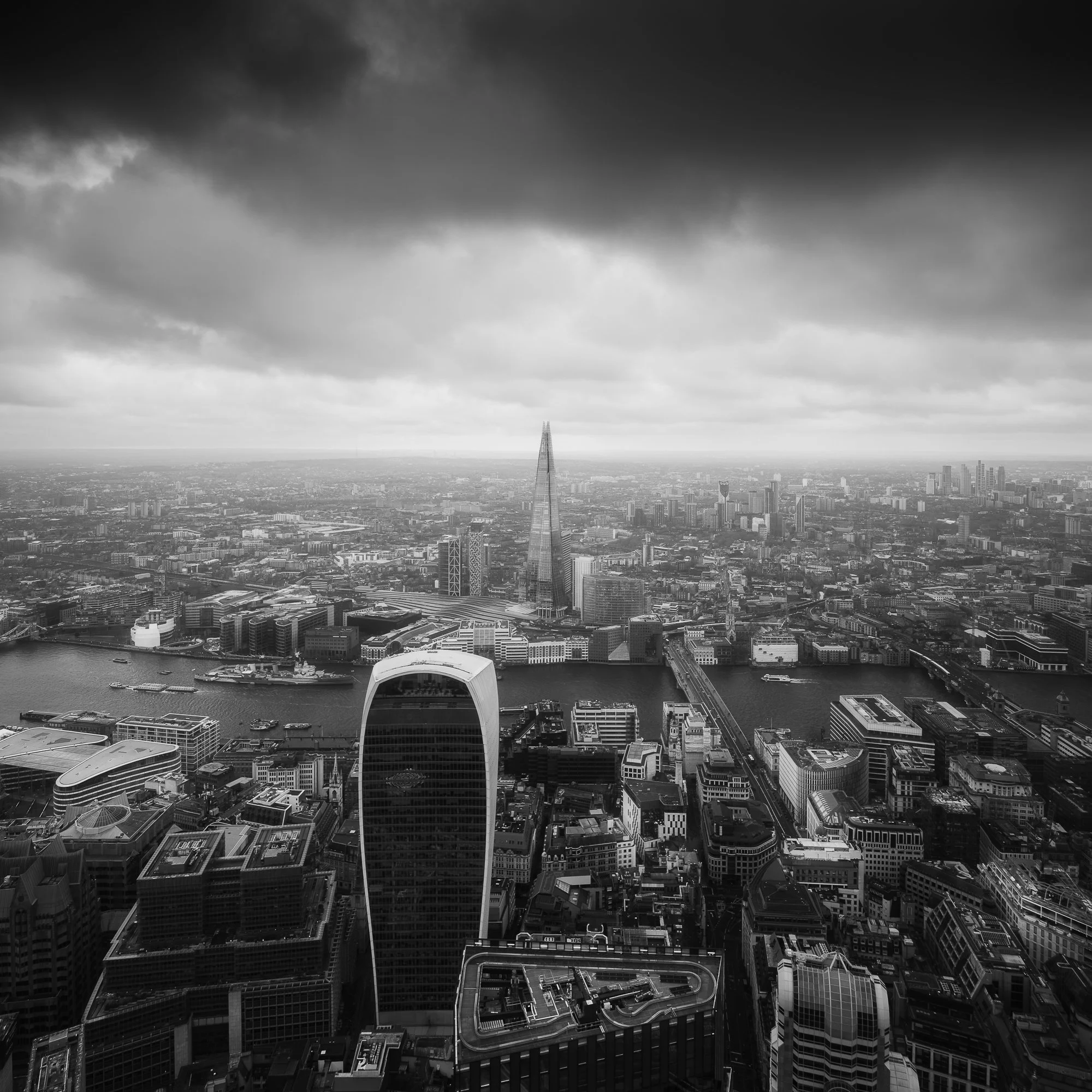
Distant Heights
Photographing London from high above, where cloud, rain and distance defined the view.
This article is part of Vignettes — Timeless City, a series of short reflections on individual photographs from my wider project. Each vignette looks beyond the finished image to explore the subject, inspiration, and ideas behind the work.
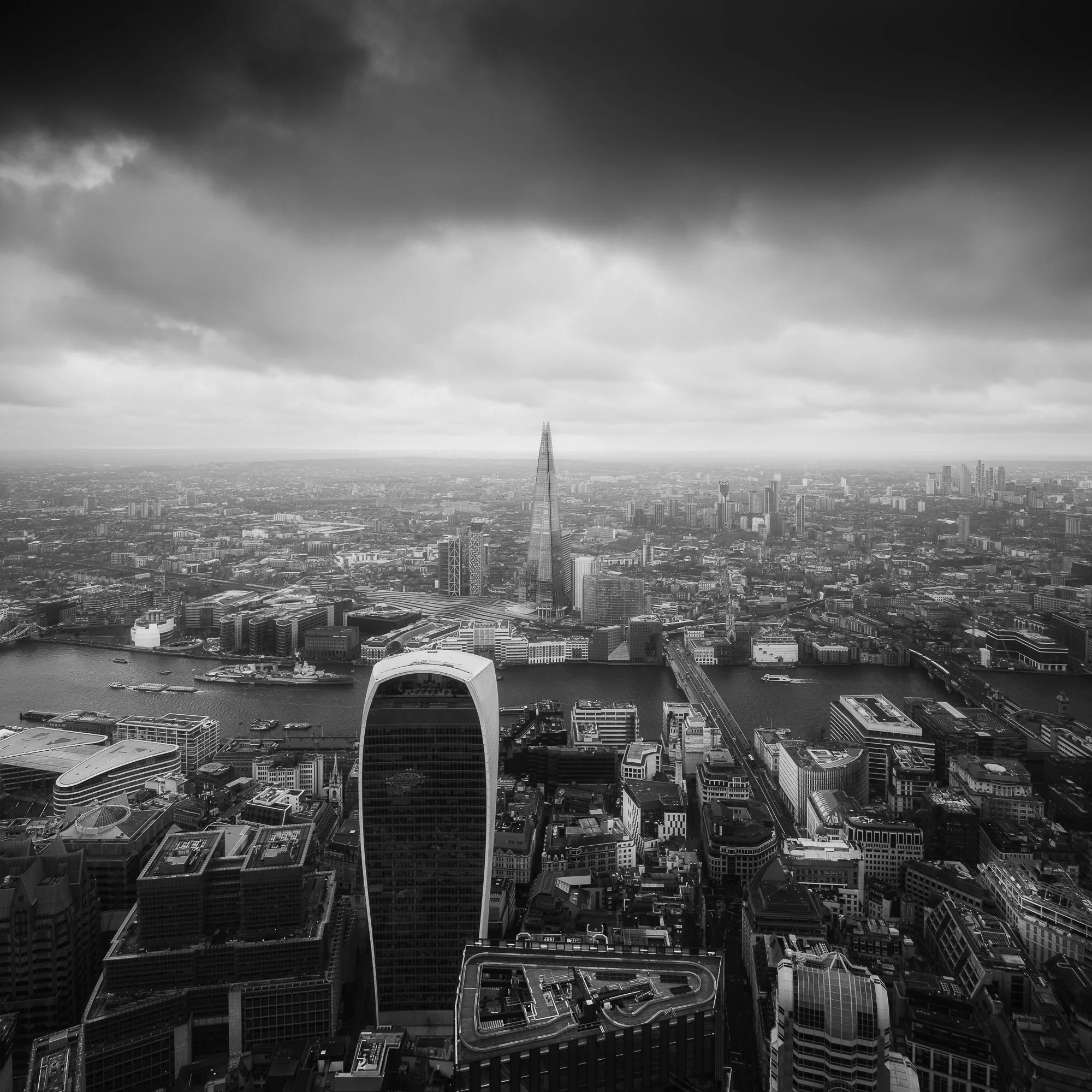
London is often experienced at street level. Its character is found in the details, in the contrast between old and new architecture, and in the unexpected views that appear while moving through the city.
But from above, things change. Individual buildings lose some of their dominance, and the contrast between architectural styles becomes part of a much larger landscape. From this height, the true scale of London begins to reveal itself, not only in its physical size, but in the visual diversity spread out across the city.
London’s modern skyline continues to divide opinion, but one of the more positive decisions made as the city has grown upwards, in my view, has been the encouragement for tall buildings to include publicly accessible spaces. These viewpoints turn the height of such structures into something shared, offering a different perspective on the city that would otherwise belong only to those who work within them.
Located on the 58th floor of 22 Bishopsgate, Horizon 22 is one of the more recent additions to London’s growing collection of high-rise public viewing galleries. On a rainy day in February 2026, I visited with my camera to explore this elevated view across London.
It will probably come as no surprise that the dark, heavy rain clouds were exactly the kind of conditions I was hoping for. They suit the atmosphere I aim for within this project, and the moisture in the air helped create a softened, diffused feeling as the eye moves beyond the skyline and towards the distance. I used a wide-angle lens to give a sense of scale to the landscape in front of me, allowing the scene space to breathe while still including both the weight of the clouds above and the detail of the city below.
Compositionally, I chose to place The Shard in the centre of the frame, with the Walkie Talkie building just to its left, giving each of them a little separation while keeping the overall composition balanced. The viewpoint offers a vast sweep of London, yet the image still needed a clear structure — something to hold the eye before allowing it to drift further into the distance.
Although it is great for visitors, photographically, this location is quite challenging. You have to contend with some particularly dirty glass, and even with a lens hood pressed up against the window, the deep cavity between the layers of glazing makes it almost impossible to exclude reflections from the final image. It is a location that makes you work for the photograph, and a reminder that even from a viewpoint designed to make the city feel open and accessible, creating an image still comes with its own challenges.
After making the photograph, I spent a little longer at the window, looking out across the city and watching the rain clouds move slowly over London. With the image made, I packed away my camera and made my way back down to street level.
Trevor
Guardian
The Thames Barrier, standing between London and the river that shaped its existence.
This article is part of Vignettes — Timeless City, a series of short reflections on individual photographs from my wider project. Each vignette looks beyond the finished image to explore the subject, inspiration, and ideas behind the work.
The Thames has always been central to London’s identity. It has shaped the city’s growth, supported its trade, and connected it to the wider world. Yet the same river that helped London flourish has also carried the potential for destruction, with the threat of flooding remaining a constant concern for a city built along its banks.
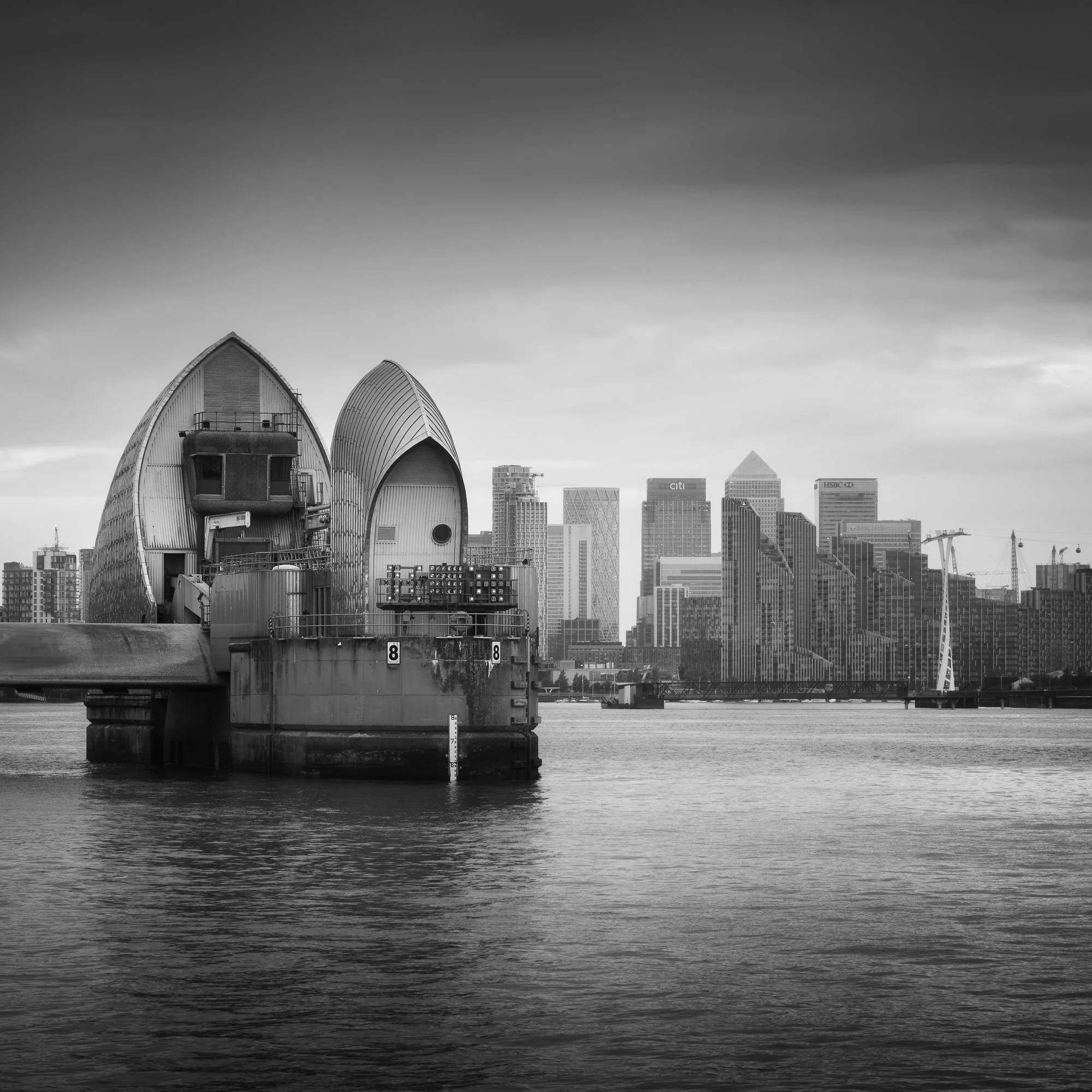
In May 2024, I decided to head east along the river to photograph the Thames Barrier, a huge structure made up of nine piers spanning the width of the river. Located downstream from the Isle of Dogs, the barrier stands ready to rise when needed, protecting the many built-up areas further upstream from the threat of flooding.
It was my second visit to this part of London, and after photographing the line of structures side on (which I may well share in this series one day), I continued a little further downstream to see if these fascinating structures could offer any other compositions looking back towards the city.
As I walked further east, I found myself drawn to the relationship between the barrier and the city beyond. Standing in front of the financial district of Canary Wharf, this vast piece of engineering appeared almost like a silent guardian, watching over the modern skyline behind it. I had my composition.
Carefully composing the image, I wanted to make sure pier number 8 remained the primary subject, while still allowing the high-rise buildings of the Isle of Dogs, sitting two miles upstream, to appear behind it. This was the story I had in mind.
I’ve written before about how the square crop can be more forgiving when it comes to balance, as no single side of the image dominates and the viewer’s eye can move naturally around the scene. This gave me the freedom to place the pier further towards the edge of the frame without the left side feeling visually unbalanced.
There was a subtle mood within the clouds that I was able to emphasise in post-processing, and by choosing a slightly faster shutter speed, I was able to capture some of the texture offered by the relatively calm water.
The Thames Barrier reflects the idea that it is not a monument built to celebrate London, but a structure designed to preserve it. These guardians stand between the river and the city, protecting generations of Londoners and allowing the skyline beyond to continue evolving.
With a photograph that helped tell that story, I made my way upstream, back towards the city it protects.
Trevor
Enduring Eminence
The first image in my Timeless City project, and the enduring presence of a landmark that continues to shape London’s identity.
This article is part of Vignettes — Timeless City, a series of short reflections on individual photographs from my wider project. Each vignette looks beyond the finished image to explore the subject, inspiration, and ideas behind the work.
“The longest-lasting buildings are those that touch the human spirit.”
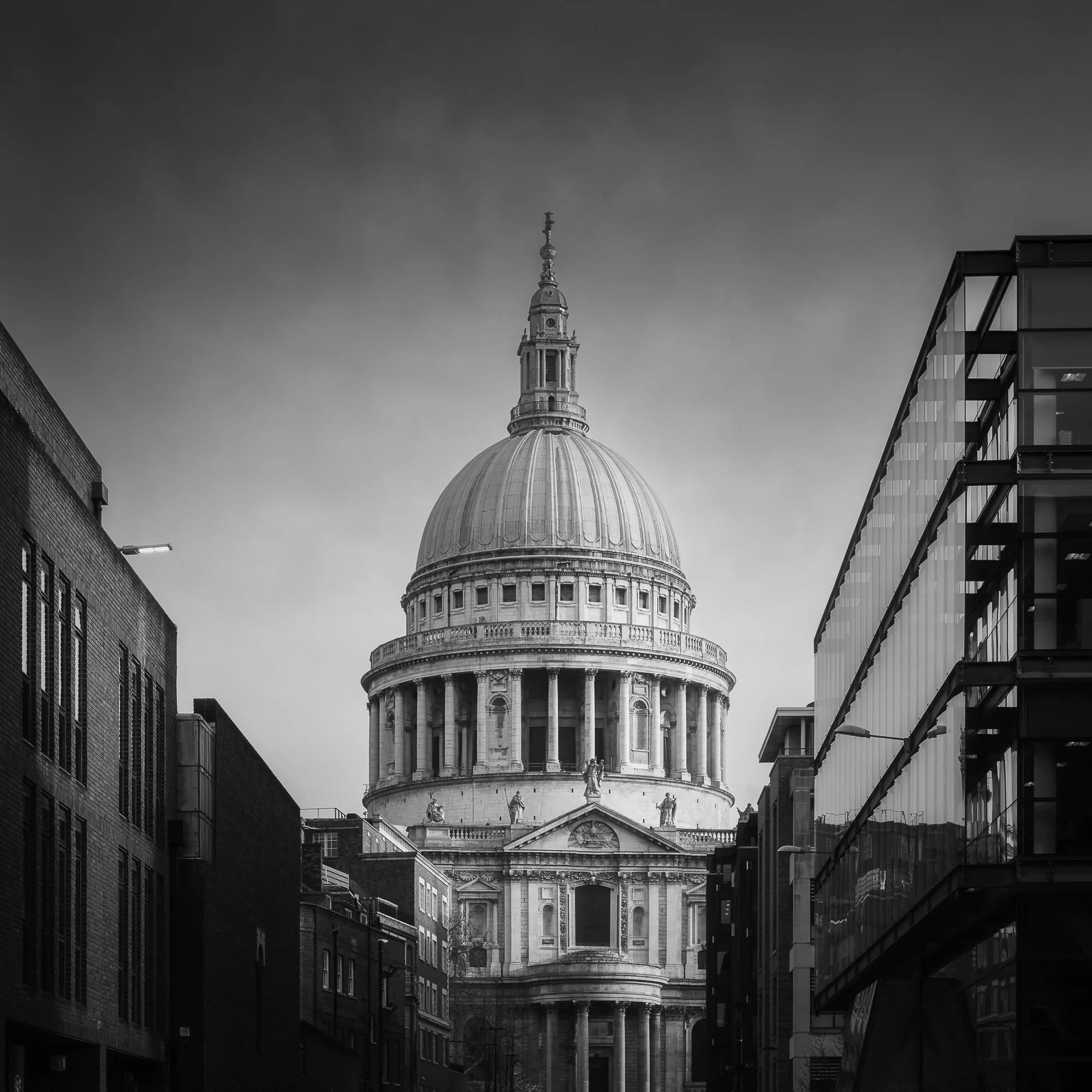
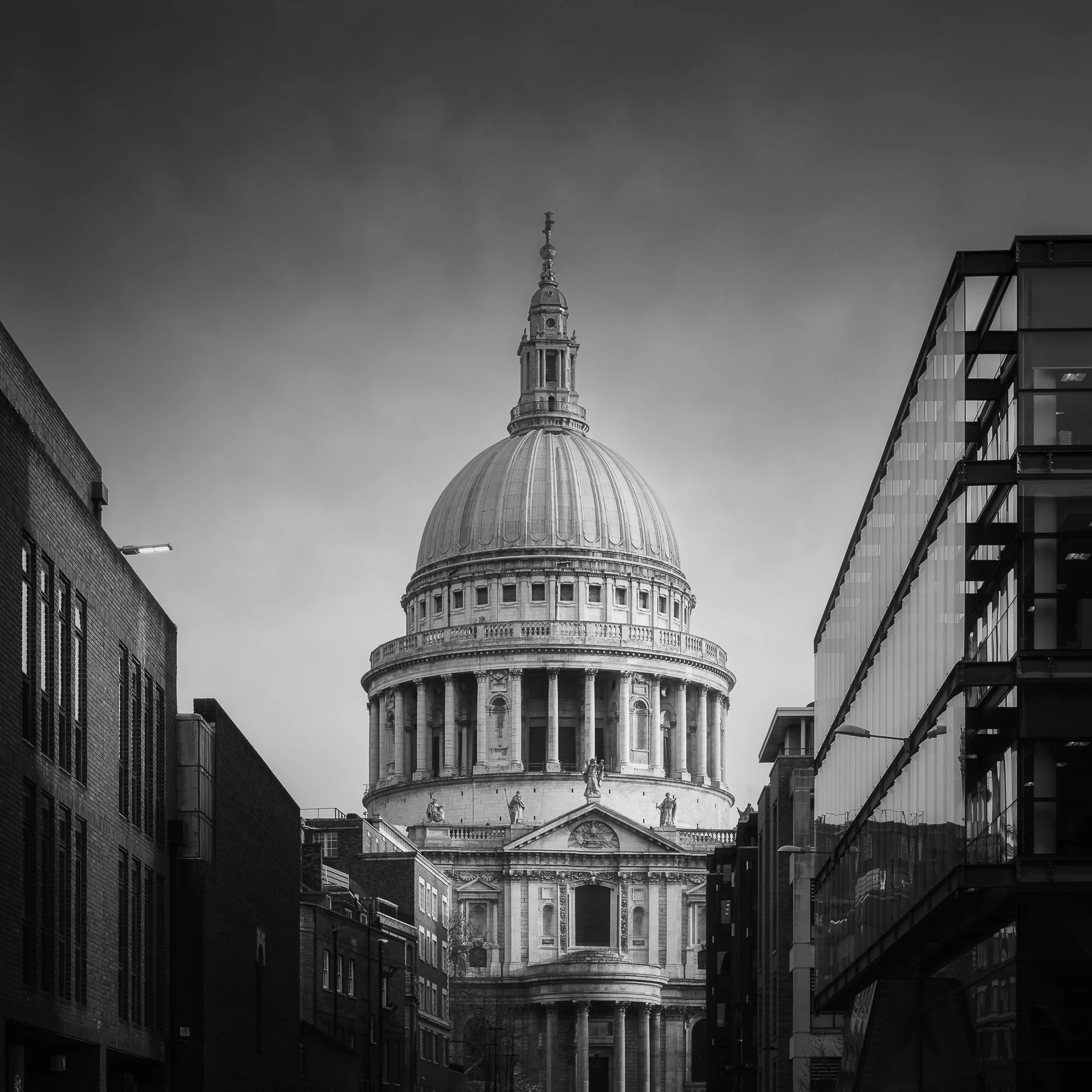
It feels fitting that the first entry in Vignettes begins here, with St Paul’s Cathedral. Not only is it one of London’s most recognisable and enduring landmarks, but this photograph is the earliest in the project, making it a fitting starting point.
I’ve wandered along the Thames with my camera countless times, and this is the view that greets you as you head north across the Millennium Bridge towards St Paul’s Cathedral. On this particular morning back in April 2018, conditions were just about perfect, and after leaving London Bridge Station at around 6am, I made my way towards the river to enjoy another walk along the Thames with my camera.
After a few stops along the way, I found myself on the south side of the river, looking across towards St Paul’s Cathedral, which stood in quiet eminence above the surrounding city. With a faint veil of cloud to the north providing a subtly textured backdrop and soft diffused light from the east illuminating the magnificent dome, this enduring icon of London looked particularly beautiful in that moment.
At the time, I wasn’t shooting specifically for this Timeless City project; that idea came a little later. I’m grateful, however, to have composed the photograph in a way that suited the square crop, and by placing the cathedral centrally in the frame, it emphasised the idea of St Paul’s continuing to hold prominence in this ever-changing city.
Looking back at this photograph now, it feels even more fitting that it became the first image in the collection. At the time, I was simply drawn to the balance of the scene — the familiar shape of the cathedral, the atmosphere created by the light, and the calmness of the moment. It was only later, as the idea behind Timeless City developed, that I began to see how this photograph represented something much broader: the way certain places become woven into the identity of a city.
The title Enduring Eminence reflects that idea. St Paul’s is not only prominent because of its position above London’s skyline, but because it has continued to hold meaning through generations of change, becoming part of the story of the city itself.
Trevor

Apollo Remastered by Andy Saunders | My Photo Bookshelf
Apollo Remastered by Andy Saunders, featuring digitally remastered NASA mission photographs and insight into how the missions were captured.
Although this Photo Bookshelf series typically features books connected in some way to landscape photography, every now and then I like to include something a little different, while still remaining closely tied to photography itself. Apollo Remastered is another example of that.
I’ve long had a fascination with space exploration and have spent countless hours watching documentaries about the Apollo missions and the early years of human spaceflight. So when I discovered a book featuring remastered photography from the Mercury, Gemini, and Apollo programmes, it immediately felt like something I needed to add to my bookshelf.
Author’s synopsis
The definitive book about the Apollo missions: extraordinary, newly restored images from the NASA archives.
In a frozen vault in Houston sits the original NASA photographic film of the Apollo missions. For half a century, almost every image of the Moon landings publicly available was produced from a lower-quality copy of these frozen originals.
Over the last few years, image restorer Andy Saunders has been working hard. Taking newly available digital scans and applying painstaking care and cutting-edge enhancement techniques, he has created the highest quality Apollo photographs ever produced.
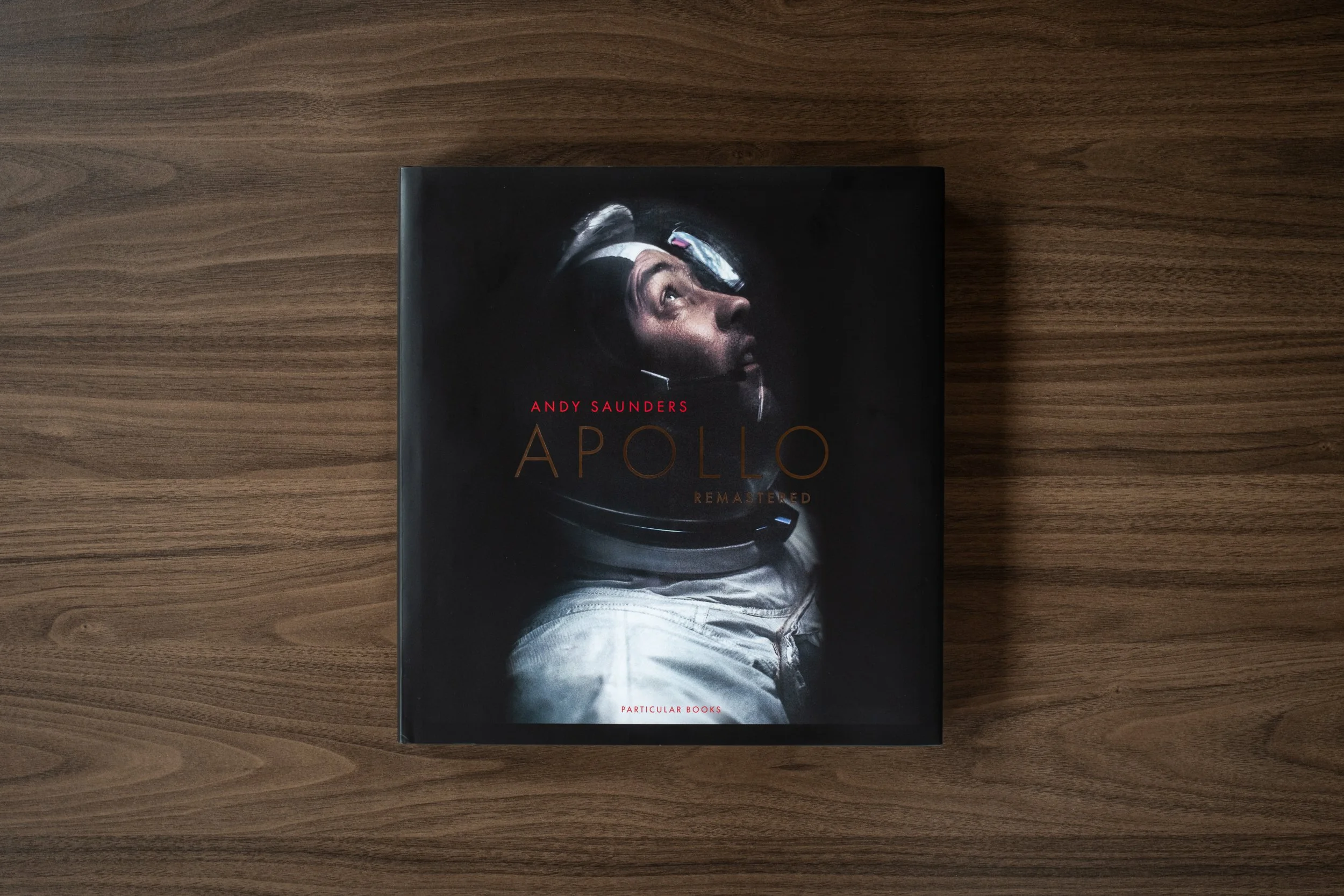
Never-before-seen spacewalks and crystal-clear portraits of astronauts in their spacecraft, along with startling new visions of the Earth and the Moon, offer astounding new insight into one of our greatest endeavours.
This is the definitive record of the Apollo missions and a mesmerising, high-definition journey into the unknown.
My thoughts about the book
Apollo Remastered is a book created by Andy Saunders and is a project that brings some of the most important photographs in human history back into focus, showing them in a way they were never really able to be seen before. Using original NASA film scans from the Mercury, Gemini and Apollo missions, Saunders painstakingly restored and remastered the imagery using modern digital techniques, revealing remarkable levels of detail, clarity, and colour that could almost be mistaken for images created on modern cameras.
It’s a large book, and with 456 pages, it is also quite heavy, but don’t let that put you off. The size and weight are, in my opinion, a deliberate choice to ensure as many images as possible are included and that they are printed large enough to showcase all of that newly revealed clarity and detail.
The book starts with a preface, introducing the project, followed by a chapter focusing on the journey from the Earth to the Moon. In this section, we are taken through the early stages of the missions, from launch through to the journey into space, setting the scene for what follows and providing context for the images that come later.
From there, there is a chapter that features photographs from the pre-Apollo missions, Mercury and Gemini. Including these sections helps provide additional context and builds a clearer sense of the progression that led up to the Apollo programme itself, showing how each stage of early space exploration contributed to what was ultimately achieved on the Moon.
Then we have a chapter for each of the Apollo missions, starting at Apollo 7 through to Apollo 17. Each of these chapters follows a consistent structure, beginning with technical mission details such as launch and landing dates, mission duration, and the amount of time the astronauts spent on the Moon’s surface.
This is followed by a section introducing the mission’s crew, along with an overview that helps frame the objectives and significance of each flight. Finally, before moving into the imagery itself, there are usually a few paragraphs outlining the photographic equipment used on the mission, which adds useful context for understanding how these images were originally captured in such extreme conditions.
The book then moves into the photographs, which form the heart of Apollo Remastered. Many of the most iconic images from the Apollo programme are included, such as the first human steps on the Moon, the Earthrise over the lunar horizon, astronauts working on the surface, and the now-familiar portraits of spacecraft and equipment suspended in orbit.
What is most striking is just how much new life these images seem to have. Even photographs that feel instantly recognisable take on a completely different presence here, with extraordinary levels of detail, texture, and tonal depth revealed through the restoration work. Shadows feel deeper, surfaces more tactile, and the sense of scale far more immediate than in any previous versions I have seen.
The sheer time and care taken to painstakingly restore each and every image cannot be underestimated. It is this dedication to detail that transforms the book from a historical archive into something that feels almost contemporary in its visual impact, allowing these moments to be experienced with a clarity that feels genuinely new.
After the Apollo mission chapters, the book concludes with a series of sections that explore the photographic aspects in more depth. These cover topics such as the development of space photography, the photographic objectives during the missions themselves, and the image processing and restoration work that has brought these photographs back to life.
If you’re interested in the technical side of photography and how these images were originally captured, transmitted, and later restored, this part of the book is particularly engaging. It adds an extra layer of understanding to the imagery and brings the whole experience to a fitting close.
Overall, this book is a showcase of beautifully restored photographs from some of the most significant space exploration missions in history, alongside a wealth of context and information that helps bring those moments to life. Despite the depth of material covered, everything is presented in a way that never feels overwhelming, with a clear and structured flow that makes it easy to follow and absorb. It strikes a careful balance between visual impact and accessible storytelling, allowing the reader to take in both the technical detail and the extraordinary imagery at their own pace.
If you have an interest in photography, history, and space exploration, this is a book that will not disappoint.
Book Details
Hardcover
Size: 29.8cm x 31.6cm x 3.6cm and weighing 3.3kg
Pages: 456
Availability at the time of writing: Still in print. Purchase options are available from the author’s website: https://www.apolloremastered.com/apollo-remastered and major online bookshops.
Until next time.
Trevor
Photographing a Bluebell Woodland in Surrey
A beautiful foggy spring morning photographing a bluebell woodland in Surrey
It’s no secret that one of the best times to visit the woodland is in spring. After months of stillness, things begin to change—slowly at first. Buds start to open, the light softens as fresh leaves form, and the forest floor begins to show the first signs of colour. With each visit, there’s a little more to see, until the woodland suddenly comes into full bloom, transforming almost overnight.
For a woodland photographer, there’s a relatively short window where everything comes together. The greens are still fresh and vibrant, the woodland floor is covered in bluebells and wild garlic, and that sense of a new beginning hasn’t yet given way to the heavier, more established canopy of summer. It’s a brief transition, where the woodland feels at its most open and responsive, before it settles into a more enclosed, leafy state.
So, during this transitional period, many woodland photographers find themselves checking weather forecasts, hoping for the right conditions to head out amongst the trees, and every now and then it all comes together—exactly what happened for me just a few weeks ago here in leafy Surrey.
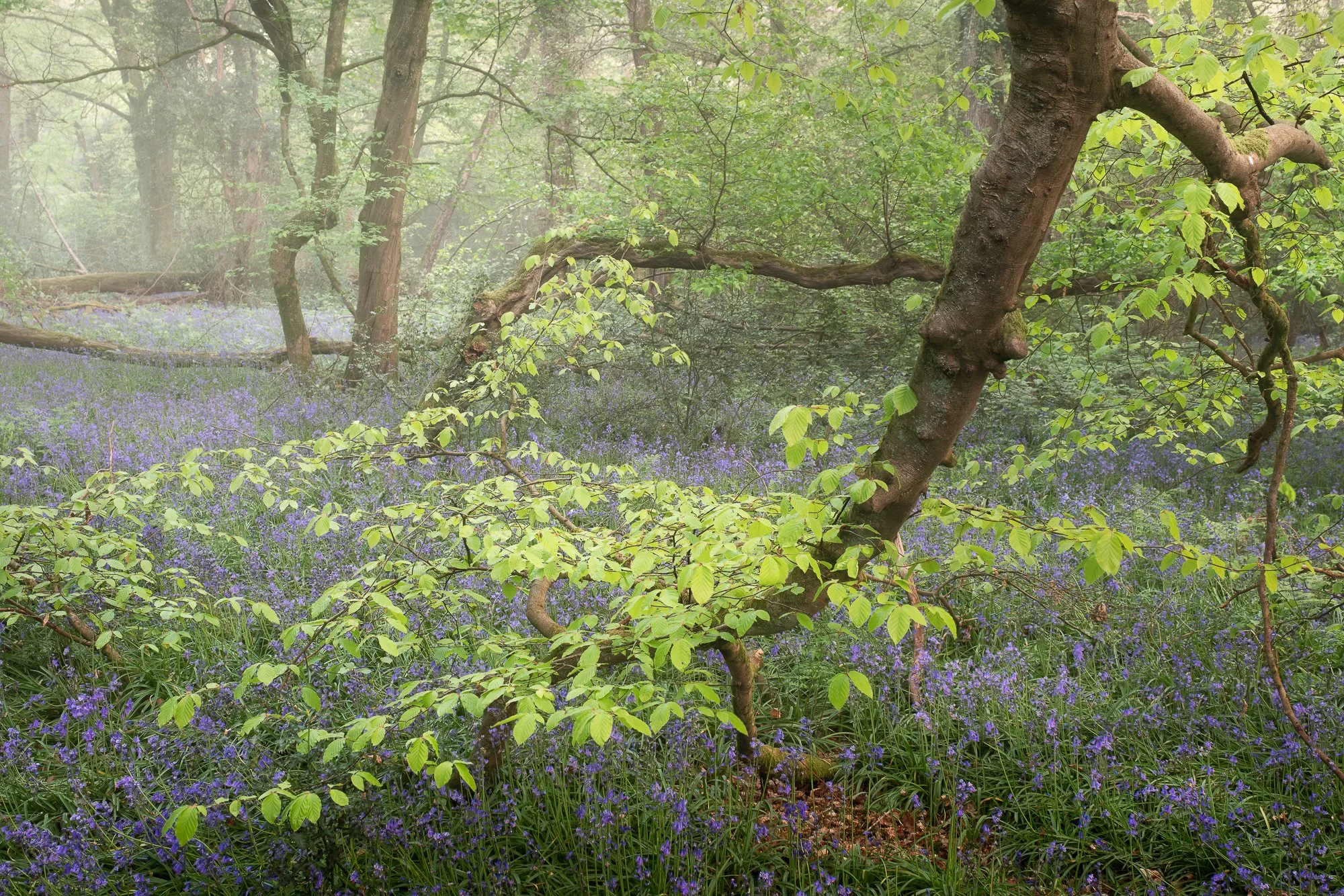
A Foggy Morning in a Surrey Bluebell Woodland
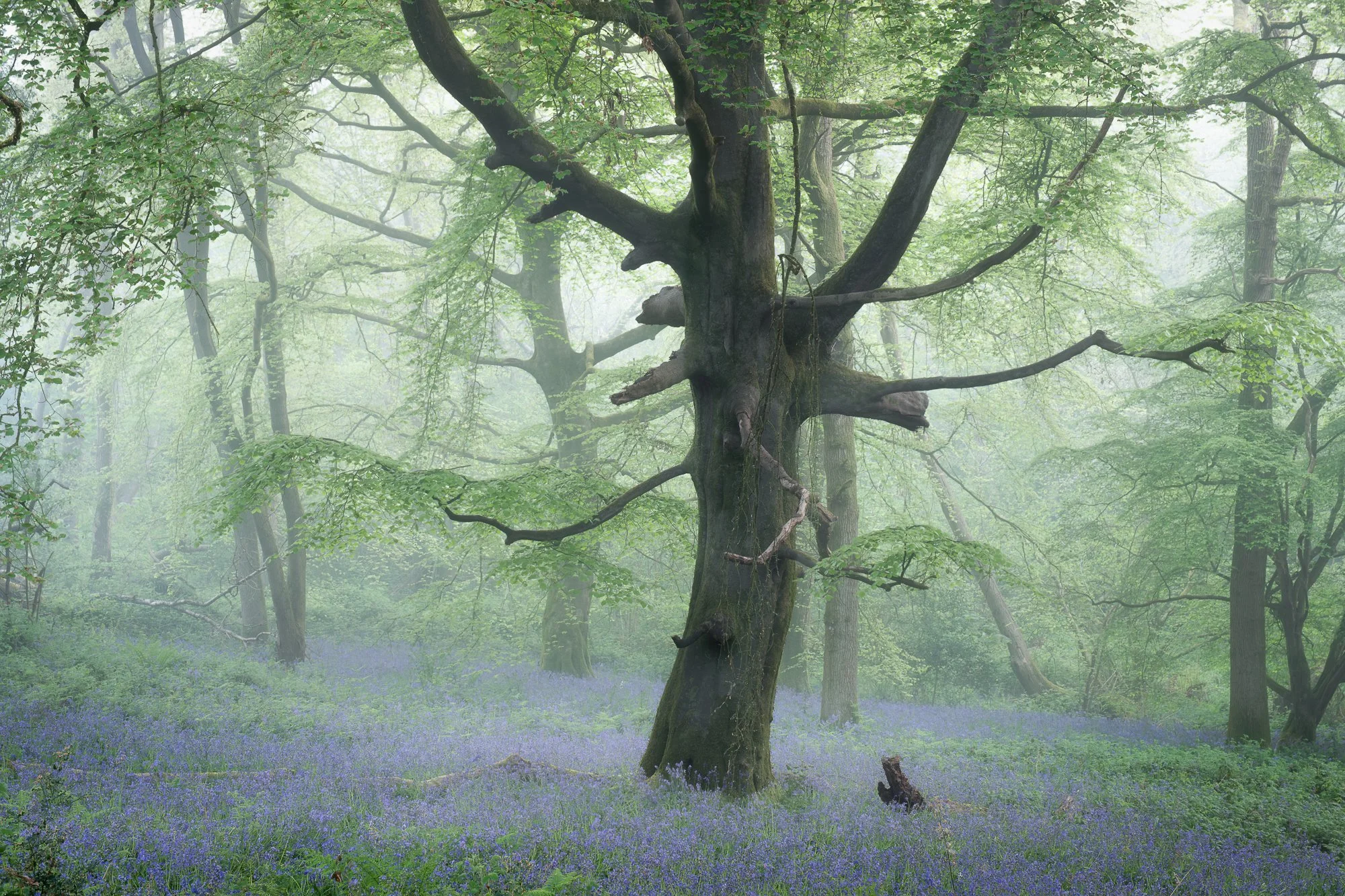
Fujifilm XT5 | XF16-55mm | 44mm | 2 Seconds | f/10 | ISO125
A few weeks ago in April, I met up with Nigel Danson while he was in the area for his Counties project, photographing across Surrey. In the days leading up to our meeting, the weather had been consistently clear, with bright blue skies each morning. Although it’s always good to be out in the landscape, clear conditions are rarely ideal for creating soft, atmospheric woodland photographs.
On the morning we arranged to meet, however, things changed. Instead of another bright, cloudless start, we were greeted with gentle fog and beautifully diffused light — exactly the conditions we were hoping for in this bluebell woodland.
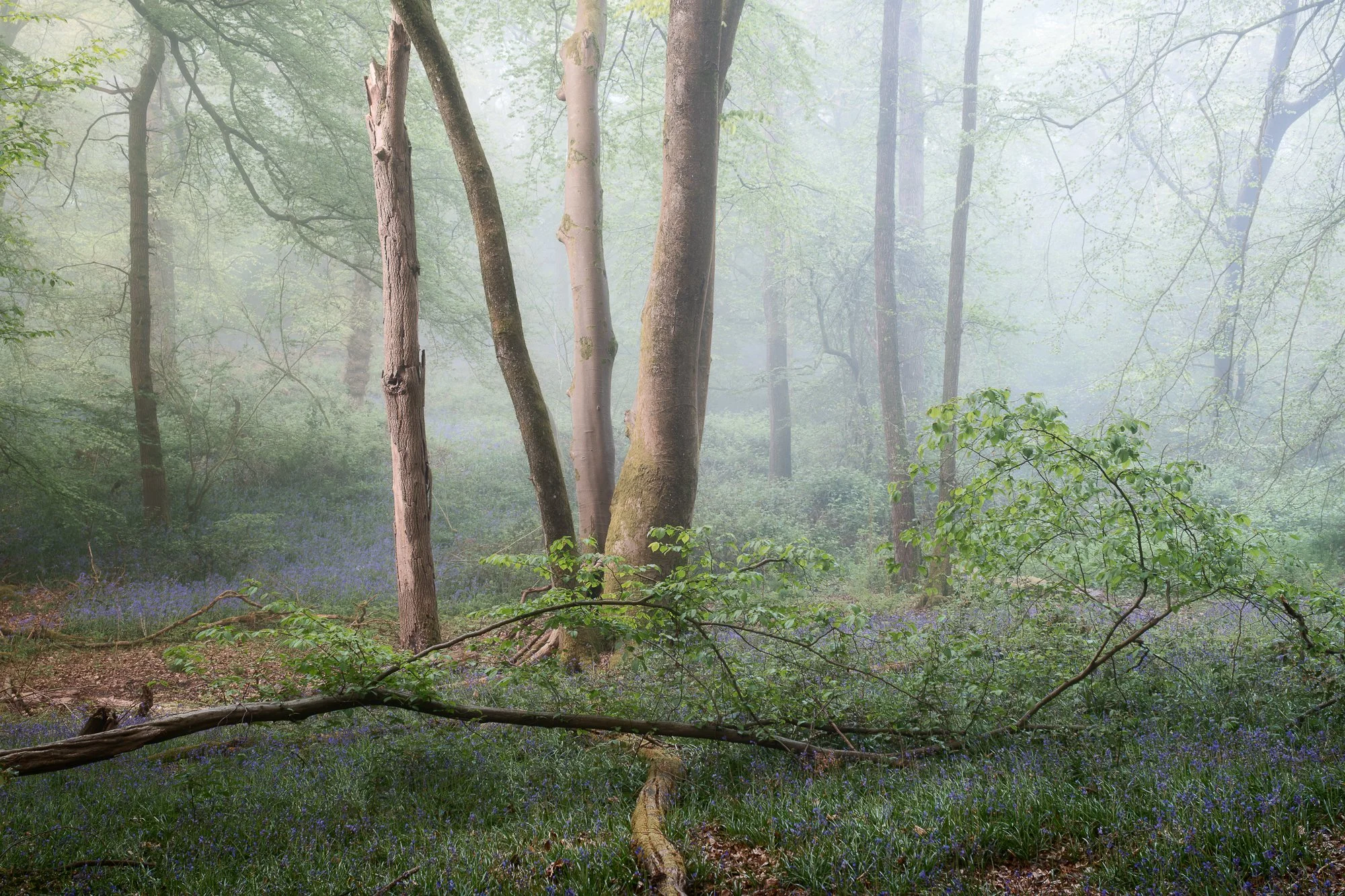
Fujifilm XT5 | XF16-55mm | 30mm | 1/3rd Second | f/7.1 | ISO400
Even with the right conditions, there’s always a sense that time is working against you. Fog like this is rarely static — it shifts, thins, and disappears without warning. So there’s a constant pull between moving quickly to make the most of it, and slowing down enough to really take in what’s in front of you.
In these moments, photographing familiar locations can make a real difference. Amid the inevitable rush that comes with fleeting conditions like this, I was able to return to a few compositions I had already discovered on earlier visits, balancing that urgency with a more considered approach.
Fujifilm XT5 | XF16-55mm | 32mm | 1.3 Seconds | f/10 | ISO125
The images shared so far are all examples of compositions I had previously photographed, so capturing these early helped ease any anxiety about the fog disappearing before I had taken anything worthwhile. They also helped me settle into the process, allowing me to find my rhythm and gradually re-engage with familiar compositions.
It was Nigel who first photographed the composition below, and although I initially felt it carried too much visual weight on the left, it has gradually grown on me to the point where I now really appreciate the image. The leaning tree to the right adds just enough weight, helping to balance the heavier area on the left. That side of the frame is wonderfully chaotic, and as long as a sense of balance is retained, I often look to include these kinds of elements in my woodland photography, as they help demonstrate how unpredictable and fascinating woodland environments can be.
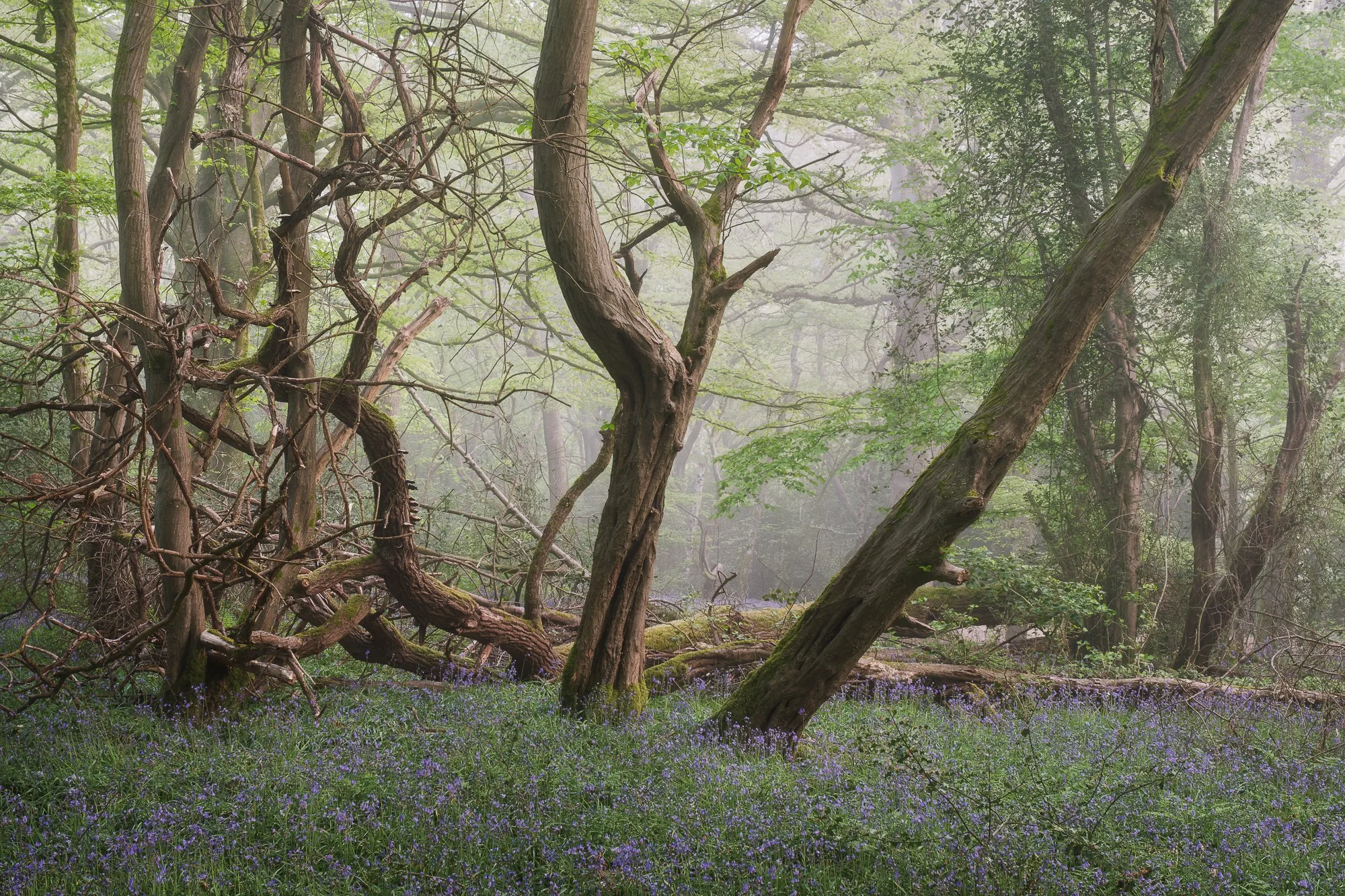
Fujifilm XT5 | XF16-55mm | 36mm | 2 Seconds | f/10 | ISO125
We continued to move through the bluebell woodland, talking about photography as we searched for new areas of interest and structure, with everything subtly shaped by the conditions we had been fortunate to be given. It was shaping up to be a very rewarding morning.
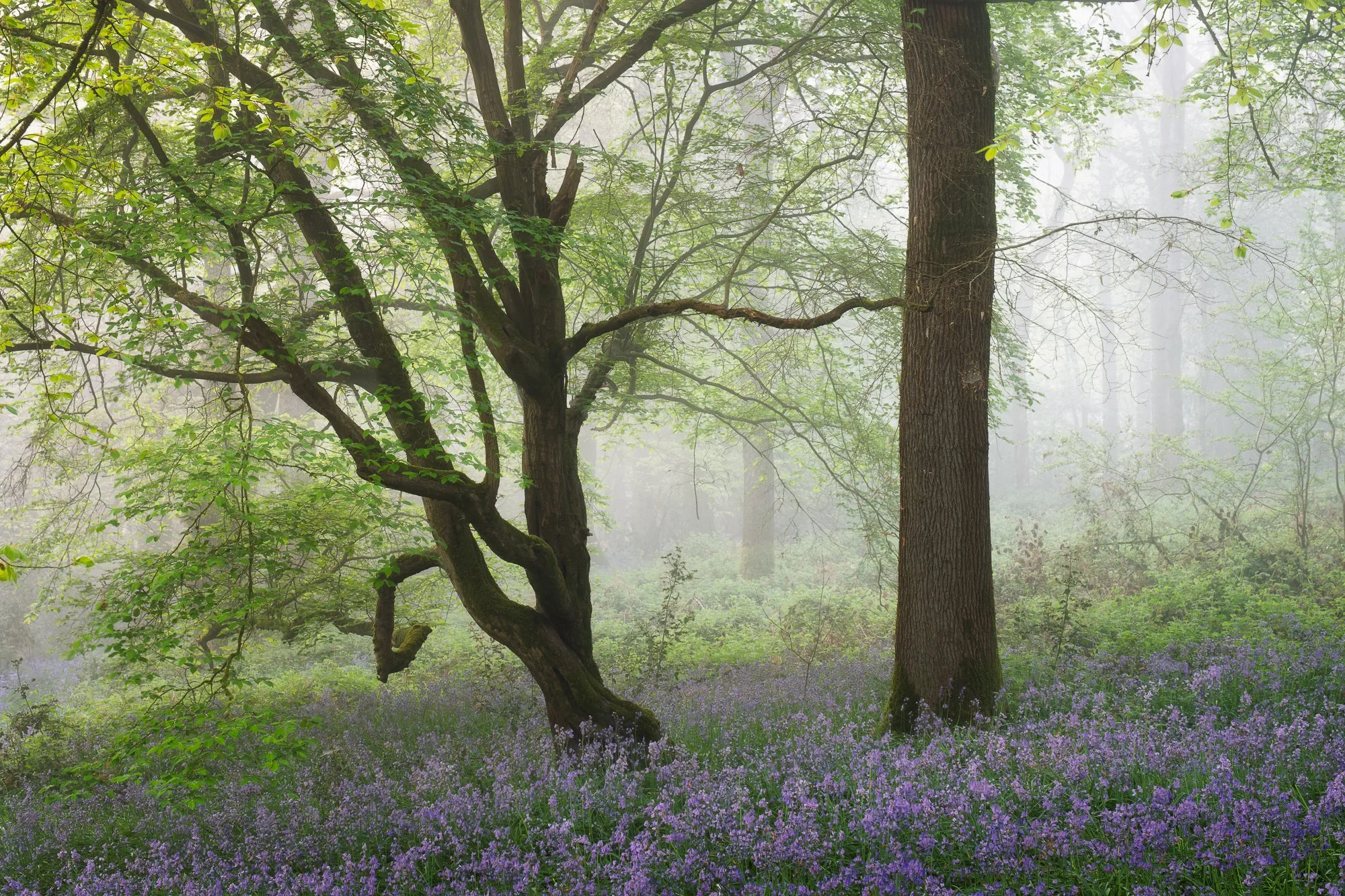
Fujifilm XT5 | XF16-55mm | 41mm | 1 Second | f/10 | ISO125
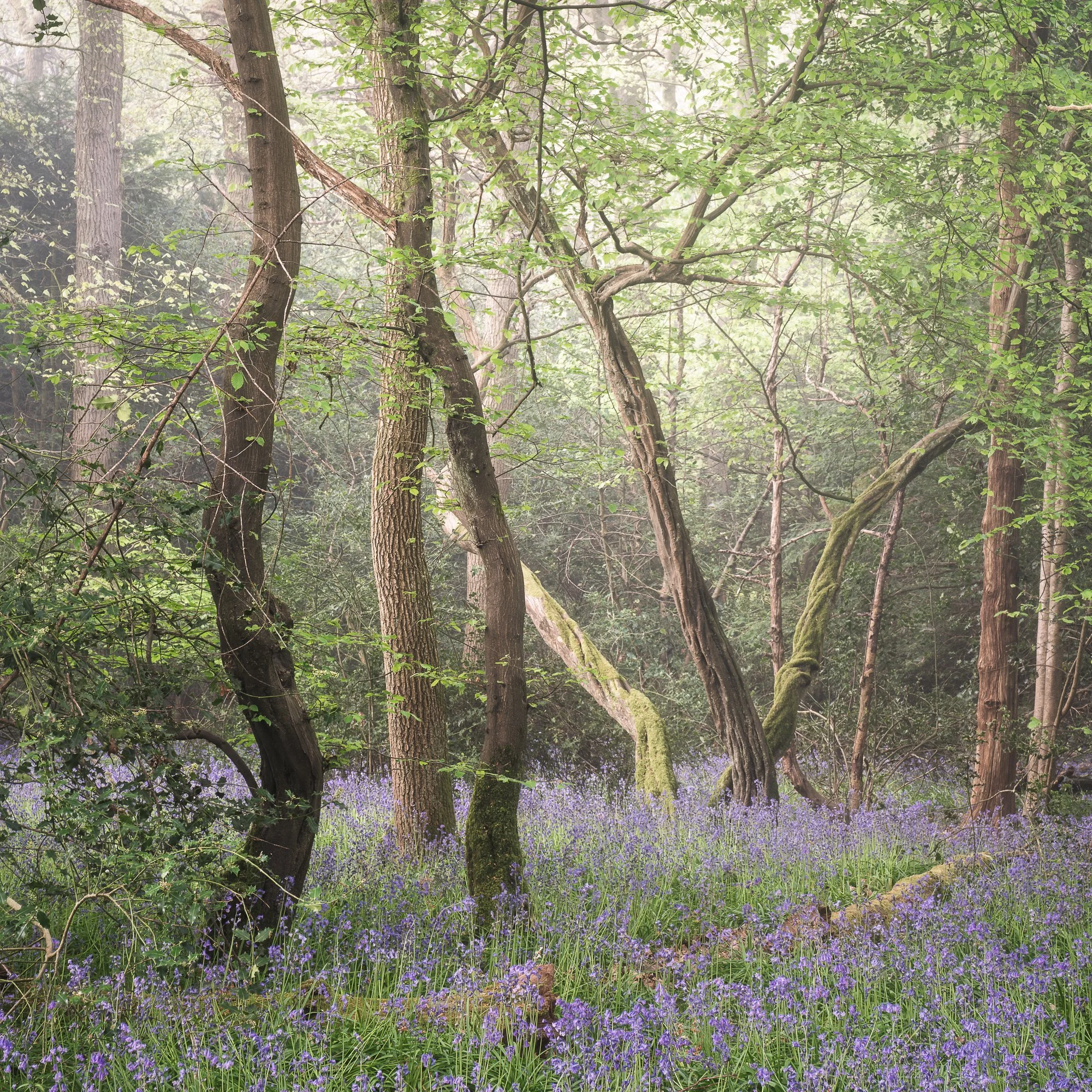
Fujifilm XT5 | XF16-55mm | 50mm | 0.8 Seconds | f/10 | ISO125
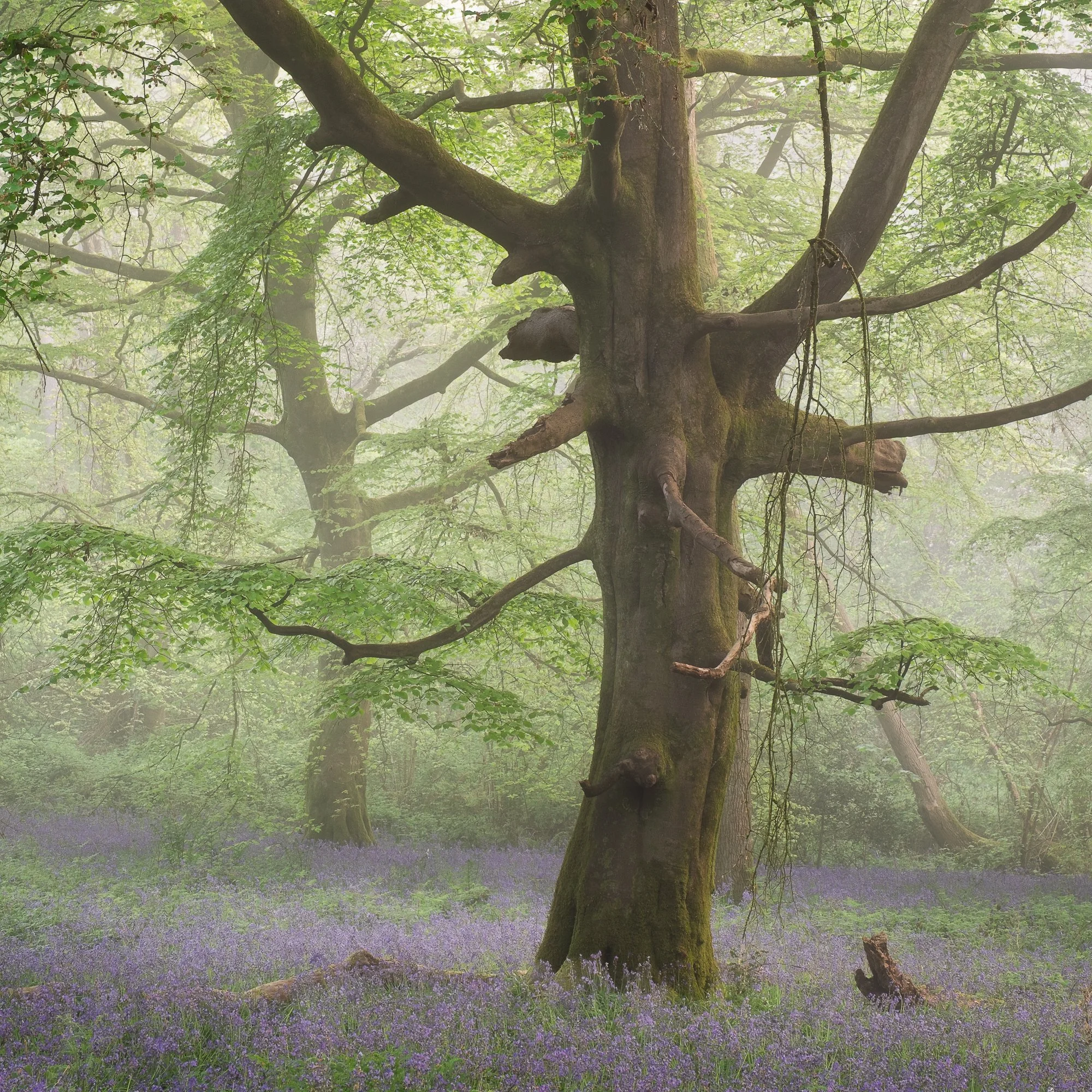
Fujifilm XT5 | XF16-55mm | 47mm | 0.6 Seconds | f/10 | ISO125
I would normally describe this as a “messy” woodland. By that, I mean there is a lot of natural fall across the ground, and the trees and shrubs tend to form a disorganised, naturally chaotic structure that requires more considered work to bring any compositional order to. I often find I prefer it this way. The clean, orderly bluebell scenes you sometimes see—tall straight beech trees and a perfect carpet of flowers—are undeniably beautiful, but I don’t find them as satisfying to photograph as discovering a strong composition within a woodland like this.
That said, the foggy conditions help enormously. They introduce natural separation and depth, simplifying some of the more distracting backgrounds and softening the overall scene, reducing strong contrast, which I tend to avoid.
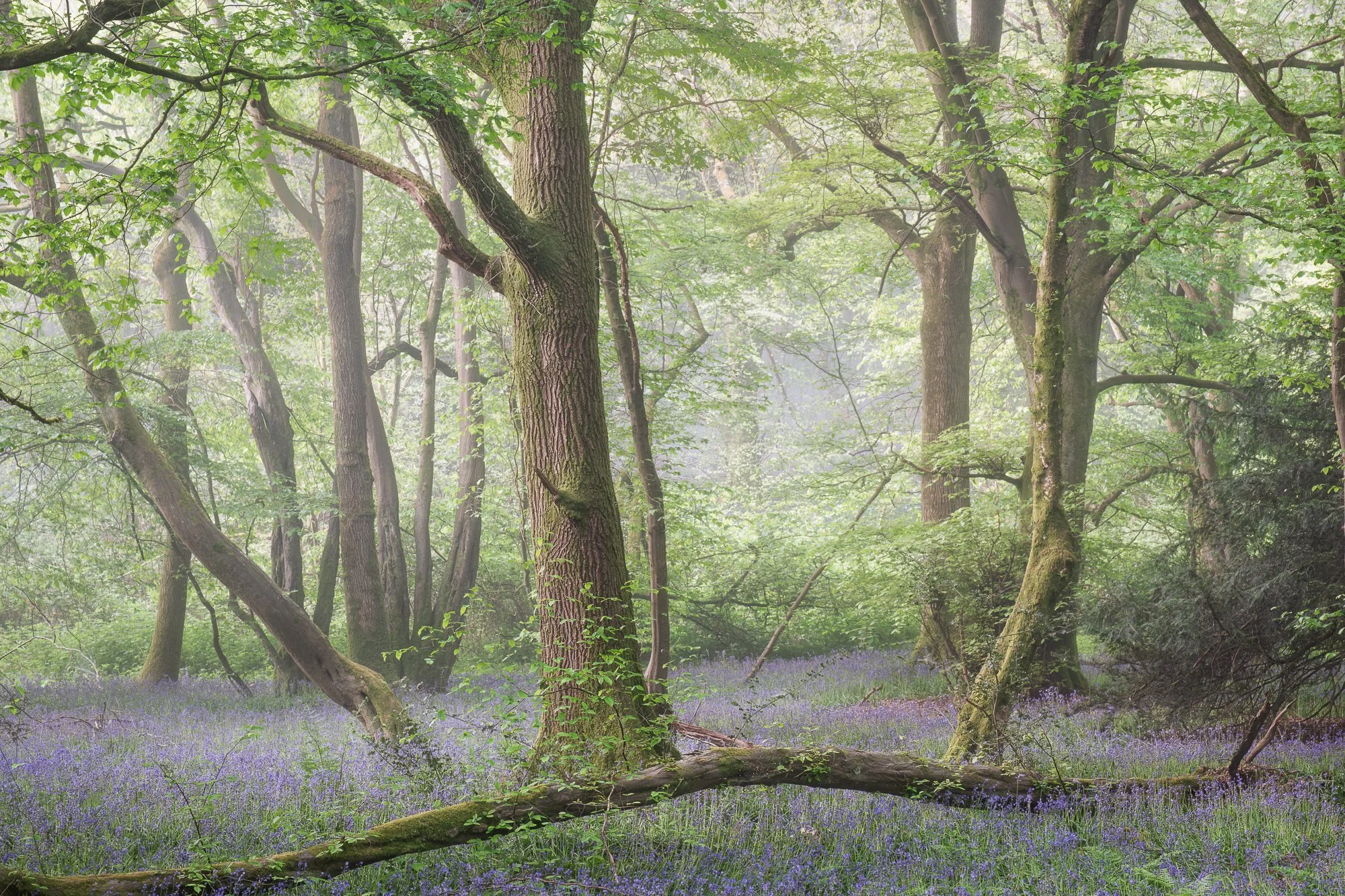
Fujifilm XT5 | XF16-55mm | 52mm | 0.6 Seconds | f/10 | ISO125
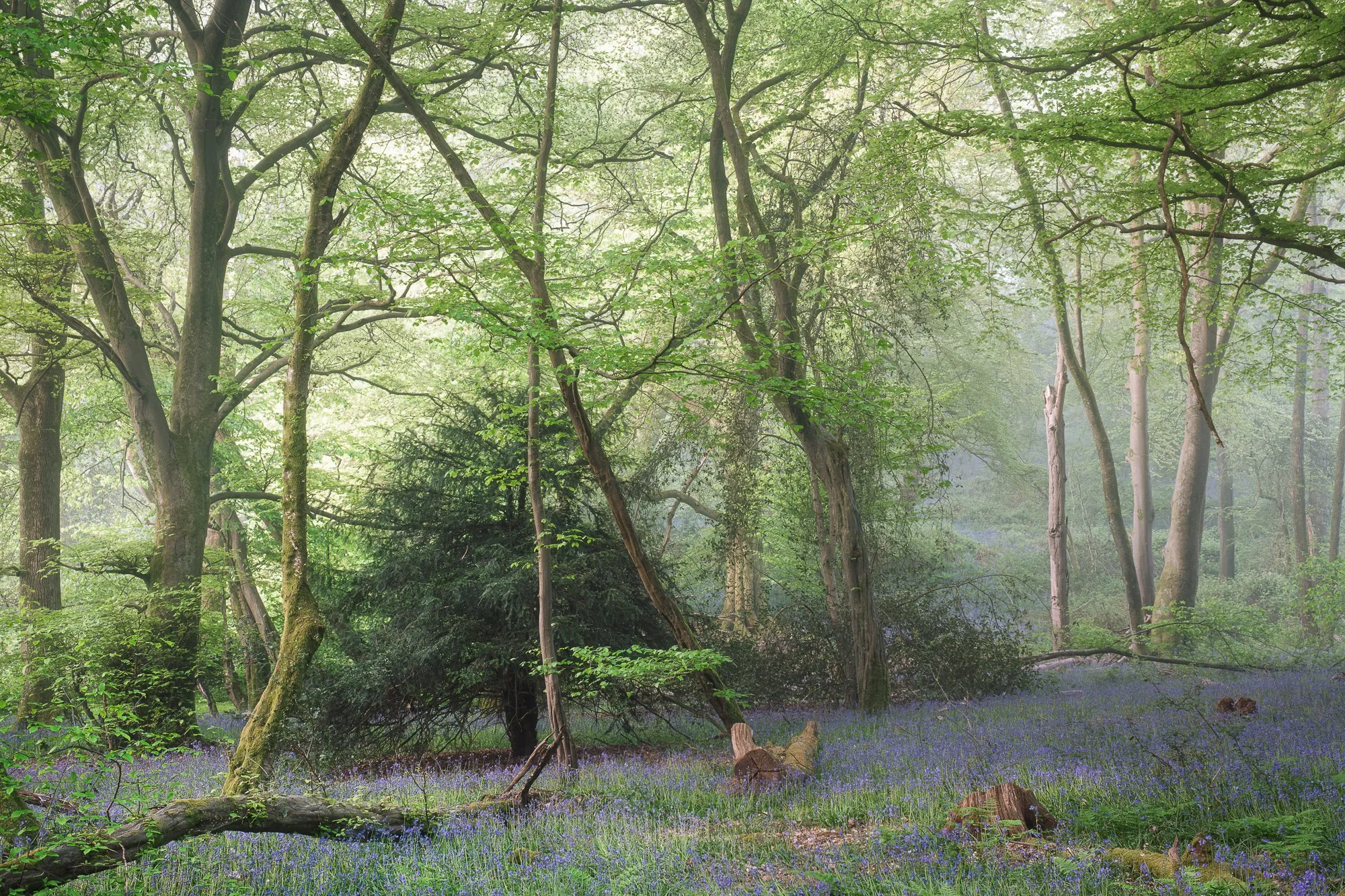
Fujifilm XT5 | XF16-55mm | 33mm | 0.8 Seconds | f/10 | ISO125
Below is a view I’ve returned to a number of times over the years in this woodland. The trees on either side frame a natural pathway into the distance, where the scene begins to catch some of the diffused light breaking through the mist. It’s a composition that continues to draw me back again and again.
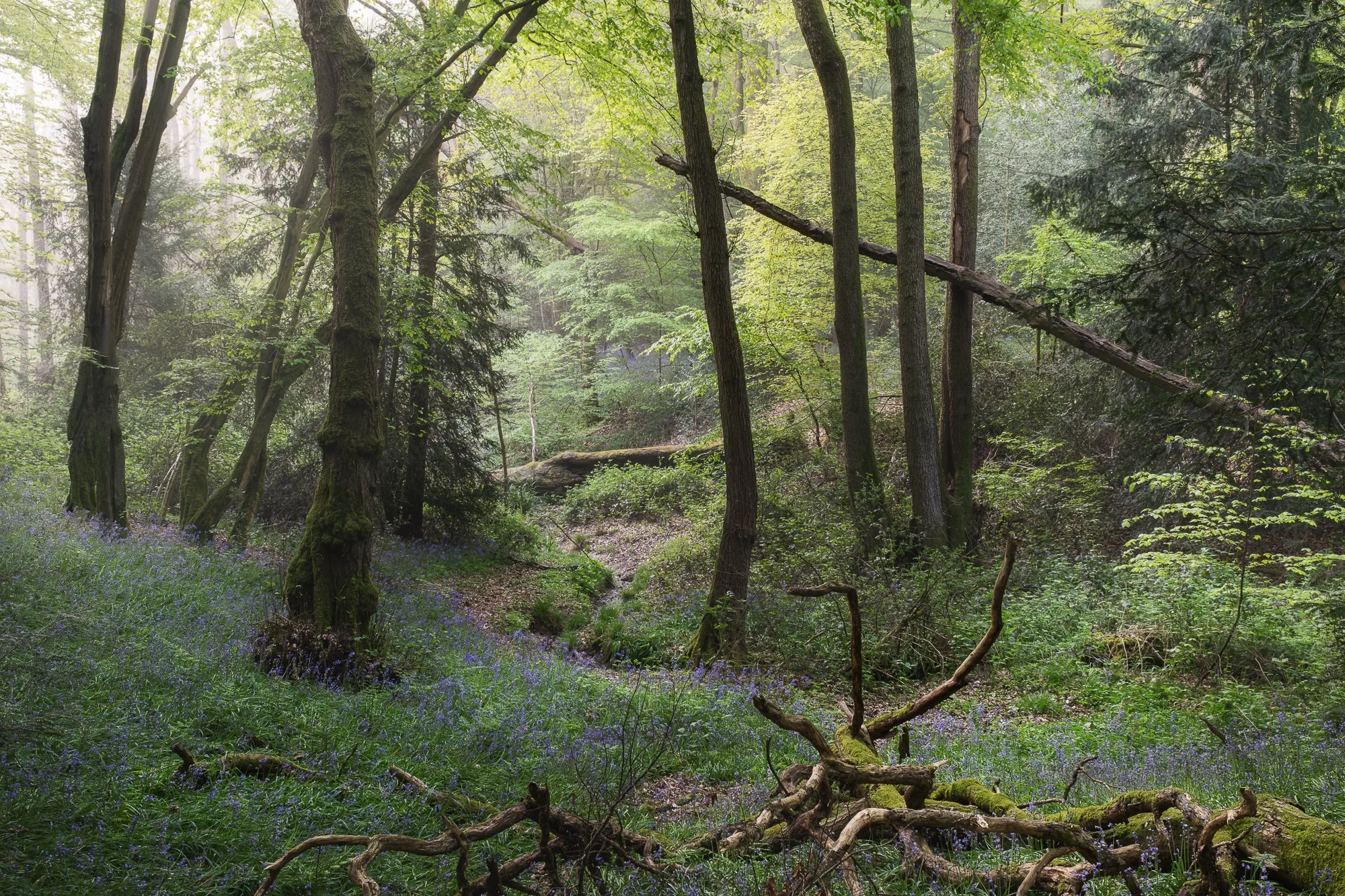
Fujifilm XT5 | XF16-55mm | 26mm | 1/2 Second | f/10 | ISO125
This is one of the images from the morning that I’m particularly drawn to. I like the arrangement of trees, with the main one in the foreground catching the diffused light breaking through the canopy, revealing its wonderful detail and character.
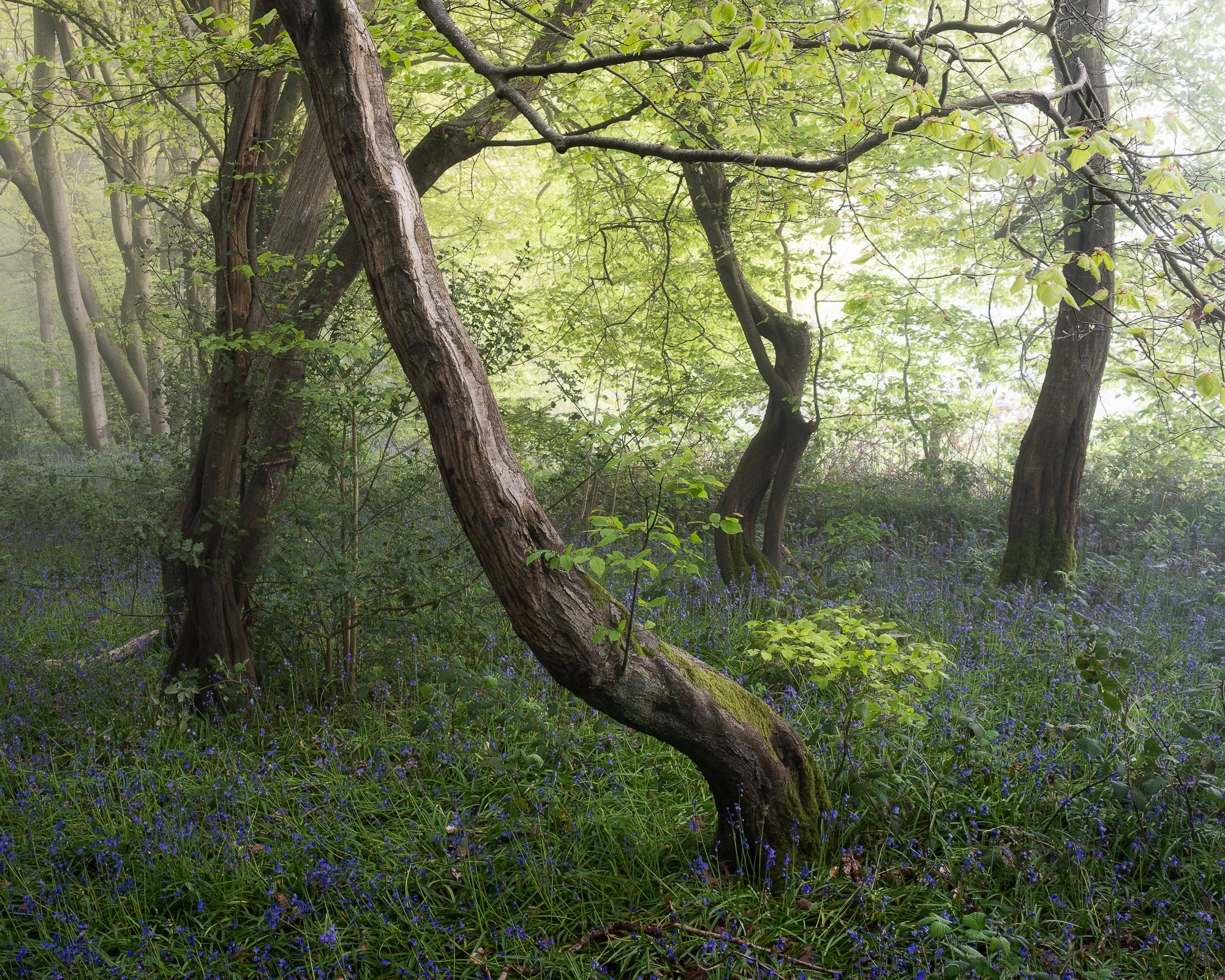
Fujifilm XT5 | XF16-55mm | 27mm | 1/4th Seconds | f/10 | ISO125
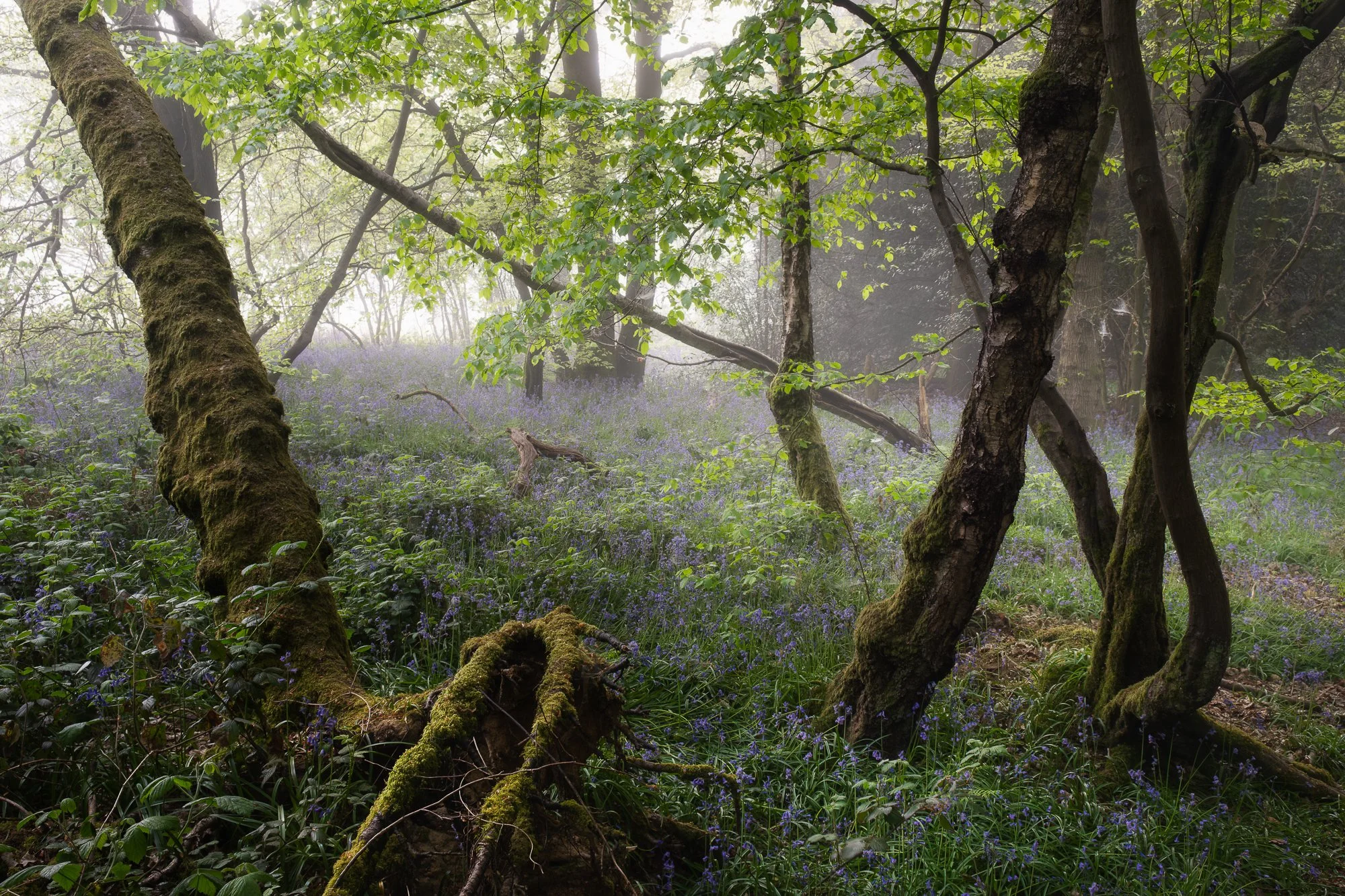
Fujifilm XT5 | XF16-55mm | 23mm | 1/8th Second | f/10 | ISO125
After a couple of hours, the fog began to clear, revealing patches of blue sky. By this point, we had moved into another part of the woodland, and with the sun now much higher, I only had time to capture a couple of images before the light broke through more strongly across the scene.
Although these lack the atmosphere and separation achieved in the earlier images, I’m still drawn to the freshness of the colours, with the new leaves and bluebells bringing a different quality to the woodland floor. As the light strengthened, the woodland began to lose some of that layered depth, and compositions that had felt effortless earlier suddenly required more thought. It became less about waiting for the scene to reveal itself, and more about deciding whether it was still worth pursuing.
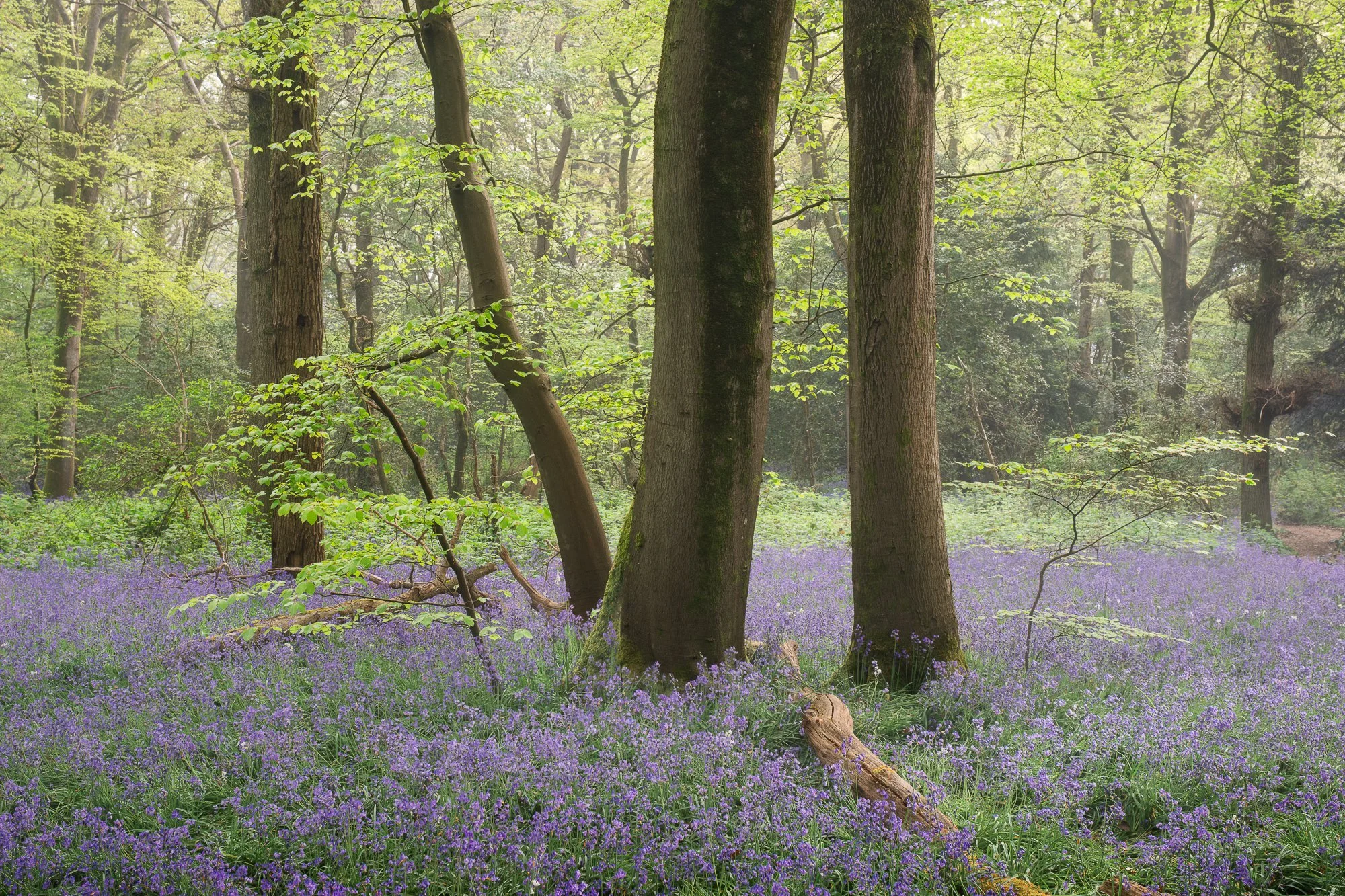
Fujifilm XT5 | XF16-55mm | 34mm | 1/5th Second | f/10 | ISO125
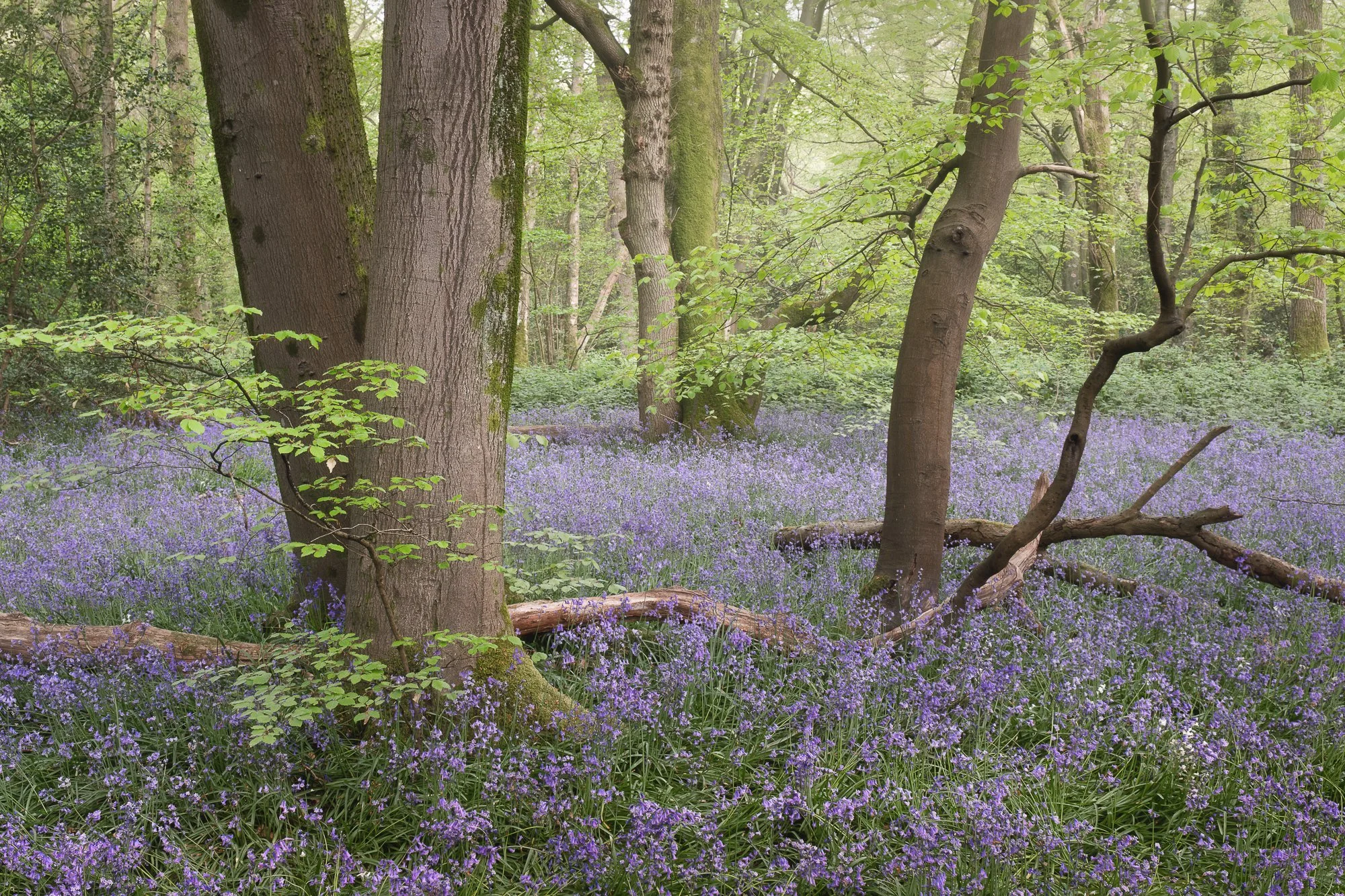
Fujifilm XT5 | XF16-55mm | 28mm | 1/5th Second | f/10 | ISO125
After the final image was taken, the cameras went back into our bags for the last time that morning, and we headed off for a coffee.
These conditions don’t come along every day, and when they do, there is often a natural pressure to make the most of them before they change. However, the advantage on this occasion was familiarity with the woodland, and having a number of established compositions already in mind meant I could work with a little more intention rather than urgency.
It was also great to meet Nigel and see him working while filming for his YouTube channel. Nigel has written an article about his springtime woodland photography in the Home Counties, available here.
Thanks for reading, and if you have any thoughts or questions, feel free to leave a comment below.
Until next time,
Trevor
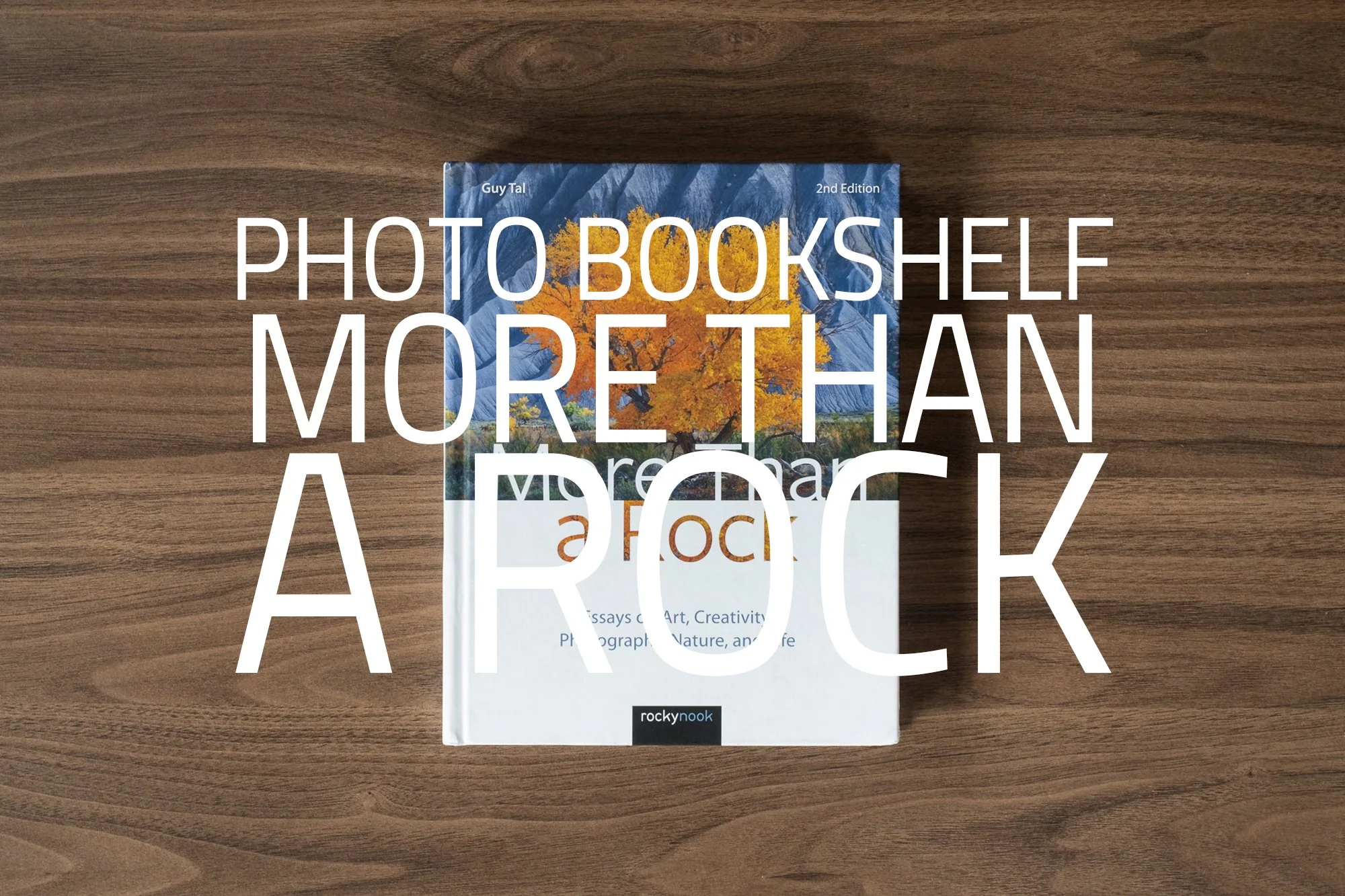
More Than A Rock by Guy Tal | My Photo Bookshelf
More Than a Rock, a collection of essays about creativity and expression.
Landscape photography books often focus on technique, locations, or the pursuit of dramatic light. More Than a Rock by Guy Tal takes a very different approach. Rather than teaching readers how to photograph landscapes, Tal explores why we photograph them in the first place. Through a series of thoughtful essays, he examines creativity, artistic intent, and the deeper meaning behind making photographs. The result is less a technical guide and more a reflective exploration of photography as a form of personal expression.
Author’s synopsis
A deeper look at the creativity, art, expression, craft, and philosophy of landscape photography. More Than a Rock, 2nd Edition is a passionate and personal book about creativity and expression. In this series of over 70 brief essays, photographer and teacher Guy Tal shares his thoughts and experiences as an artist who seeks to express more in his images than the mere appearance of the subject portrayed. Following up on the success of the first edition, this revised edition contains updated imagery, a new essay in each of the book’s four sections―Art, Craft, Experiences, and Meditations―and is presented in a beautiful hardcover format.

Tal makes an argument to consider creative landscape photography―expressing something of the photographer's conception through the use of natural aesthetics―as a form of visual art that is distinct from the mere representation of beautiful natural scenes. Tal covers topics such as the art of photography, approaches to landscape photography, and the experiences of a working photographic artist. His essays also include reflections on nature and man’s place in it, living a meaningful life, and living as an artist in today’s world.
The book is decidedly non-technical and focuses on philosophy, nature, and visual expression. It was written for those photographers with a passion and interest in creative photography. Anyone who is pursuing their work as art, is in need of inspiration, or is interested in the writings of a full-time working photographic artist will benefit from reading this book. The book is visually punctuated with Tal’s inspiring and breathtaking photography.
My thoughts about the book
“Photography is not about collecting images; it is about experiencing the world.” - Guy Tal
For those not familiar with his work, Guy Tal is a photographic artist, author, and teacher whose work blends landscape photography with thoughtful writing on creativity and artistic vision. He is based in Torrey, Utah, near the Colorado Plateau, a landscape that plays a central role in shaping both his images and his ideas.
Tal’s book, More Than a Rock, is a collection of more than 70 short essays. It occupies an important place in contemporary photography writing because it challenges the dominant culture of landscape photography, which often emphasises gear, locations, and technique. While these elements certainly have their place, Tal instead argues for introspection, personal meaning, and artistic intent.
The book begins with a foreword written by fellow landscape photographer Chuck Kimmerle, followed by Tal’s preface, in which he introduces the idea that creative photographs should not simply be “of something,” but rather “about something.” From there, the book unfolds through a carefully considered structure divided into four thematic sections—Art, Craft, Experiences, and Meditations—each exploring a different aspect of creativity and photographic practice.
The tone throughout is reflective and philosophical, yet also deeply personal, inviting readers into Tal’s own journey as an artist. Interwoven with the essays are many of his photographs, which serve not merely as illustrations but as expressions of the very philosophy he describes.
Running through all four sections are stories from Tal’s own life: leaving a conventional career, choosing a new way of living in wild and remote landscapes, and embracing the challenges and rewards of a fully creative life. These personal narratives give the book a strong sense of authenticity and lived experience, showing how a commitment to art can shape both lifestyle and perspective.
My advice to anyone about to read More Than a Rock is to pay attention to the space around you as you read. The ideas within these pages are deeply thoughtful, and taking the time to sit quietly—allowing yourself to reflect on and absorb them—greatly enhances the experience.
If you want to engage with photography on a philosophical level and enjoy reflective, deeply personal essays that may even encourage you to consider your own creative path and purpose, then I can warmly recommend this book.
Book Details
Hardcover
Size: 186mm x 237mm
Pages: 272
Availability at the time of writing: Still in print. Available from the author’s website: https://guytal.com/books/more-than-a-rock-2nd-edition and major online bookshops.
Until next time.
Trevor

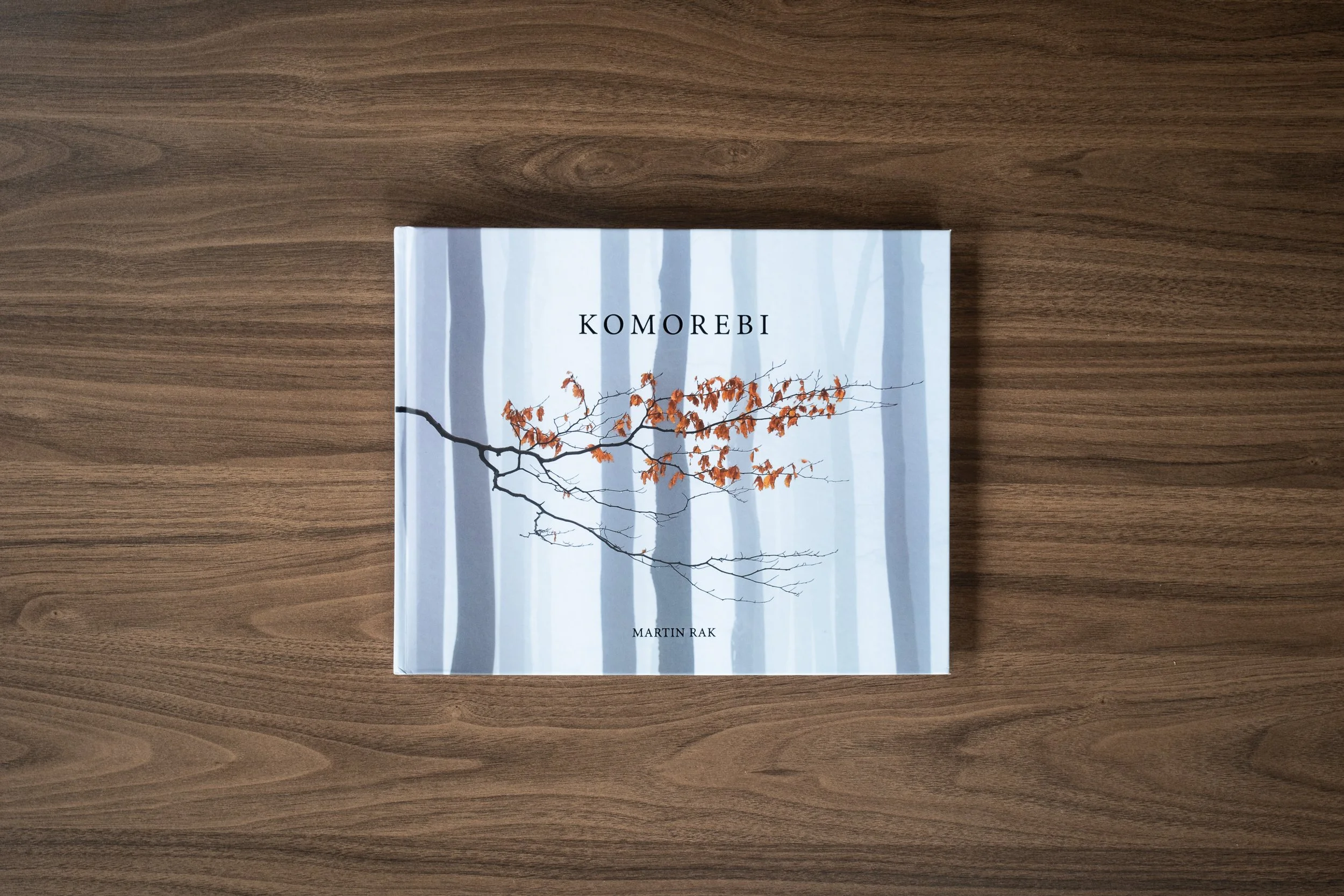
Komorebi by Martin Rak | My Photo Bookshelf
Komorebi, a book by Martin Rak, showcases stunning woodland and landscape photography, capturing light, atmosphere, and seasonal beauty.
I’m fairly sure — although not entirely certain — that I first came across Martin Rak on Instagram, and I quickly became a fan of his stunning landscape photography. Based in Prague, Martin’s work is beautifully atmospheric and often impactful, with a distinctive style that sets his images apart from his contemporaries.
As a photographer who loves to explore woodland, I am always open to adding woodland photography books to my bookshelf, and when I came across Martin’s book Komorebi, I knew this was not one to miss.
Synopsis
“Standing on a cliff above the endless sea of clouds, waiting for the first light to touch the landscape, I feel more alive than ever. In the morning silence, it is as if the whole world was holding its breath in expectation. Then, the light comes and everything bursts into life.”
KOMOREBI shows images of trees and forests that I made during the last decade. I see the collection as a tribute to trees, which have always been my favourite motive. As a name for the book, I chose a Japanese word meaning “sunlight that filters through trees”. Why? Because it pretty much sums up my passion for photographing woodland and for landscape photography as such.
My thoughts about the book
Martin Rak’s book Komorebi is published by Kozu Books, and having already bought several of their previous releases, I felt confident I wouldn’t be disappointed. Like the others I own, Komorebi is a solidly made hardback with satisfyingly thick 170gsm satin pages. It opens with a foreword by Neil Burnell, another landscape and woodland photographer whose work I admire, followed by Martin’s own introduction, in which he reflects on his love for photographing woodland — the passion that ultimately inspired this book.
The book’s title is inspired: a Japanese word composed of three parts — 木 (ko), meaning “tree”; 漏れ (more), meaning “to escape from”; and 日 (bi), meaning “sun.” Together, Komorebi loosely translates as “sunlight filtering through trees.” The title feels perfectly suited to the work, as Martin demonstrates a remarkable ability to use light as a central compositional element in his photographs.
The book’s title is inspired: a Japanese word composed of three parts — 木 (ko), meaning “tree”; 漏れ (more), meaning “to escape from”; and 日 (bi), meaning “sun.” Together, Komorebi loosely translates as “sunlight filtering through trees.” The title feels perfectly suited to the work, as Martin demonstrates a remarkable ability to use light as a central compositional element in his photographs.
The sequencing shows the care and thought that went into pairing each image. Whether aligned by colour, shape, or subject, the photographs sit comfortably side by side on each spread. Beyond the pairing, the book flows effortlessly, and one aspect that particularly impressed me is how the seasonal progression — from spring to winter, a common approach in woodland and landscape books — is rendered so subtly. There’s no abrupt change, and as I moved from one season to the next, the transition felt almost seamless. It’s a wonderful example of a perfectly sequenced body of work.
This is a well-crafted book, brimming with beautifully presented photographs. Although it’s now sold out, if you have the chance to get hold of a copy, I sincerely recommend doing so — it’s a book that rewards time spent with it.
Book Details
Hardback Foil Stamped Cover
Size: 300mm x 240mm
Pages: 88 printed on Fedrigoni Symbol Freelife Satin 170gsm
Availability at the time of writing: Sold out from the publisher’s website (https://www.kozubooks.com/). Consider buying a used copy if available.
Until next time.
Trevor
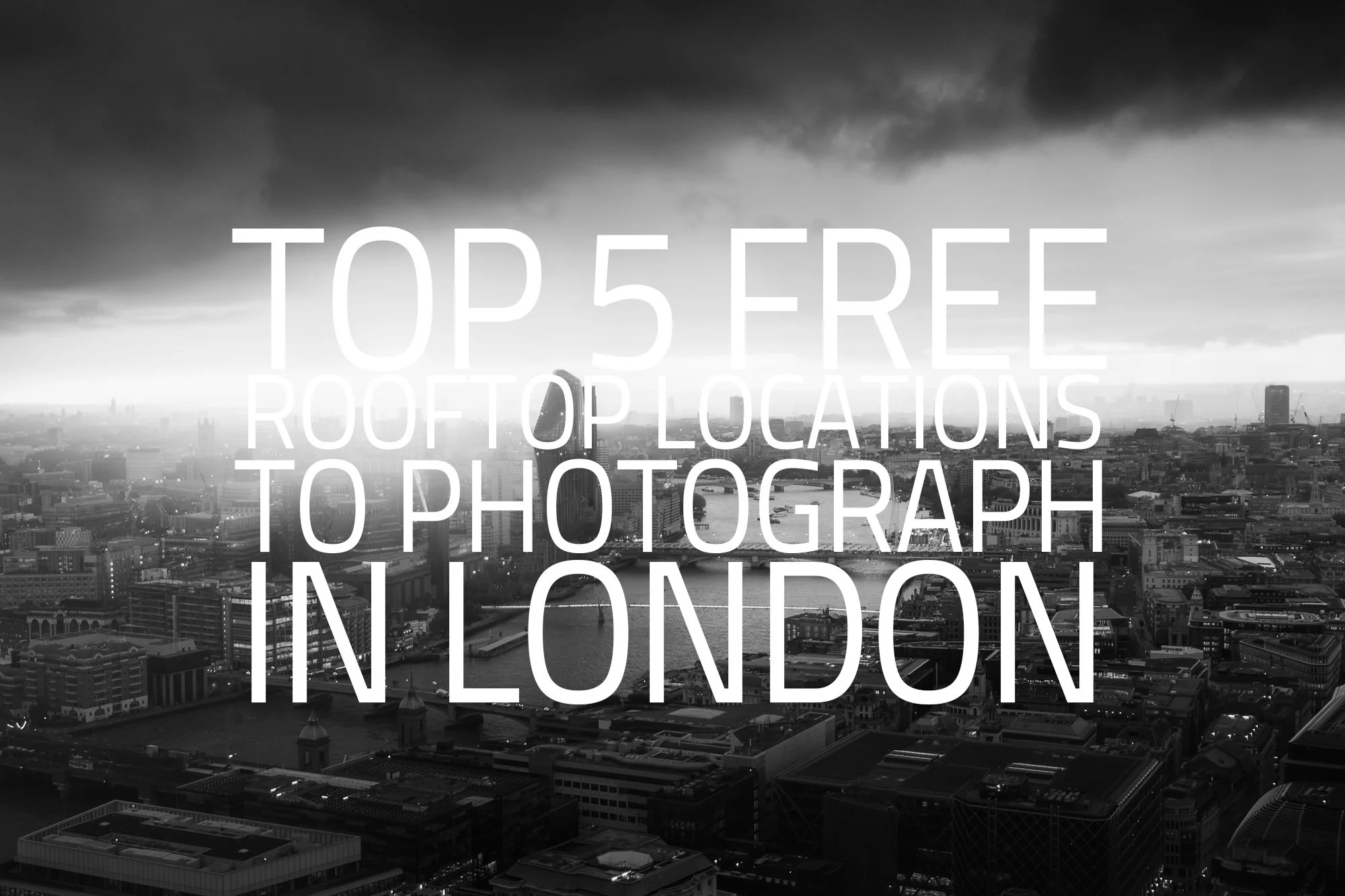
My Top 5 Free Rooftop Locations to Photograph London in 2026
My updated guide to the best free rooftop locations to photograph London in 2026
I first shared My Top 5 Free Rooftop Locations to Photograph London way back in 2020, and it’s been exciting to see how these spots continue to inspire photographers and visitors alike. Since then, the city has evolved, with new observation decks like Horizon 22 opening, offering higher, free-to-enter viewpoints and fresh perspectives on the skyline.
This updated 2026 guide is written specifically for photographers. Whether you’re capturing wide panoramas, architectural details, or dramatic sunset light, you’ll find practical advice to help plan your visit. For each rooftop, I’ve included booking requirements, tripod rules, opening times, and travel information, so you can make the most of your time above London and come away with stunning images of the city.
A quick note: the information in this guide is sourced directly from the official websites of each location and is accurate at the time of publishing. Opening hours, booking procedures, and other details may change, so I recommend checking with the venue before finalising your plans.
Timeless City Edition
For this updated guide, I’ve chosen photos from my black-and-white Timeless City project. To learn more about this project, visit the main project page here.
Quick Comparison of the Free London Rooftop Locations Featured
Before diving into the details of each location, here’s a handy comparison table showing the key information photographers need to know at a glance.
| Location | Closest Tube Station(s) | Booking Needed | Height / Floor Level | Tripods Allowed | Indoor / Outdoor |
|---|---|---|---|---|---|
| Sky Garden | Monument / Tower Hill | Yes | 34 | No | Indoor / Open-air terrace |
| The Garden at 120 | Monument / Tower Hill | No | 15 | Yes | Outdoor |
| Horizon 22 | Liverpool St / Bank / Moorgate / Monument | Yes | 58 | No | Indoor |
| Tate Modern | Southwark / Blackfriars / St Paul's | No | 10 | No | Indoor / Open-air terrace |
| One New Change | St Paul's / Bank / Mansion House | No | 6 | No | Outdoor |
#1 Sky Garden
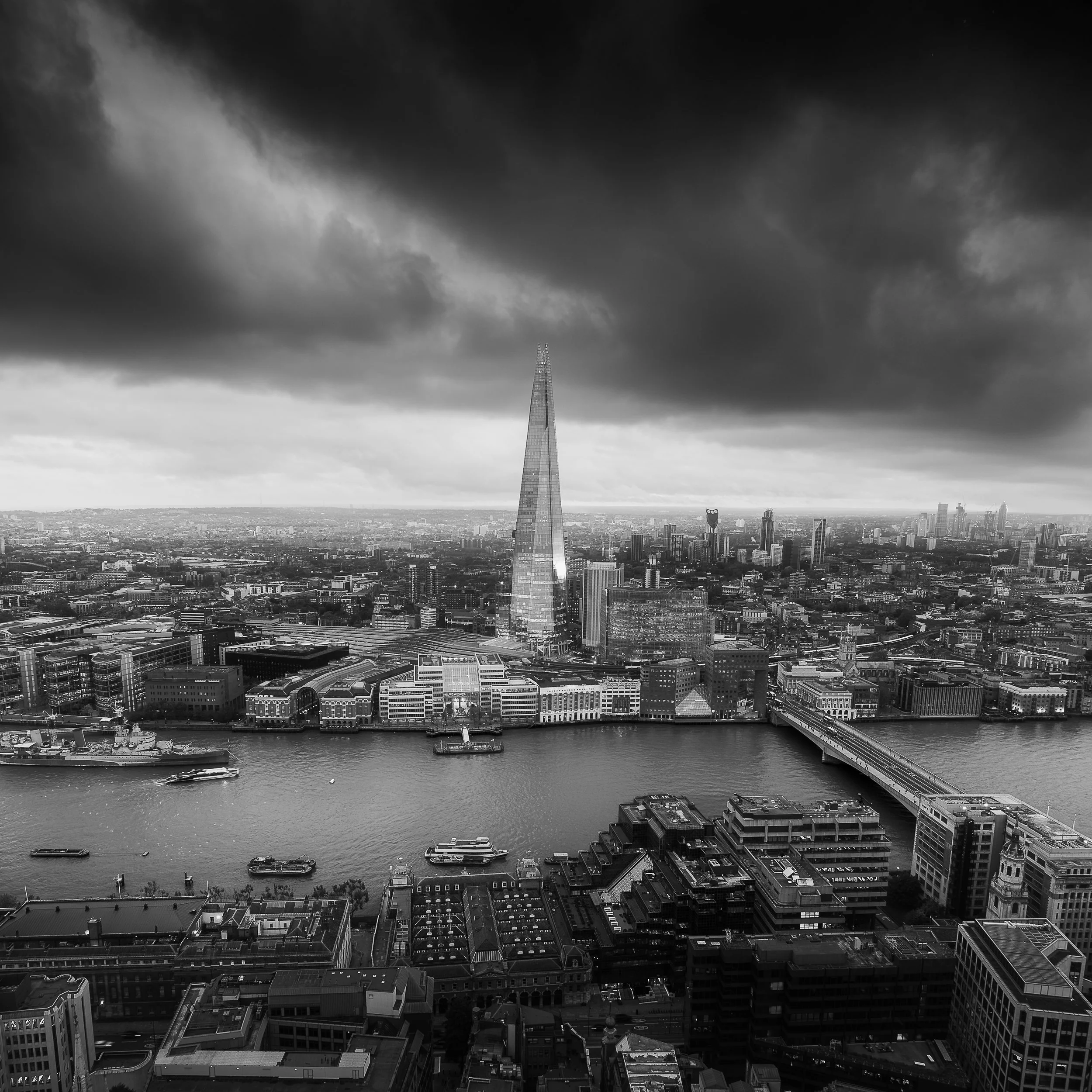
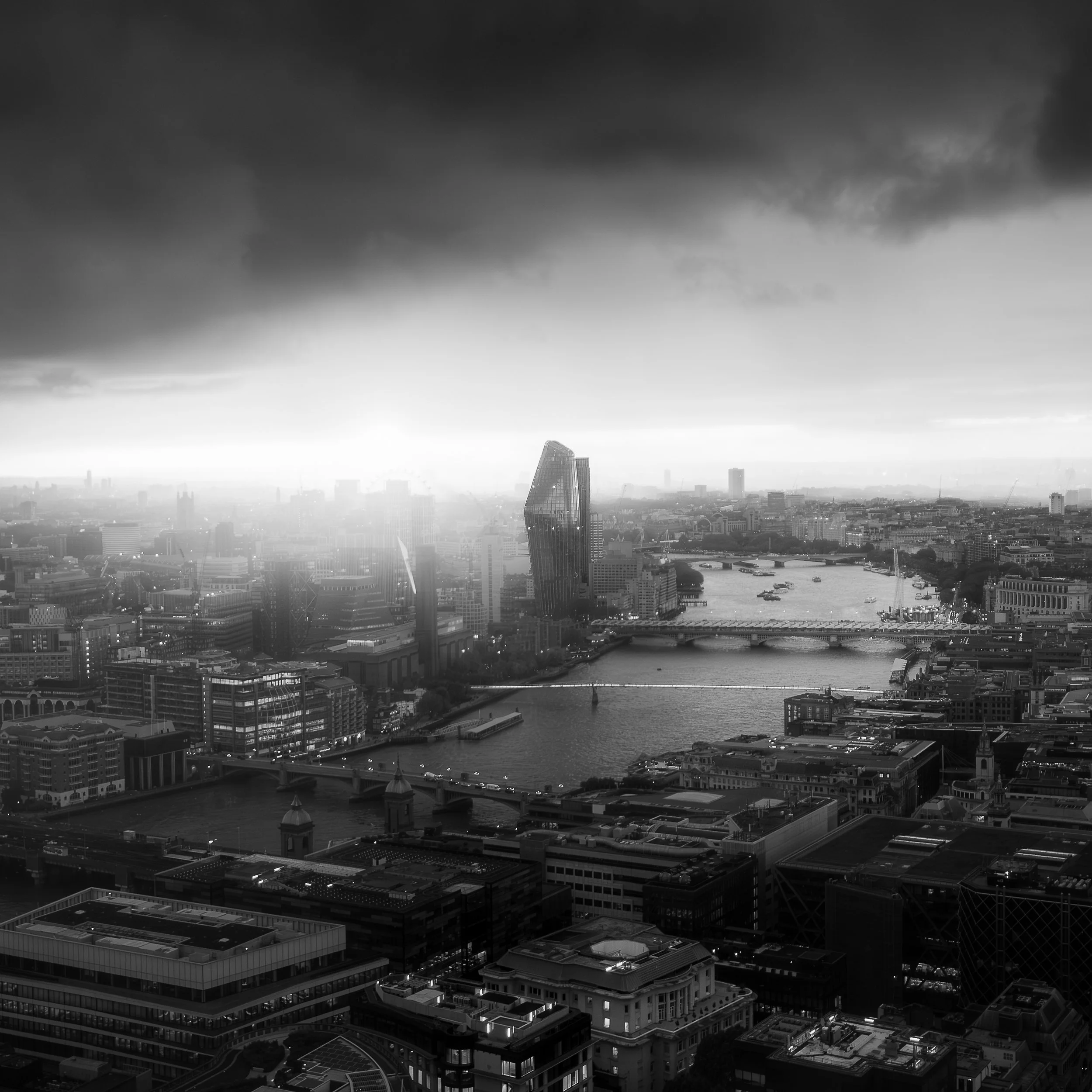
First up is the Sky Garden, one of my favourite places to photograph London’s rooftops. Perched above the city inside the iconic “Walkie Talkie” building, this viewing platform delivers one of the most complete 360° skyline views in the capital. From the 34th floor, you can enjoy a drink at one of two bars, book a sit-down meal at one of three resturants or simply book a free ticket and take in the spectacular views. This is one of the most popular elevated viewpoints in London, and for good reason, so be sure to book your tickets as soon as they are released.
Information for photographers visiting the Sky Garden
| Opening Hours |
Monday – Friday: 10am – 6pm | Saturday – Sunday & Bank Holidays: 11am – 9pm Bar and restaurant hours may differ. Check the official Sky Garden website for current details |
| Closest Tube Station(s) | Monument (Circle & District) / Tower Hill (Circle & District) |
| Google Map Location | Click here to open Google Maps |
| Booking Required? | Yes |
| Ticket Release Schedule | Free tickets are released every Monday morning (excluding bank holidays), three weeks in advance, covering the following week |
| Booking / Website Details | Click here to visit the venue's website |
| Height / Floor Level | Level 34 |
| Tripods Allowed? | No |
| Tripod Information | Tripods may be carried into Sky Garden, but their use is strictly prohibited. Security staff actively monitor the space and will intervene if tripods are set up |
| Indoor / Outdoor | Sky Garden is primarily an indoor venue, but it also features an outdoor terrace. Access can occasionally be weather-dependent, but when open, the terrace provides uninterrupted views toward the Thames and the surrounding City skyline |
| View Direction | 360-degree views across London |
#2 The Garden at 120
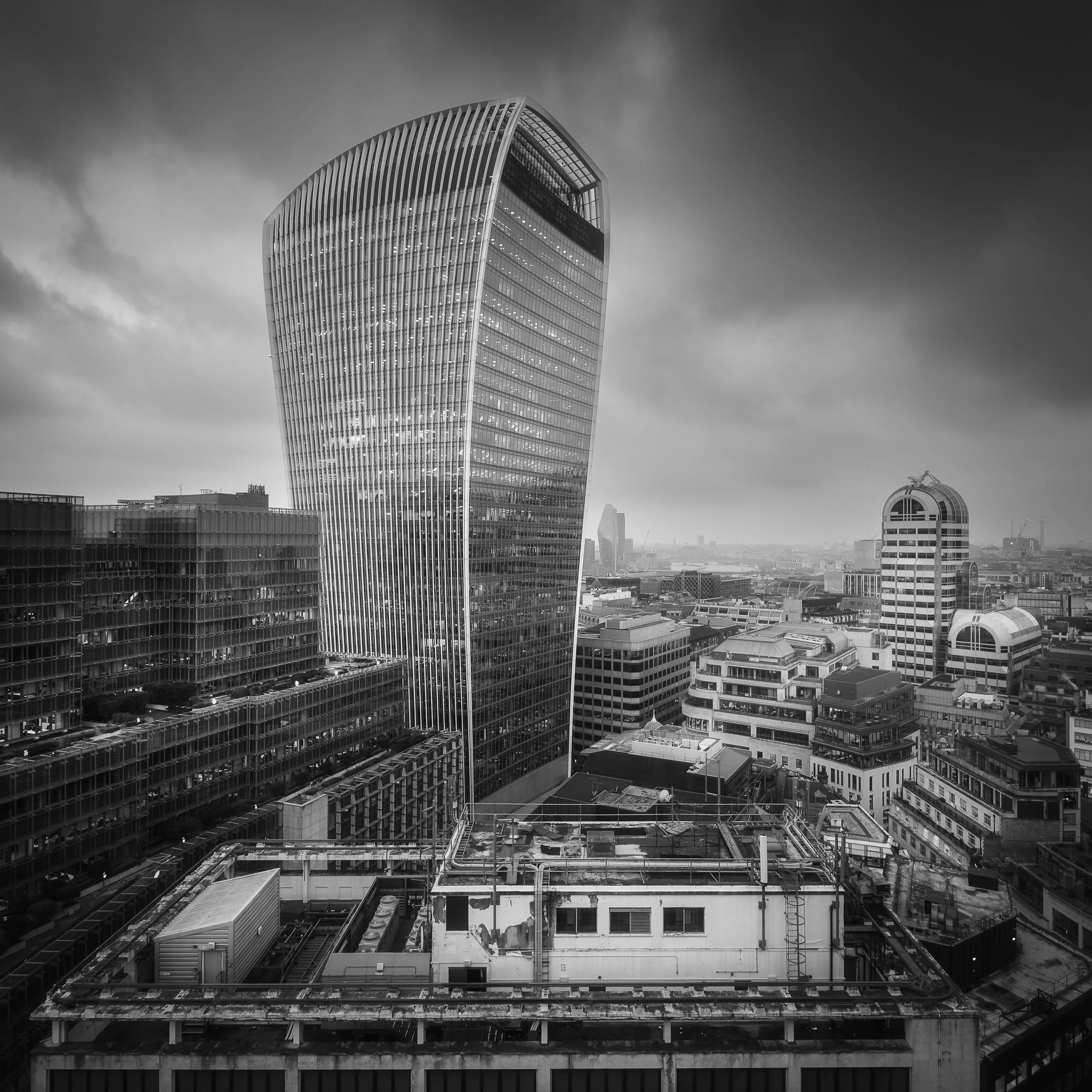
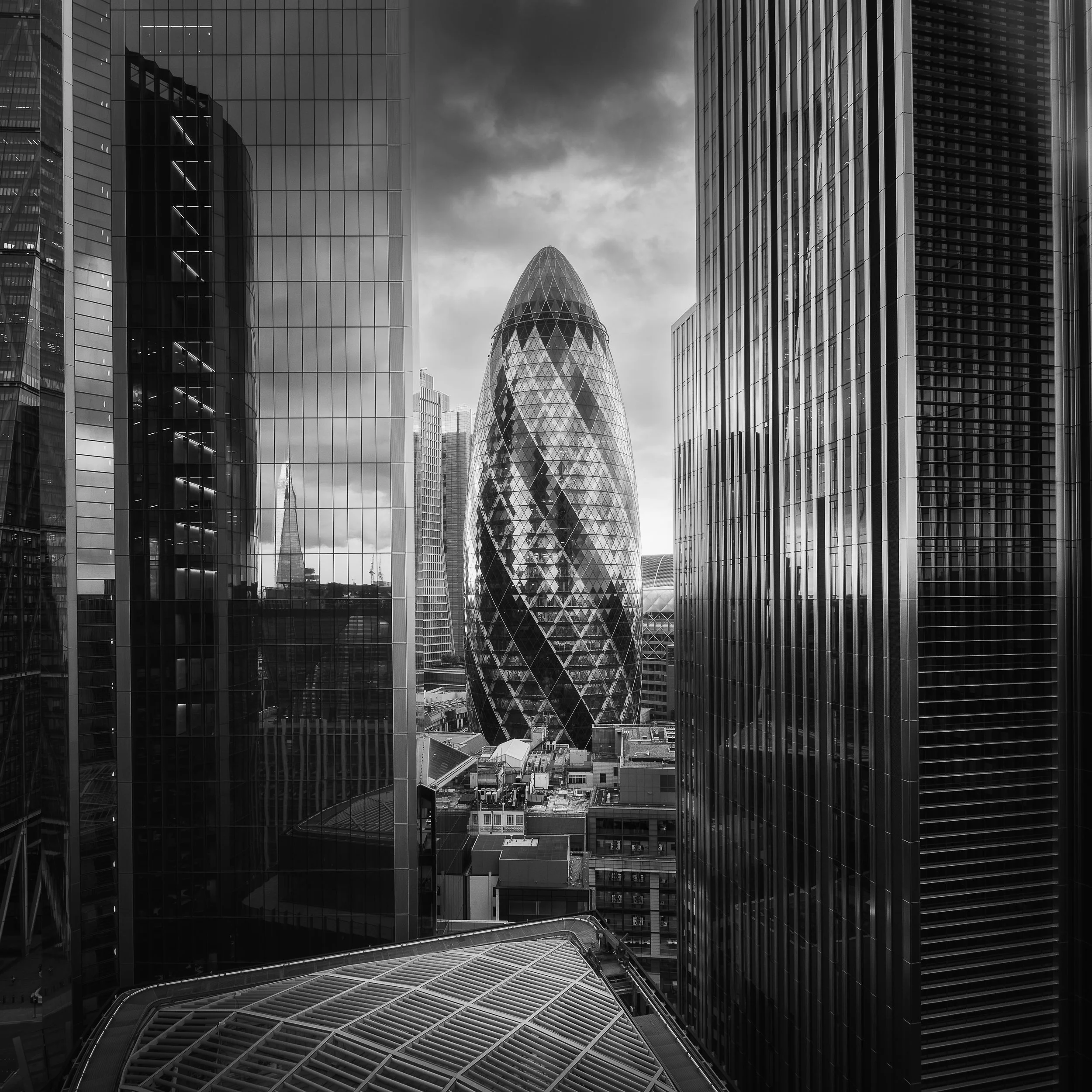
Open to the elements, The Garden at 120 may not be as high as some of the other locations on this list, but the views are no less spectacular. It offers one of the most accessible free rooftop viewpoints in London. With no advance booking needed, this location is truly fuss-free, often with short queues and plenty of space to find the best spots for photographing the surrounding buildings.
Information for photographers visiting the Garden at 120
| Opening Hours |
The Garden at 120 will be closed on Bank Holidays 1 April – 30 September: Monday to Friday 10:00 – 21:00, Saturday & Sunday 10:00 – 17:00 1 October – 31 March: Monday to Friday 10:00 – 18:30, Saturday & Sunday 10:00 – 17:00 |
| Closest Tube Station(s) | Monument (Circle & District) / Tower Hill (Circle & District) |
| Google Map Location | Click here to open Google Maps |
| Booking Required? | No |
| Booking / Website Details | Click here to visit the venue's website |
| Height / Floor Level | Level 15 |
| Tripods Allowed? | No |
| Tripod Information | Officially, tripods are not permitted at The Garden at 120. In my experience, I have used one on every visit without any problems. The staff appear relaxed about their use as long as the photographer is sensible and keeps out of the way of other visitors. Be aware that this informal approach may change at any time |
| Indoor / Outdoor | Outdoor. There is no cover, so come prepared with raincoats or umbrellas |
| View Direction | 360-degree views across London |
#3 Horizon 22
As the highest free public viewing platform in the city, Horizon 22 offers a dramatic, almost aerial perspective over London. Located on the 58th floor of 22 Bishopsgate, it presents sweeping views of some of the capital’s most iconic landmarks — from Tower Bridge and the Tower of London to St Paul’s Cathedral, and directly south toward the Walkie Talkie building and The Shard. This is a fantastic location to capture some truly unique views of London.
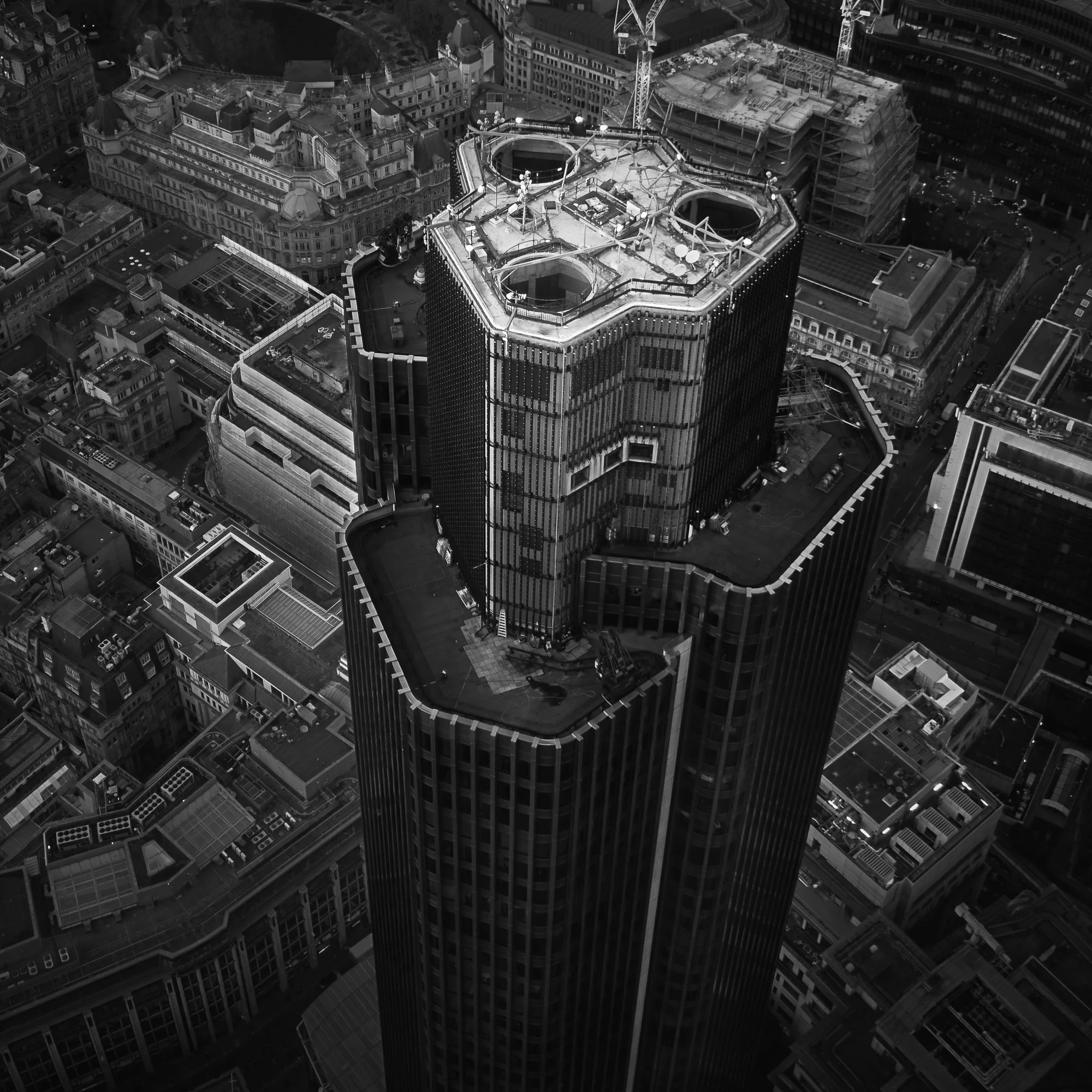
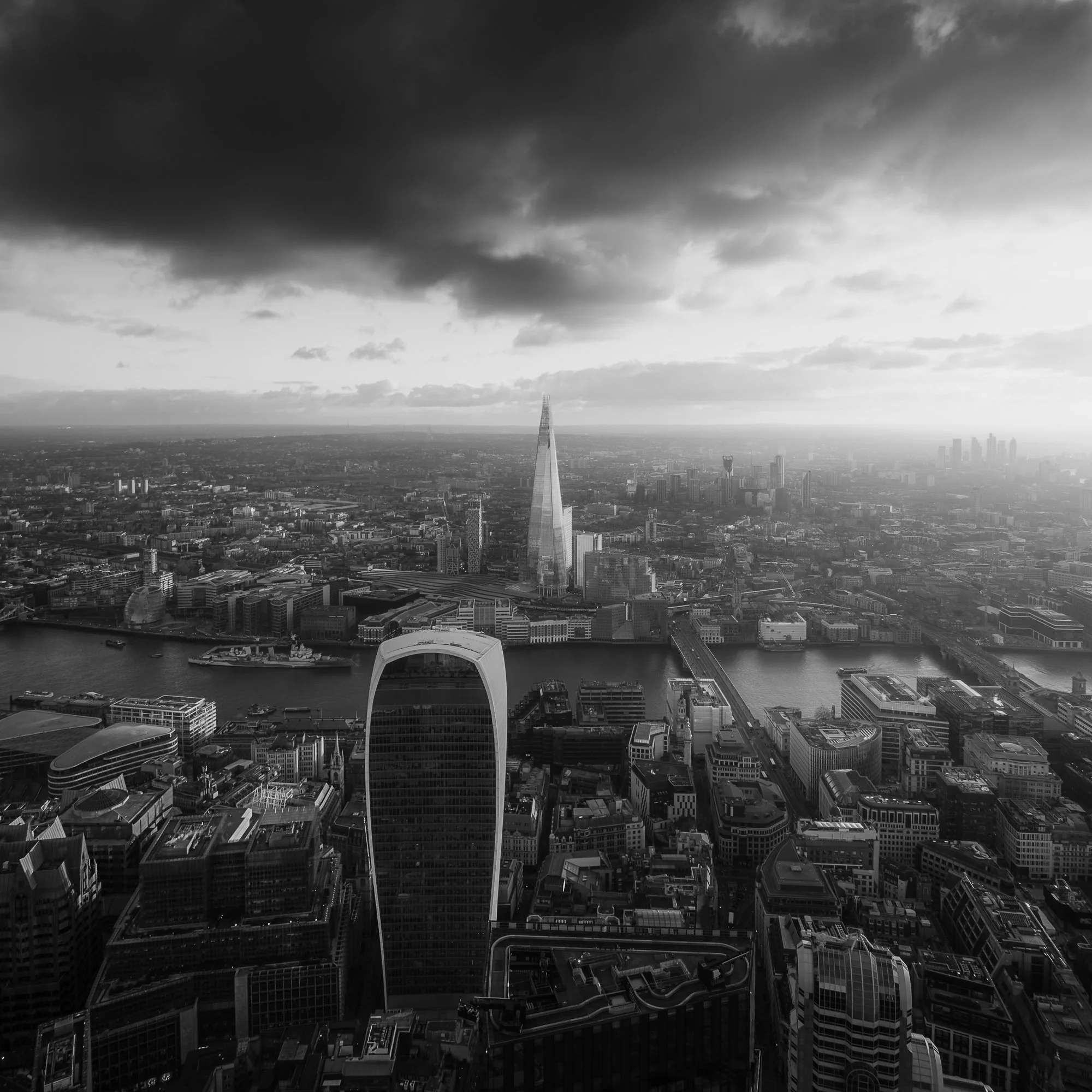
Information for photographers visiting Horizon 22
| Opening Hours | Weekdays 10:00 - 18:00 Saturdays 10:00 - 17:00 Sundays 10:00 - 16:00 |
| Closest Tube Station(s) | Monument (Circle & District) / Bank (Central, DLR, Northern, Waterloo & City) Liverpool Street (Elizabeth line, London Overground, Central, Circle, Hammersmith & City, Metropolitan) Moorgate (Circle, Hammersmith & City, Metropolitan, Northern) |
| Google Map Location | Click here to open Google Maps |
| Booking Required? | Yes |
| Ticket Release Schedule | Tickets are released every Monday for the following 14 days |
| Booking / Website Details | Click here to visit the venue's website |
| Height / Floor Level | Level 58 |
| Tripods Allowed? | No |
| Tripod Information | Tripods are not permitted on the viewing level and may be held by security upon entry. Any retained items can be collected when exiting |
| Indoor / Outdoor | Indoor |
| View Direction | Primarily south, east, and west-facing views |
#4 Tate Modern
Unlike the towering viewpoints found in the City, the viewing level at Tate Modern offers a different kind of rooftop experience. Located on the 10th floor of the Blavatnik Building, just beyond the main Turbine Hall, it provides a fantastic view of St Paul’s Cathedral and the City’s highrises across the Thames.
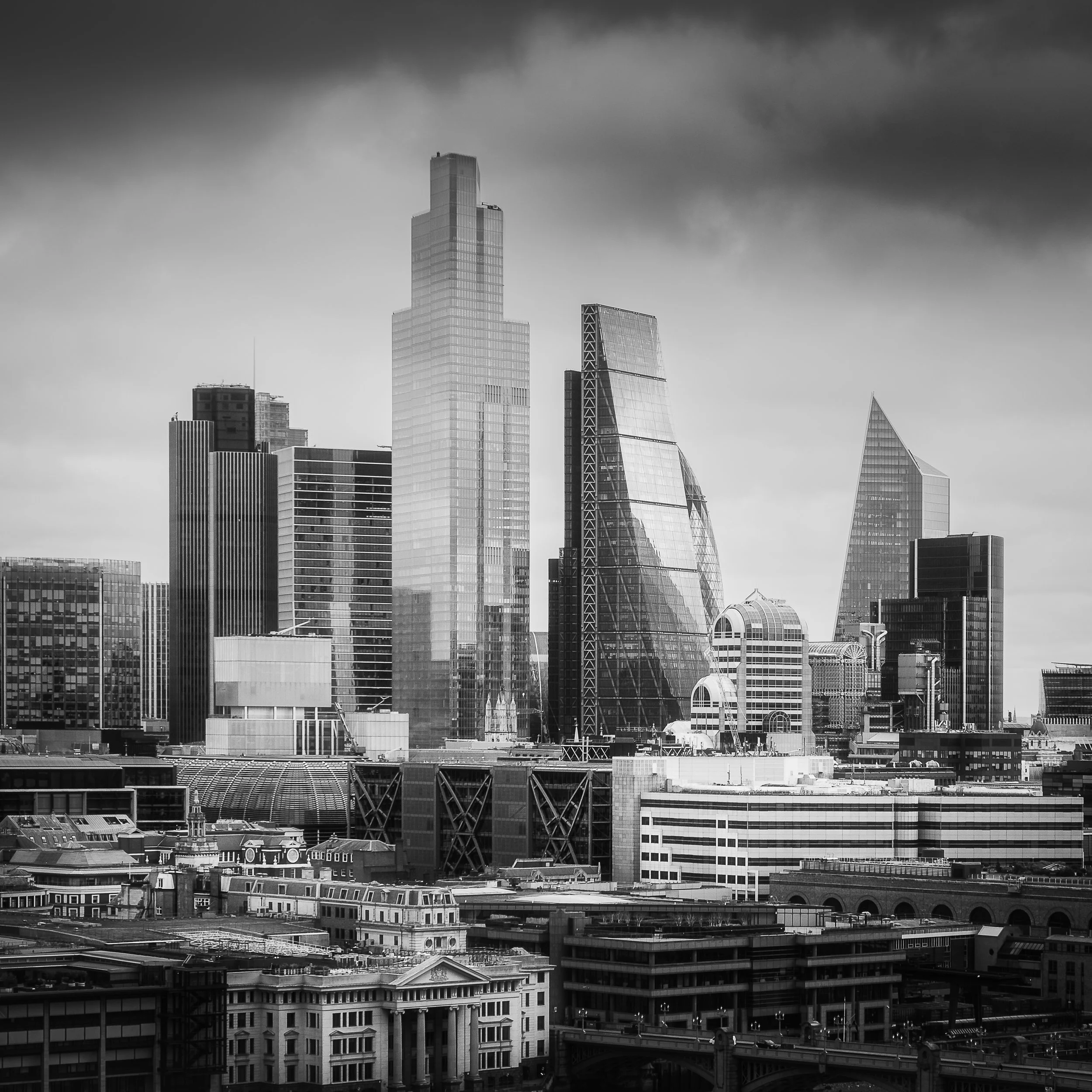
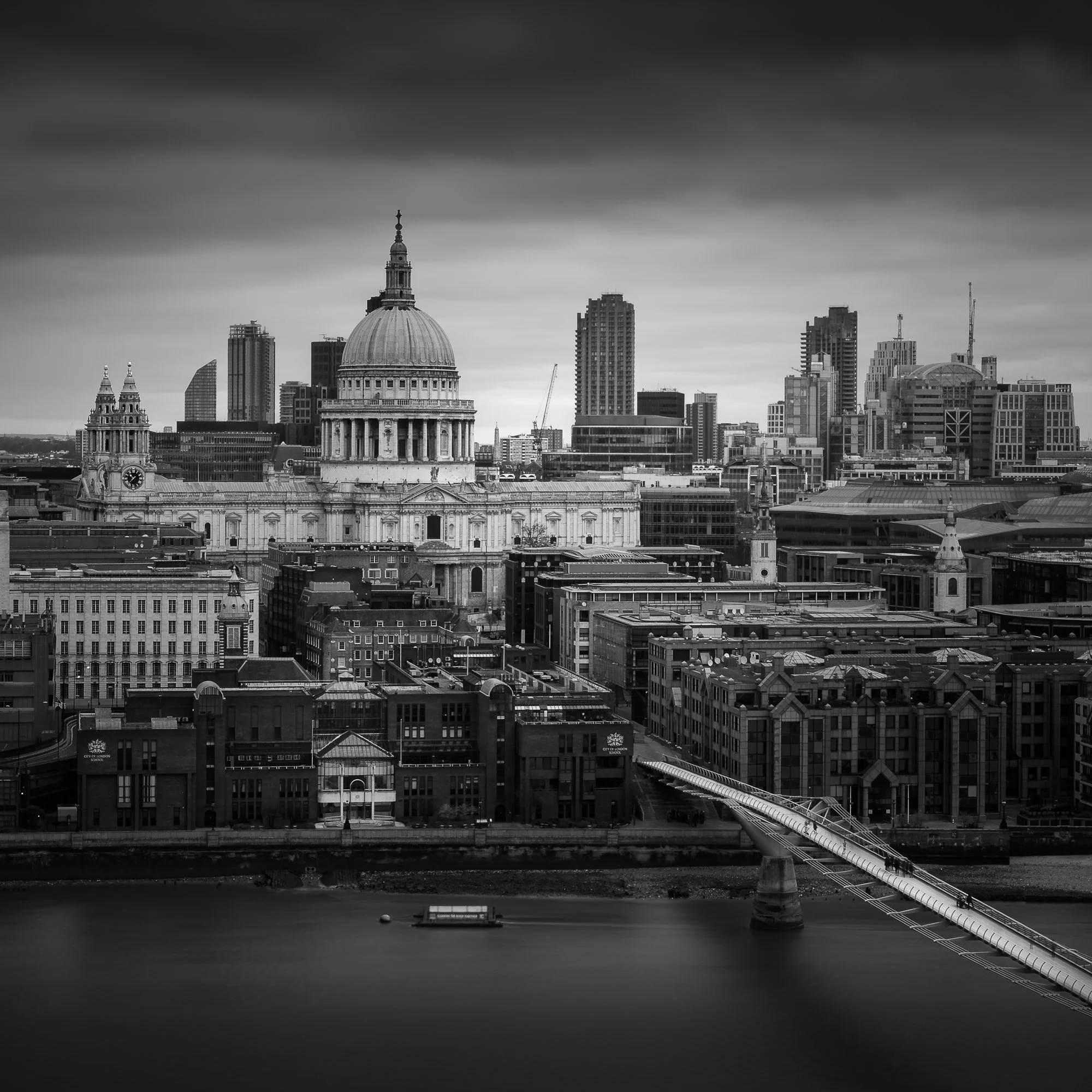
Information for photographers visiting Level 10 at Tate Modern
| Opening Hours | Sunday to Thursday 10:00 - 18:00 Friday to Saturday 10:00 - 21:00 |
| Closest Tube Station(s) | Southwark (Jubilee) / Blackfriars (Circle & District) St Paul's (Central) |
| Google Map Location | Click here to open Google Maps |
| Booking Required? | No |
| Booking / Website Details | Click here to visit the venue's website |
| Height / Floor Level | Level 10 |
| Tripods Allowed? | No |
| Tripod Information | Tripods may be brought into the venue, but security will likely remind you that they must not be used on the viewing level |
| Indoor / Outdoor | Indoor area with seating, plus a covered outdoor terrace for photography |
| View Direction | 360-degree views across London, with the most interesting perspectives to the north, east, and west |
#5 One New Change
Another of the fuss-free rooftop locations is here at One New Change. Located above a shopping centre, this six-storey-high viewing level may not be the tallest, but it offers an unrivalled close-up view of St Paul’s Cathedral. With no booking required and generally easy access, it’s a convenient spot for quick visits or capturing the changing light at sunset. The open-air terrace also means you can shoot freely without glass or barriers in the way, making it a surprisingly versatile location despite its modest height.
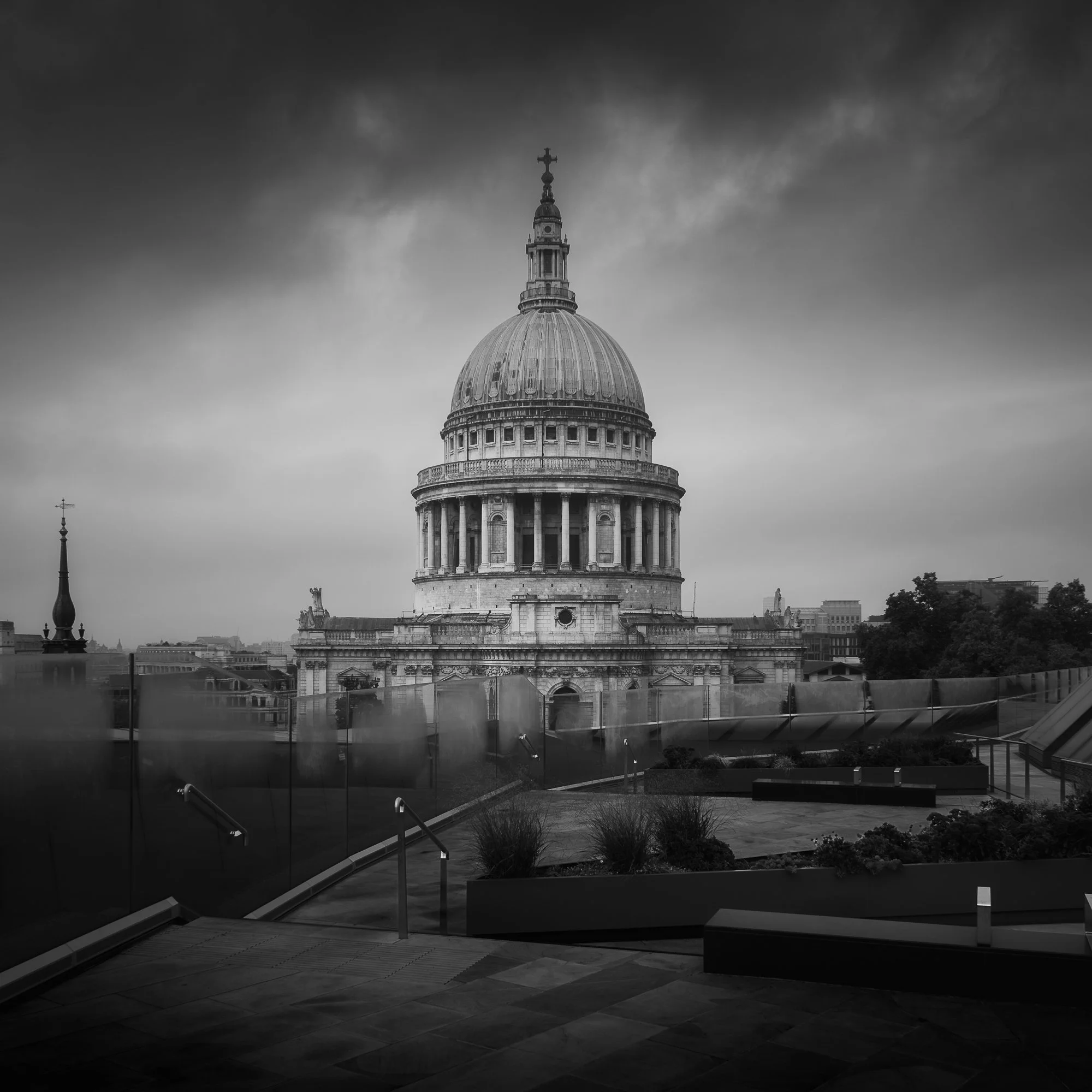
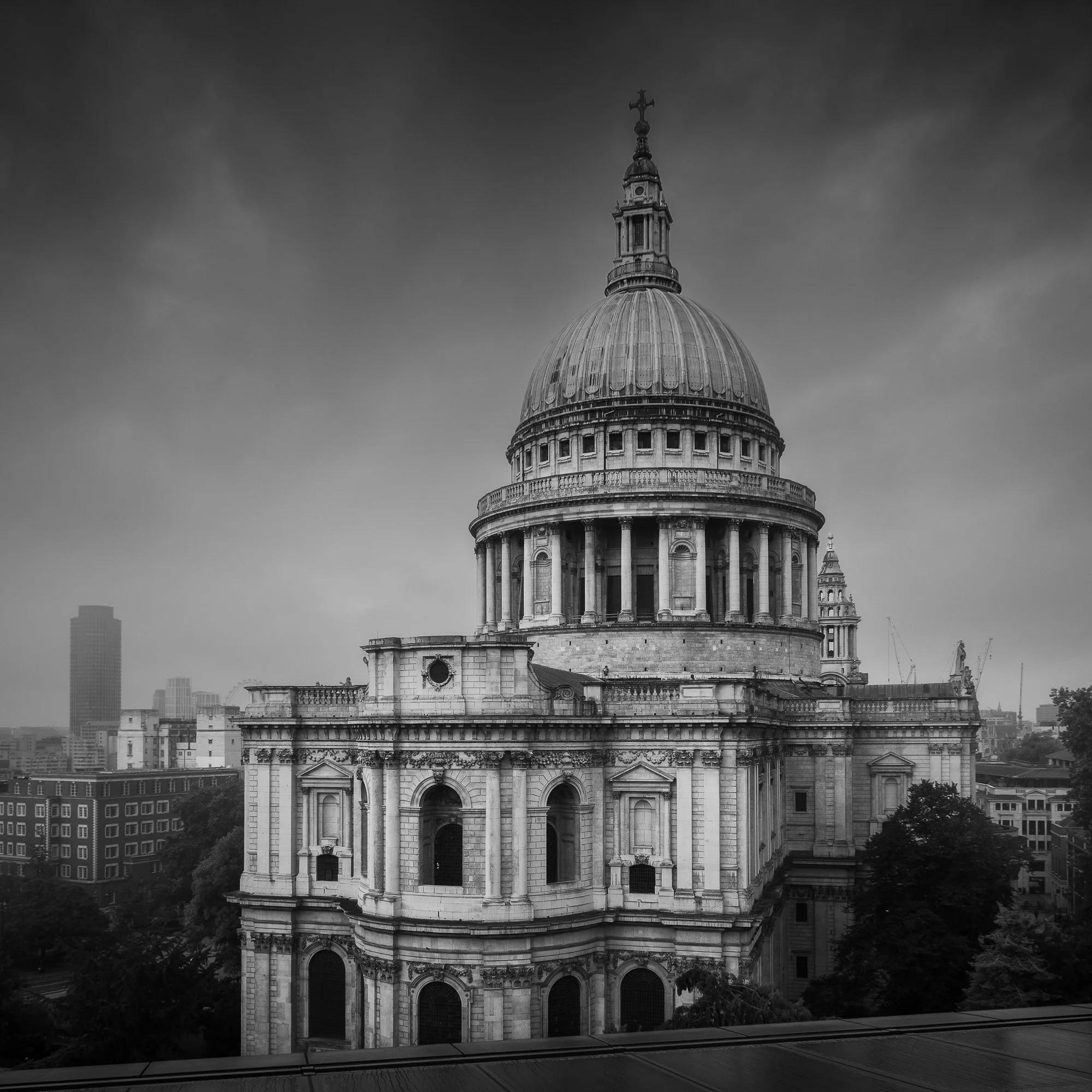
Information for photographers visiting One New Change
| Opening Hours | Monday to Sunday 06:00 - 00:00 |
| Closest Tube Station(s) | St Paul's (Central) / Mansion House (Circle & District) |
| Google Map Location | Click here to open Google Maps |
| Booking Required? | No |
| Booking / Website Details | Click here to visit the venue's website |
| Height / Floor Level | Level 6 |
| Tripods Allowed? | No |
| Tripod Information | There is no formal security scanning process, so tripods can be carried up to the terrace, but their use is not permitted during your visit |
| Indoor / Outdoor | Outdoor |
| View Direction | The main view looks west towards St Paul’s Cathedral, with partially restricted views to the south |
A Notable mention - The Lookout at 8 Bishopsgate
While not included in my top five, the lookout at 8 Bishopsgate is still worth a mention for photographers looking for a high vantage point in the City. Its views are very similar to Horizon 22, offering sweeping panoramas across the skyline, but the southern view toward The Shard and the Walkie Talkie building is partially blocked by One Leadenhall. For me, that small difference makes Horizon 22 the slightly better option, offering cleaner, more expansive compositions, though 8 Bishopsgate remains a solid alternative if you’re exploring the City rooftops.
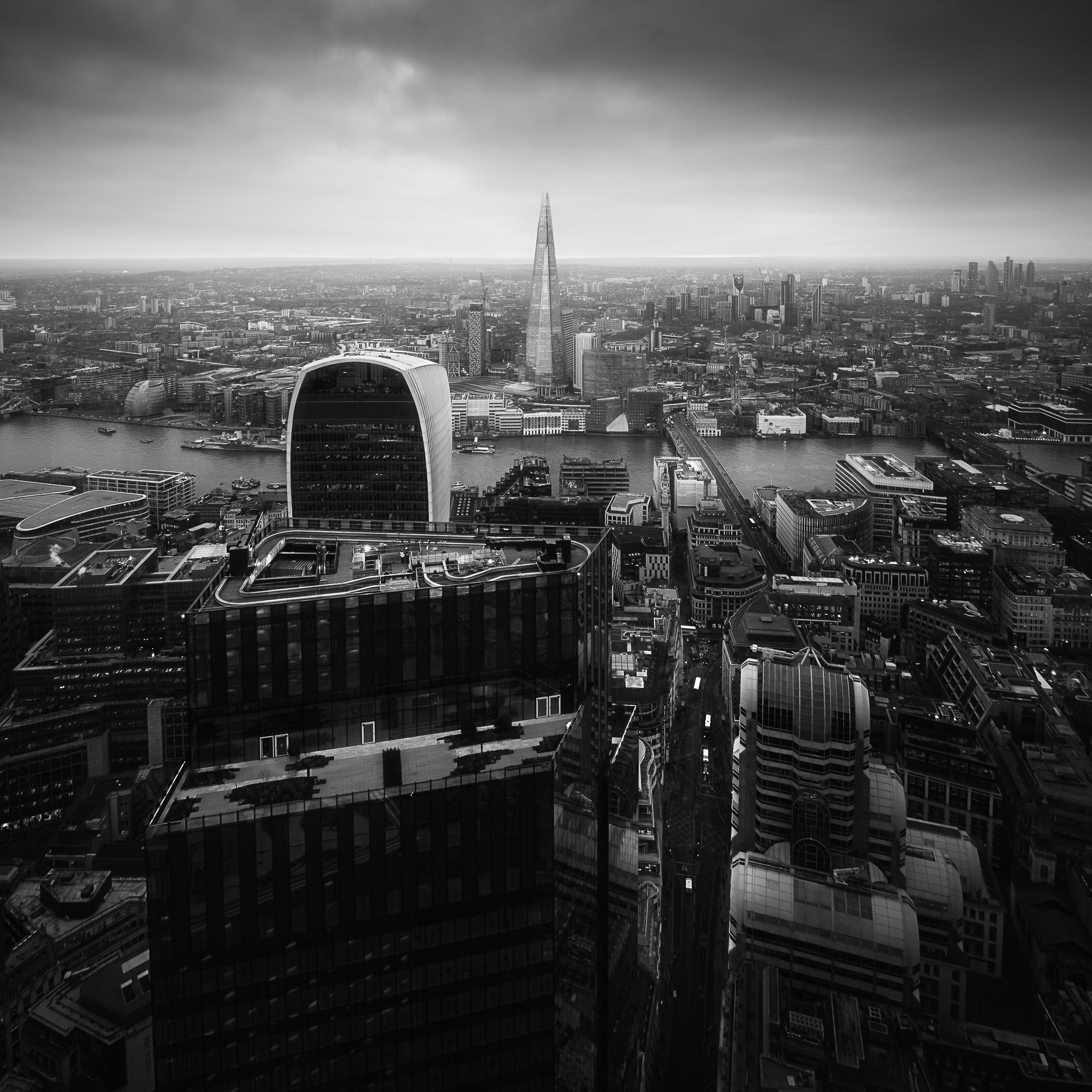
Information for photographers visiting The Lookout at 8 Bishopsgate
| Opening Hours | Mondays and Fridays 12:00 - 21:00 Tuesdays to Thursdays 10:30 - 17:30 Saturdays 11:00 - 18:00 Sundays 10:00 - 17:00 |
| Closest Tube Station(s) | Monument (Circle & District) / Bank (Central, DLR, Northern, Waterloo & City) Liverpool Street (Elizabeth line, London Overground, Central, Circle, Hammersmith & City, Metropolitan) Moorgate (Circle, Hammersmith & City, Metropolitan, Northern) |
| Google Map Location | Click here to open Google Maps |
| Booking Required? | Yes |
| Ticket Release Schedule | Tickets can be booked up to two weeks in advance and are released every other Monday |
| Booking / Website Details | Click here to visit the venue's website |
| Height / Floor Level | Level 50 |
| Tripods Allowed? | No |
| Indoor / Outdoor | Indoor |
| View Direction | The lookout offers views primarily to the south and west of London |
Essential Gear for London Rooftop Photography
Apart from a camera and lens, no specialist gear is needed when photographing London’s rooftops, but for both serious photographers and hobbyists, the following items are worth considering:
CPL (Circular Polariser) filter: Useful to help reduce the reflections when photographing through glass and cutting through some of the haze often experienced when high up above the city. CPLs reduce light by around one stop, so keep an eye on your shutter speed.
Lens hood: I find lens hoods the most effective way to reduce reflections when photographing through glass. I have a slightly rigid silicon hood that fits over my lens. Most venues are not happy for items to be placed against the glass, so this style of lens hood works best in those situations.
Telephoto Lens: A good zoom lens can help to isolate those far-away compositions across the city, and is a worthwhile addition to your camera bag.
Lens cloths: Useful to clean your lens, but also useful to wipe away fingerprints and grime from the glass, helping to keep your photos as clean as possible.
5 Tips for Shooting London Rooftops Through Glass
1. Use a lens hood and/or a circular polariser filter to avoid reflections
As mentioned in the gear checklist above, a lens hood and CPL are the most effective tools for reducing reflections in glass. If you don’t have either, press the end of your lens directly against the glass to block stray reflections.
2. Look for spots without indoor lights
Rooftop locations cater mostly to casual visitors, so interior lighting can often create glare and reflections. Seek areas where indoor lights don’t interfere too much with your shot.
3. Use a wide aperture (but not too wide)
A slightly wider aperture helps reduce depth of field, keeping any dirt or smudges on the glass out of focus. However, avoid opening the aperture too much, as many lenses lose sharpness around the edges when fully wide open.
4. Clean the glass if allowed
If the location permits, give the glass a quick clean. It’s an easy way to improve image quality, but be discreet — some venues prefer that visitors don’t touch the glass.
5. Turn off your flash
This may seem obvious, but many photographers forget to switch off their camera flash when shooting through glass. Even a small flash can create harsh glare and ruin a shot.
Bonus Tip: Shoot in RAW
Not essential, but very helpful. Many rooftop glass panels have a slight tint, often greenish, and shooting in RAW gives you maximum flexibility to correct white balance and remove any unwanted colour casts in post-processing.
There you have it — my top five free rooftop locations to photograph London in 2026. I hope you found this guide useful! If you have any questions, comments, or suggestions that other readers might find helpful, please feel free to leave a message in the comments.
Until next time.
Trevor

Natural Landscape: Volume One | My Photo Bookshelf
The first edition of the Natural Landscape Photography Awards photobook presenting a curated collection of authentic landscape photography.
I’ve lost count of how many competition-based photo book series there are, and being someone whose mind is wired in such a way that I can’t buy just one book in a series, for the sake of my wallet — and the space on my bookshelf — I’ve typically chosen not to buy them… well, until now.
For the last few years, I’ve been watching the Natural Landscape Photography Awards from the sidelines. I’ve never been tempted to enter, but I have admired the way the competition is run, its underlying ethos and, equally important, the calibre of work from the photographers who take part. Then, some time in 2025, after the fourth competition closed and the book was released, I decided enough was enough. I bought the first four editions, with the fifth soon to be ordered.
Having now finished the first edition, and before I get started on the second, it felt like the right time to add it to my photo bookshelf.
Synopsis
To commemorate the success of our first year running the awards, we have created what we think is one of the finest compilations of landscape photography ever printed (we’re biased, sorry). This 220 page, large-format fine art book contains the work of over 120 artists. We have also commissioned four essays which are included in the book, discussing aspects of the eyewitness tradition of photography, the idea of representing the world around us with truth and honesty.
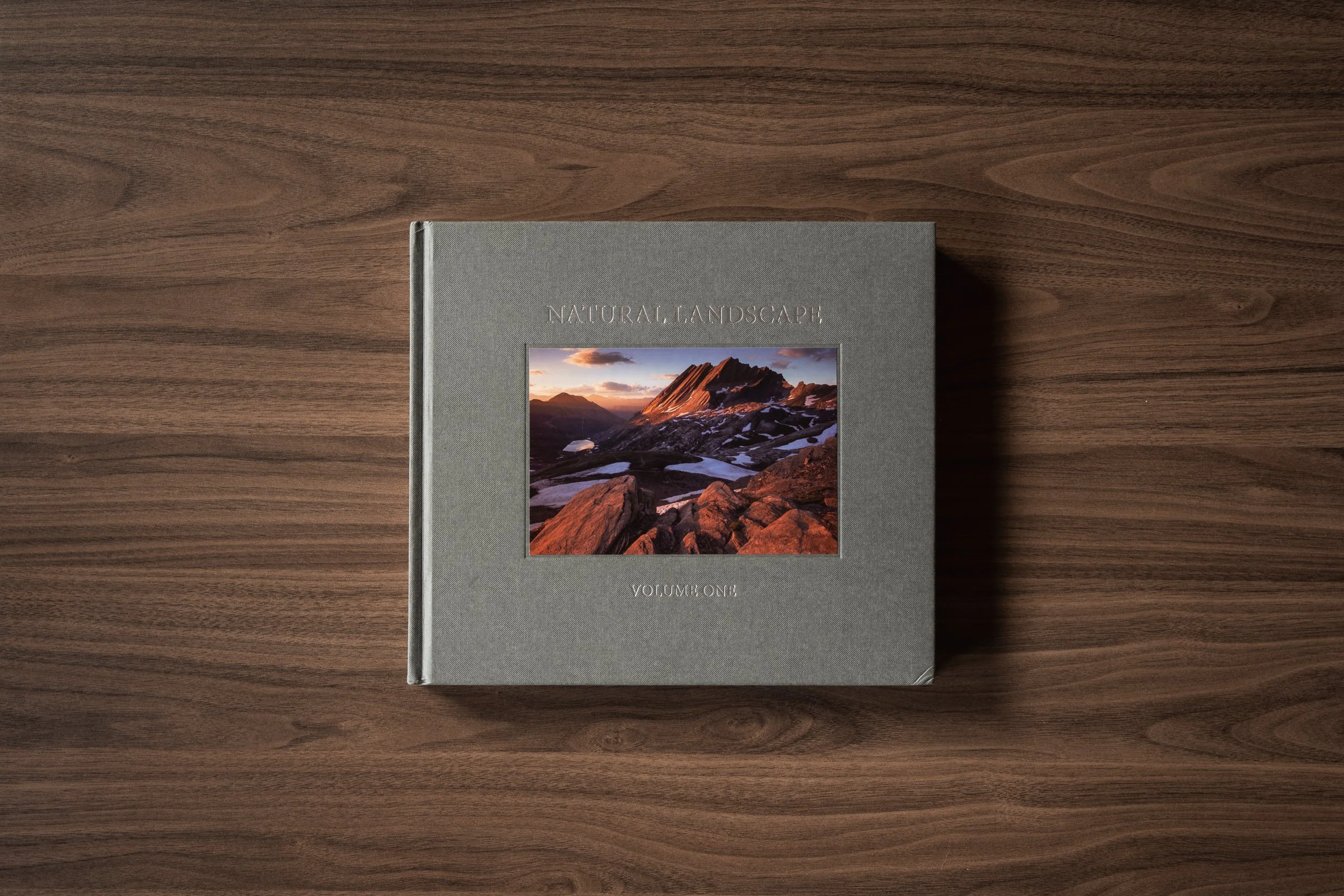
My thoughts about the book
I wanted to start by explaining a little about the Natural Landscape Photography Awards (NLPA) and why this book series is, in my opinion, something of a game-changer for photography competition books. Run by Tim Parkin and Matt Payne, the NLPA is a landscape photography competition that values realism and authentic representations of the natural world.
In a society seemingly dominated by over-processed and, more recently, AI-generated imagery, this competition places its emphasis firmly on the beauty of the real world, accepting only work that meets a particularly strict set of editing rules. For me, it’s these submission rules that set the competition apart and give future readers of this book series the confidence that the photography they are gazing upon is a genuine view witnessed by the photographer standing there as they clicked the shutter — something I feel will become increasingly important as we move further into the AI age.First impressions were extremely positive. This book feels well-made, has a good weight to it with a cloth-bound hardcover and satisfyingly thick paper throughout. The print quality is great, with well-defined details throughout and nice handling of colour, providing punch and subtlety as and when appropriate.
The book begins with a Preface written by Tim Parkin, which explains how and why the competition started. The photos are then organised into the original competition categories, such as the grand landscape, projects, typologies and so on. Amongst the work are four essays by Eric Bennett, Tim Parkin, Joe Cornish and William Neill — quite a lineup, and all complement the book nicely.
The book concludes with a section introducing the competition judges and organisers. I think that’s a nice touch, as it provides some background and transparency about who is responsible for selecting the work and the kind of photographers they are. It really does help with the overall credibility of the competition.
This is the first in the NLPA book series I’ve read, and I thoroughly enjoyed the entire experience. The quality of the book, the essays, and, of course, the collection of beautiful photography all play a crucial role in making it one of my favourite books on my photo bookshelf.
To wrap up, I wanted to make a final point, related to what I said earlier about how this competition — and specifically the resulting books — will become increasingly important in a world dominated by overly processed and manufactured imagery. We all have to accept the inevitable: the world of photography has changed, which means that when we seek authenticity in the landscape photography we enjoy, we have to question everything, as we can no longer take an image at face value.
So when a competition comes along that does all of that heavy lifting for us — checking the raw files and validating the authenticity — I see it as something more than just a competition. It’s a service to the craft, providing lovers of natural landscape photography with a haven where the default reaction when gazing upon something beautiful isn’t immediate suspicion.
Book Details
Hardcover
Size: 300mm x 280mm
Pages: 220 pages
Availability at the time of writing: All physical book editions are sold out, but an e-book edition is available for all competition books on the Natural Landscape website: https://naturallandscapeawards.com/product-category/fine-art-photography-books.
Until next time.
Trevor
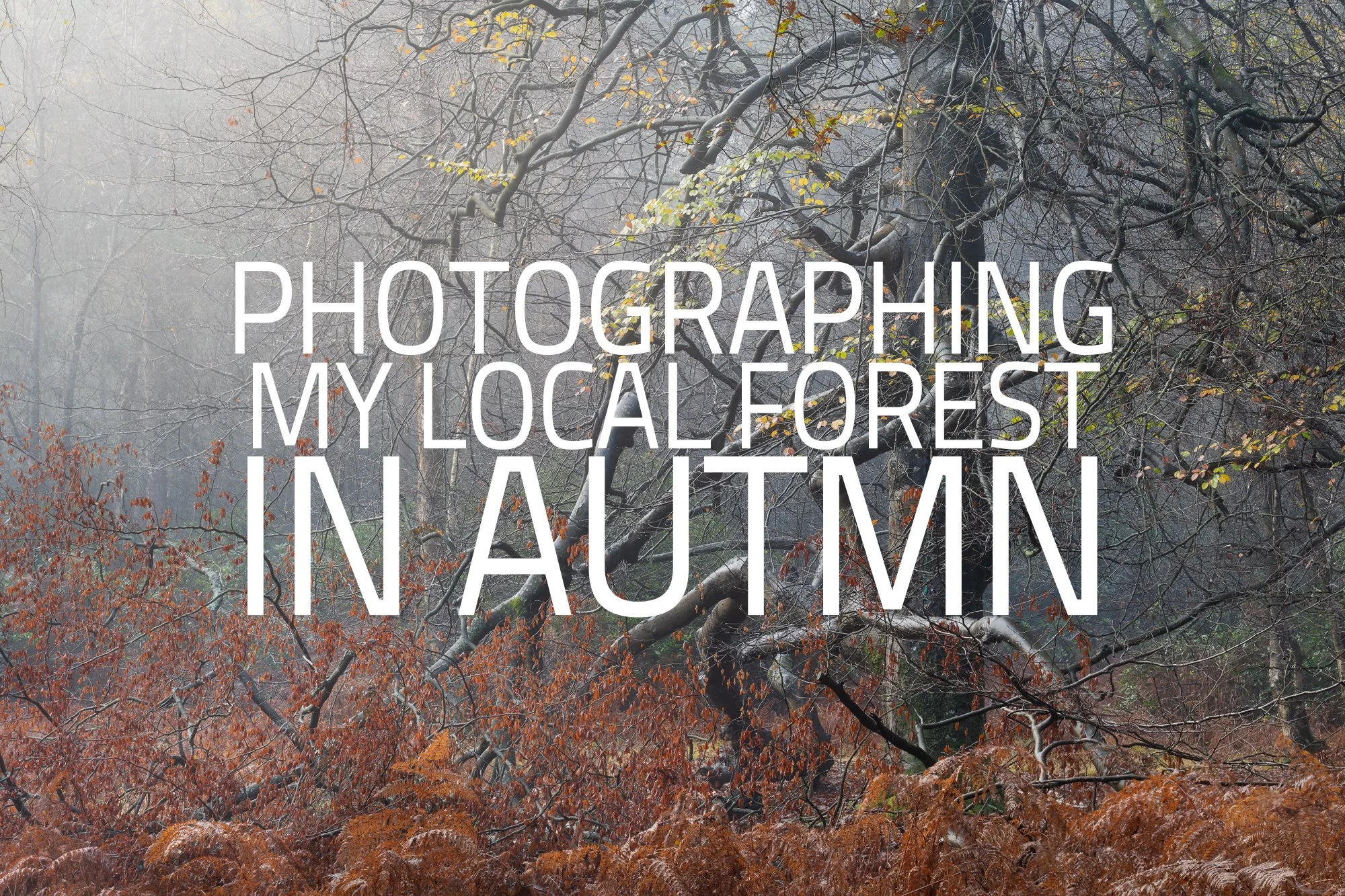
Photographing my Local Forest in Autumn
Autumn in my local forest. A collection of photos taken while exploring the woodland and open heathland between September and November 2025.
Fujifilm XT5 | XF50-140mm | 134mm | 1/10th Second | f/10 | ISO125 (3-image pano)
Like the start of spring, autumn marks one of the most noticeable shifts in the woodland, transforming my local forest—a mix of woodland and heathland—into something altogether different. The changes begin quietly, filtering down from the higher ground and gradually working their way into the valleys, until the landscape is immersed in amber, gold, and deep crimson tones.
From open heathland, where the last greens of summer still lingered, to more intimate woodland scenes with trees clinging to their final leaves, this collection of photographs was taken between September and November last year. Together, they document the evolving colours, textures, and subtle transitions of my local forest as autumn took hold.
Fujifilm XT5 | XF16-55mm | 34mm | 1/3rd Second | f/9 | ISO125
Unlike photo trips centred around a specific viewpoint or subject, my time in the forest is rarely planned. I tend to wander without any particular photograph in mind, allowing myself to slow down and become more attentive to the environment around me. If I’m lucky, a composition gradually reveals itself, and only then does the camera bag open and the tripod’s spikes press into the forest floor.
That said, I do like to revisit familiar scenes from time to time—places I’ve photographed before—to see how they’ve changed through the years or how they look in different seasons. These familiar subjects often help ease me into the process, and I’ve found that once the first image is made, others tend to follow more naturally. It’s usually enough to get the photographic gears turning.
I’m genuinely pleased with this collection, which balances new discoveries with revisited locations, featuring subjects that range from lone trees in open landscapes to richly textured woodland scenes filled with autumn colour.
With plenty of images to explore, I’ll keep this introduction brief. I would, however, recommend viewing the photographs on a larger screen for the best experience, and don’t forget that each image can be selected to view in full screen.
Fujifilm XT5 | XF50-140mm | 61mm | 1/13th Second | f/11 | ISO125
Fujifilm XT5 | XF50-140mm | 66mm | 1/4 Second | f/11 | ISO125
Fujifilm XT5 | XF16-55mm | 55mm | 1/2 Second | f/11 | ISO125
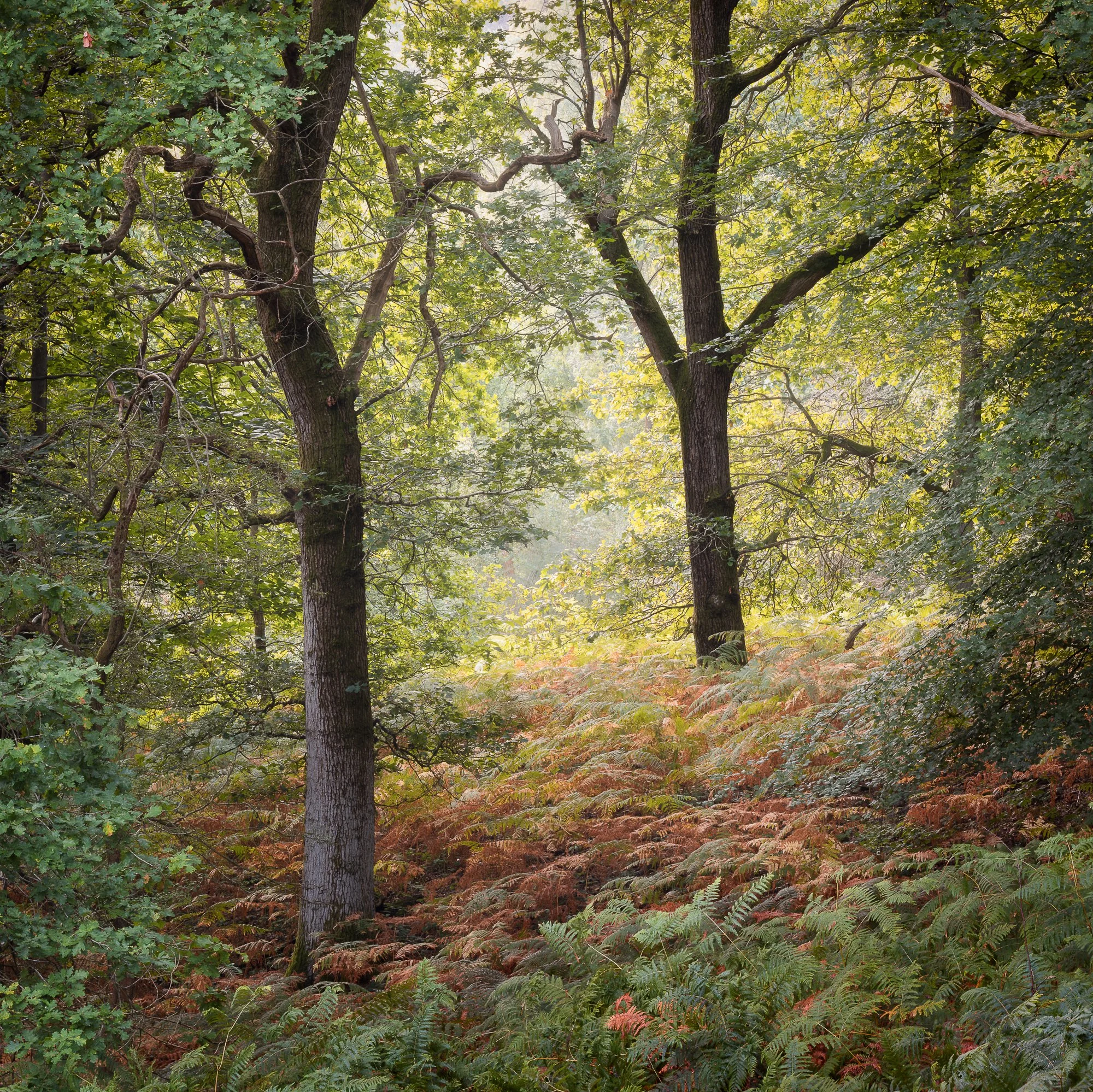
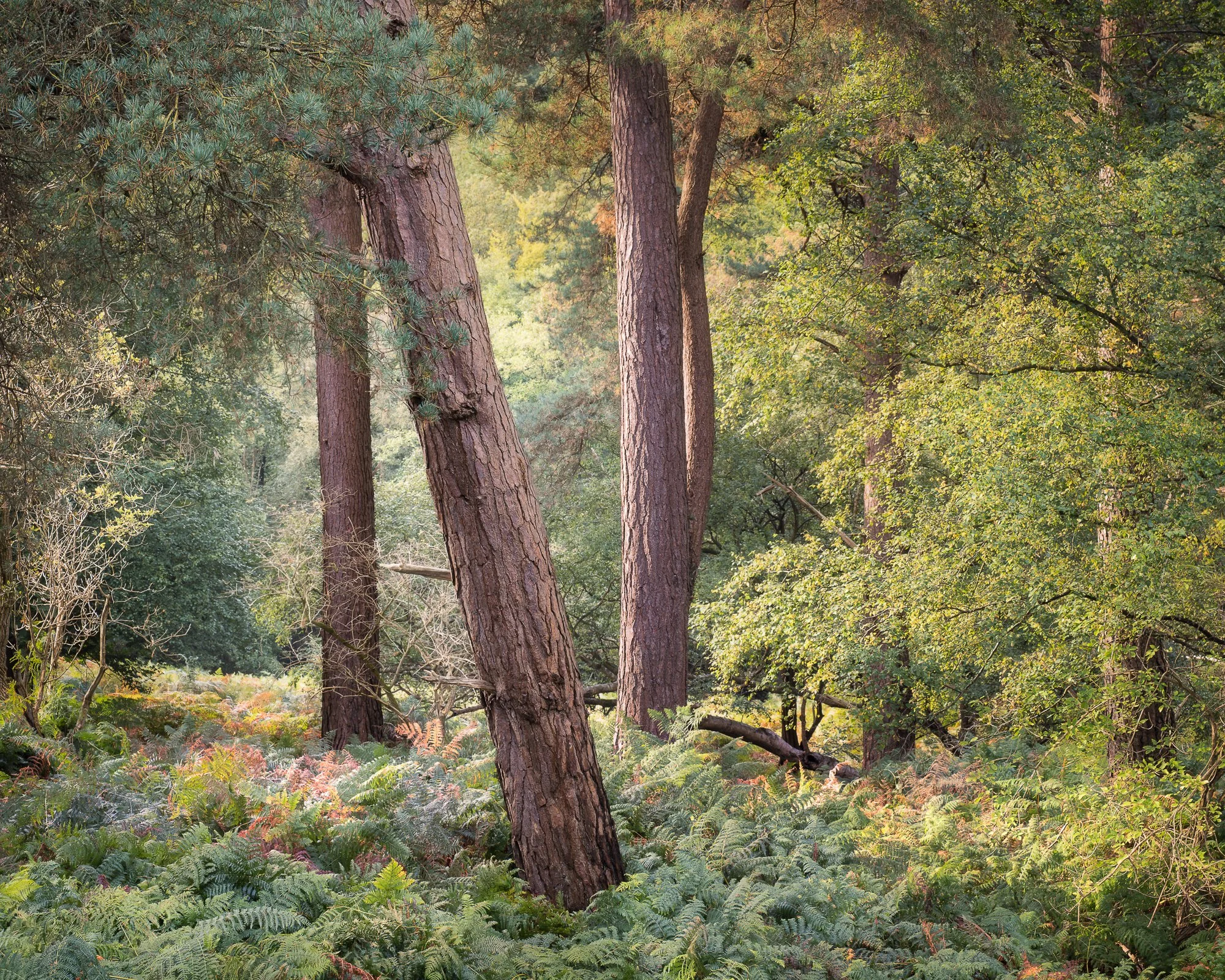
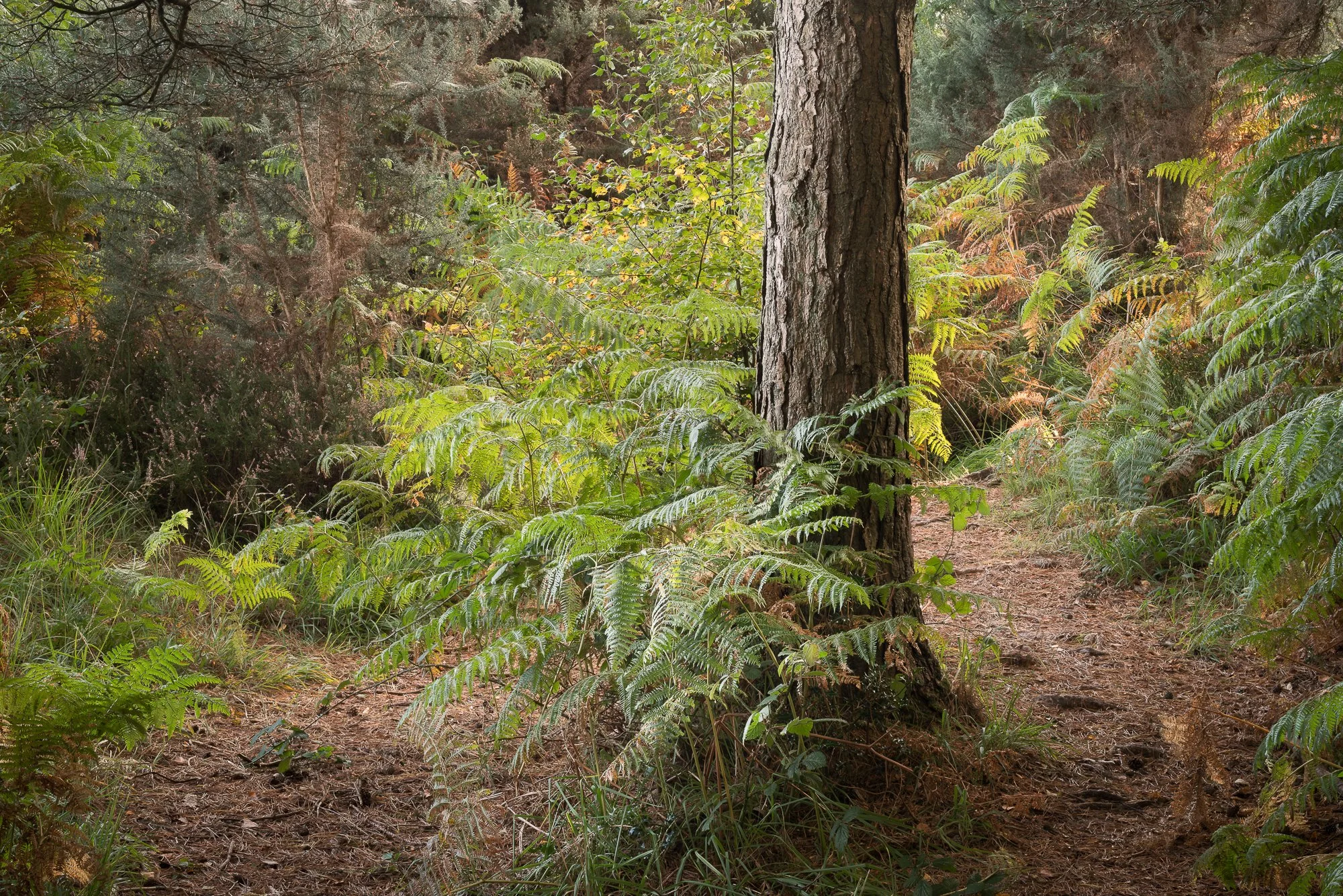
Fujifilm XT5 | XF16-55mm | 35mm | 1.3 Seconds | f/8 | ISO125
Fujifilm XT5 | XF50-140mm | 50mm | 1/3 Second | f/11 | ISO125
Fujifilm XT5 | XF16-55mm | 32mm | 4 Seconds | f/6.4 | ISO125
Fujifilm XT5 | XF16-55mm | 55mm | 1 Second | f/10 | ISO125
Fujifilm XT5 | XF16-55mm | 27mm | 1.5 Seconds | f/10 | ISO125
Fujifilm XT5 | XF50-140mm | 56mm | 0.6 Seconds | f/10 | ISO125
Fujifilm XT5 | XF16-55mm | 27mm | 1/15th Second | f/10 | ISO400
Fujifilm XT5 | XF16-55mm | 51mm | 1 Second | f/9 | ISO125
Fujifilm XT5 | XF70-300mm | 73mm | 1/4 Second | f/10 | ISO125
Fujifilm XT5 | XF16-55mm | 55mm | 1/30th Second | f/8 | ISO400
Fujifilm XT5 | XF16-55mm | 44mm | 0.4 Seconds | f/9 | ISO500
Fujifilm XT5 | XF70-300mm | 81mm | 1/100 Seconds | f/9 | ISO320
Fujifilm XT5 | XF16-55mm | 32mm | 0.4 Seconds | f/9 | ISO400
Fujifilm XT5 | XF16-55mm | 38mm | 1/3 Second | f/10 | ISO125
Fujifilm XT5 | XF50-140mm | 72mm | 1/15th Second | f/10 | ISO125 (vertical stitched panoramic)
Fujifilm XT5 | XF50-140mm | 50mm | 1/20th Second | f/10 | ISO125
Fujifilm XT5 | XF50-140mm | 119mm | 1/15th Second | f/10 | ISO125
Fujifilm XT5 | XF50-140mm | 98mm | 1/5th Second | f/10 | ISO125
Fujifilm XT5 | XF50-140mm | 63mm | 1/10th Second | f/10 | ISO125
Fujifilm XT5 | XF50-140mm | 54mm | 0.8 Seconds | f/10 | ISO125
Fujifilm XT5 | XF16-50mm | 27mm | 1.3 Seconds | f/10 | ISO125
Fujifilm XT5 | XF50-140mm | 54mm | 1/5th Second | f/10 | ISO125
Fujifilm XT5 | XF50-140mm | 71mm | 1 Second | f/10 | ISO125
Fujifilm XT5 | XF50-140mm | 69mm | 0.8 Seconds | f/10 | ISO125
Fujifilm XT5 | XF50-140mm | 140mm | 0.4 Seconds | f/10 | ISO125
Fujifilm XT5 | XF50-140mm | 124mm | 0.4 Seconds | f/10 | ISO125
Fujifilm XT5 | XF50-140mm | 87mm | 0.4 Seconds | f/10 | ISO125
Fujifilm XT5 | XF50-140mm | 77mm | 2 Seconds | f/10 | ISO125
Fujifilm XT5 | XF16-50mm | 28mm | 1/4 Second | f/10 | ISO125
Fujifilm XT5 | XF16-50mm | 50mm | 0.6 Seconds | f/10 | ISO125
Fujifilm XT5 | XF16-50mm | 50mm | 1.5 Seconds | f/10 | ISO125
Fujifilm XT5 | XF10-24mm | 18mm | 1/3rd Second | f/10 | ISO125
Fujifilm XT5 | XF16-50mm | 34mm | 0.4 Seconds | f/10 | ISO125
Fujifilm XT5 | XF16-50mm | 46mm | 1/2 Second | f/10 | ISO125
Fujifilm XT5 | XF16-50mm | 42mm | 0.8 Seconds | f/10 | ISO125
Fujifilm XT5 | XF50-140mm | 52mm | 1/4 Second | f/10 | ISO125
Fujifilm XT5 | XF50-140mm | 77mm | 1/2 Second | f/10 | ISO125
Fujifilm XT5 | XF50-140mm | 50mm | 1/2 Second | f/10 | ISO125
If you’ve made it this far, thanks for sticking with me. I hope you’ve enjoyed the photos I’ve shared, and if you have any comments or questions about this collection—or anything else—please feel free to leave a comment below or get in touch here.
Until next time.
Trevor

PhotoWork by Sasha Wolf | My Photo Bookshelf
PhotoWork: 40 Photographers on Process and Practice explores how established photographers share insights into their creative approach and the development of their photographic projects.
I discovered PhotoWork: 40 Photographers on Process and Practice some time ago, perhaps even a few years back. I’m not entirely sure who first introduced me to the book, but alongside my curiosity about how others approach their craft, I’ve found myself leaning more heavily towards photographing in projects and with project work being a key focal point of the book, I figured it was about time I finally picked up a copy.
Synopsis
PhotoWork is a collection of interviews by forty photographers about their approach to making photographs and, more importantly, a sustained body of work. Curator and lecturer Sasha Wolf was inspired to seek out and assemble responses to these questions after hearing from countless young photographers about how they often feel adrift in their own practice, wondering if they are doing it the “right” way. The responses, from both established and newly emerging photographers, reveal there is no single path. Their advice is wildly divergent, generous, and delightful: Justine Kurland discusses the importance of allowing a narrative to unravel; Doug DuBois reflects on the process of growing into one’s own work; Dawoud Bey evokes musicians such as Miles Davis as his inspiration for never wanting to become “my own oldies show.”
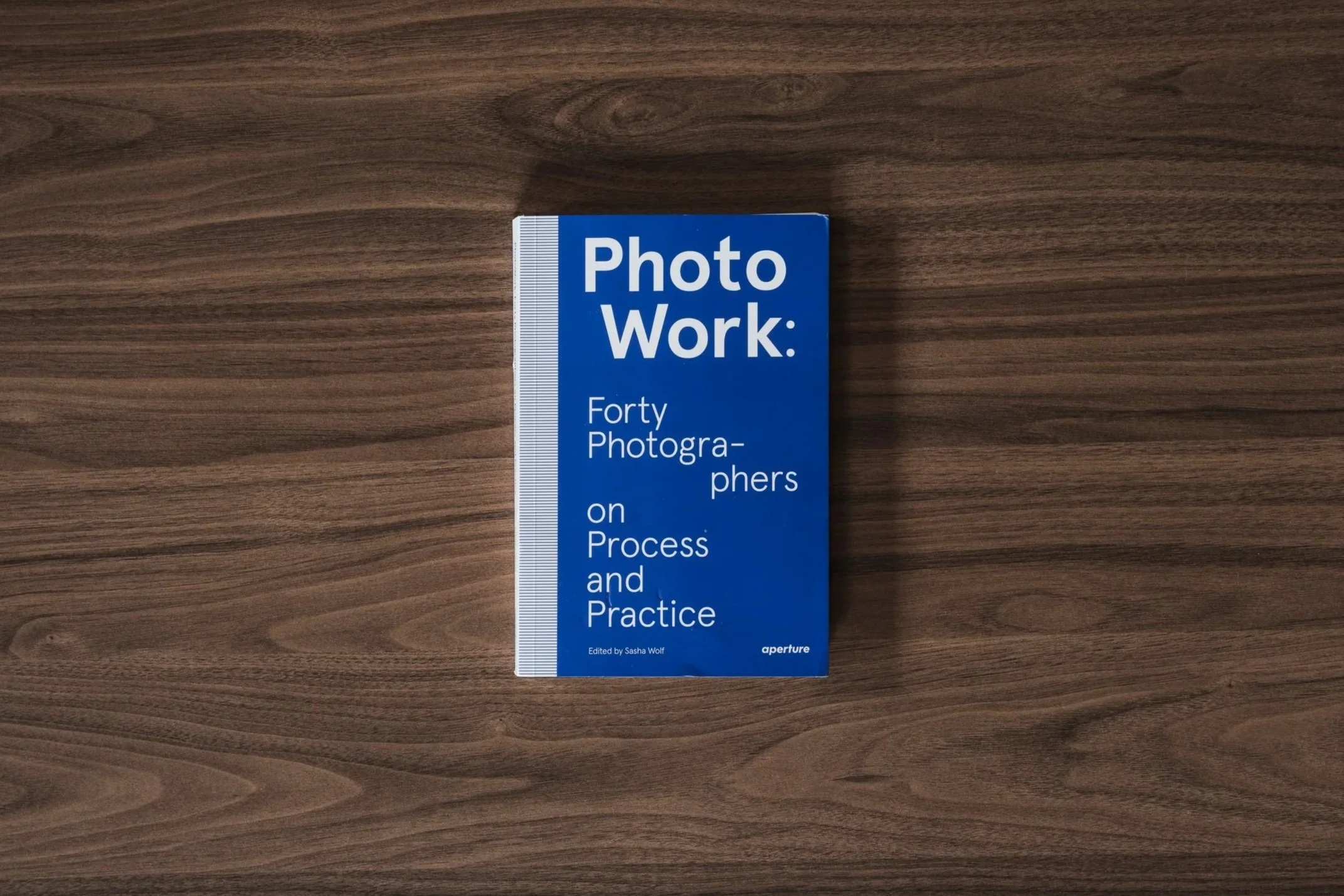
The book is structured through a Proust-like questionnaire, in which individuals are each asked the same set of questions, creating a typology of responses that allows for an intriguing compare and contrast.
My thoughts about the book
As the synopsis explains, the author, Sasha Wolf, has assembled responses to 12 specific questions sent to 40 established photographers. Coming from different backgrounds, with varying levels of experience, and practising across a range of photographic genres, the intention is to demonstrate to younger and/or less experienced photographers that there is no single way, no single approach, and most certainly no right or wrong when it comes to the craft of photography and choosing your own path.
The book opens with the list of the 12 questions asked of all the photographers, followed by an introduction from Sasha Wolf. Here, she talks about the story behind the project and her motivation to help younger, less established photographers who feel adrift in their own photographic journey. Each subsequent chapter then presents the questions alongside the responses from the 40 photographers featured in the book.
If you’re a regular reader of my Photo Bookshelf series, you’ll know that I try to inject some variety into the types of books I feature, but they typically align with my own interest in landscape photography. As a result, it may come as a slight surprise that this book is not about landscape photographers and instead leans more towards social documentary photography. That said, I feel that if you focus too much on the photographers featured and the types of images they usually make, you risk missing the entire point of the book.
Regardless of each creator’s artistic focus, this book is about how they approach their craft. It explores opinions on topics such as the single image versus a body of work, and how projects are born—whether from conceptual ideas or through inspiration drawn from existing work. It highlights the vast chasm of opinion that exists within the photographic world, and if the aim of the book is to encourage people, young and old, to understand that there are infinite paths and countless outcomes—and that, provided they remain true to their own artistic convictions, there is no right or wrong—then I think this book succeeds.
In a world where established YouTube creators with huge followings are often keen to tell us what is right and wrong, with headlines such as “pros do this” or “only amateurs do that”, it’s refreshing that this book attempts to send a different message. The message I take from it is to ignore those telling you what to do, listen instead to those who inspire you, and remember that the person with the vision—the person creating the work—is the only one who truly knows what is right for them. They just need to believe it.
Book Details
Softcover/Paperback
Size: 6x9 inches
Pages: 256 pages
Availability at the time of writing: Still in print and available from places such as Aperture’s website or by requesting a copy from your local independent bookshop.
Until next time.
Trevor
Snowdonia in Autumn | On Location
A three-day autumn journey through Snowdonia, capturing intimate woodland scenes, grand vistas, and fresh perspectives on this iconic landscape.
Snowdonia in autumn has been on my to-do list for a few years now. I’ve visited in both the colder and warmer months, but never in between. As is always the case when trying to photograph seasonal change, timing is everything. Arrive too early, and the landscape still feels like late summer; too late and much of the colour has already faded. Added to that is the challenge of localised change, where higher ground may be showing autumnal tones while the valleys below remain stubbornly green.
That uncertainty is manageable if you live nearby and can return regularly to see how the season is progressing, but when you’re a good five-hour drive away, it becomes far more of a gamble. It’s also one of the reasons I often talk about the value of photographing locally, where being able to respond quickly to subtle changes in light, weather, and season can make a real difference to the work you produce.
In the end, I settled on a mid-October weekend, booked a hotel with easy access to several areas I wanted to explore, and set off cross-country for a three-day landscape photography trip to Snowdonia.
Fujifilm XT5 | XF16-55mm | 55mm | 1/10th Second | f/11 | ISO125
Fujifilm XT5 | XF16-55mm | 41mm | 1/25th Second | f/11 | ISO400
My first stop after arriving was to revisit the view of Llyn Gwynant. It’s a spot I’ve photographed a few times before, and while it requires a little more effort than the classic roadside viewpoints most people settle for, I think the extra hike is well worth it. On previous visits, I’d never been lucky enough to have favourable light, but this time, after a quick assessment of the conditions — including the sun’s position in the sky — I could see the potential, and I decided to make the short climb to the viewpoint.
One of my goals on this trip was to capture a mix of woodland scenes, intimate landscapes, and the grand vistas Snowdonia is famous for. Achieving that balance can be tricky, as it requires staying alert to opportunities even while making your way to a specific viewpoint. To give myself the best chance, I made a point of spending plenty of time at each location, slowing down, observing the environment, and letting the photos reveal themselves.
To reach the open ground above the hill, I passed through a small woodland filled with characterful trees, just starting to show the early signs of autumn. By taking my time and keeping my eyes open rather than marching head down, I was able to spot and compose the two woodland images shared above.
A small note for readers: for the best experience of these images, I recommend viewing this blog on a larger screen, as each photo can be selected to display a larger version, which doesn’t work quite as well on mobile devices.
DJI Mini 3 Pro | 24mm (effective) | 1/2500th Second | f/1.7 | ISO100
Fujifilm XT5 | XF16-55mm | 20mm | 1/60th Second | f/11 | ISO125
Fujifilm XT5 | XF16-55mm | 29mm | 1/60th Second | f/11 | ISO125
Reaching the viewpoint high above the tree line, I found a spot with uninterrupted views of Llyn Gwynant and the majestic mountains beyond. By this time, it was just after midday, and although the sun had climbed as high as it would go, the October light still fell at a gentle angle—not as low as in winter, but enough to cast soft, dappled patterns across the landscape.
I spent some time capturing images with my main camera on its tripod, and in between shots, launched the drone to gain a higher perspective and manoeuvre around the scene. This vantage point allowed me to use the trees as the main focal point, with the lake and surrounding valley forming a dramatic, almost cinematic backdrop—arguably my favourite shot from this location.
DJI Mini 3 Pro | 24mm (effective) | 1/8000th Second | f/1.7 | ISO100
After packing away the drone, I made my way back to the car, ready for the short drive over to the Ogwen Valley and keen to see what new compositions awaited me there.
Typically, when photographing in this area, I’ll hike up the north side of the valley along Afon Lloer to capture the classic view of Tryfan beside the cascades. This time, however, I wanted to explore a slightly different angle. The Ogwen Valley is such a popular spot for landscape photography in Snowdonia that truly unique compositions of the grand vistas are hard to come by. Still, I hoped that by climbing higher and keeping an open mind, I might uncover a fresh perspective—a more personal view of these familiar mountains. With that, I set off to see what the landscape would reveal.
Fujifilm XT5 | XF16-55mm | 16mm | 1/640th Second | f/10 | ISO125
It was getting on for late afternoon, and although the sunlight was still strong, I hadn’t seen anything worth photographing yet. I continued climbing the side of Pen Yr Ole Wen, thinking (or hoping) that the higher I got, the more chance I’d have of finding a good composition, and by then, the harsh light might have softened just a little more.
As I neared the top, the way the stone face of the mountain cut diagonally in front of Tryfan caught my attention. The light was softer now and still just enough to highlight the foreground. I wasn’t sure about the clouds on Tryfan’s peak as they were partly hiding the summit, but knowing how quickly conditions can change in Snowdonia, I set up the camera and took my first shot from this spot.
DJI Mini 3 Pro | 24mm (effective) | 1/8000th Second | f/1.7 | ISO100
I waited at this viewpoint for a while, hoping the light would continue to change. Eventually, the cloud atop Tryfan cleared just long enough for my vertical composition of the same scene, but before long, the cloud rolled back in and the light faded almost completely.
Before it disappeared entirely, I launched the drone. From a higher vantage point, away from Pen Yr Ole Wen, I was able to capture some central compositions of Tryfan, with Llyn Ogwen and the A5 snaking along the valley floor below.
DJI Mini 3 Pro | 24mm (effective) | 1/8000th Second | f/1.7 | ISO100
Fujifilm XT5 | XF16-55mm | 18mm | 1/320th Second | f/11 | ISO125
As the cloud rolled in and the light faded, I began my descent. I considered trying the classic composition of the waterfall with Tryfan, but the valley was now shrouded in low cloud, obscuring the mountain tops. Instead, staying true to my goal of capturing more intimate and unique scenes, I focused on a few compositions of Afon Lloer as it tumbled down the hillside. The ambient light had cooled considerably, giving the photos a softer, more neutral tone. These two square compositions are my favourites from the shots I captured on the way back down to the car.
Fujifilm XT5 | XF10-24mm | 10mm | 0.6 Seconds | f/9 | ISO125
Fujifilm XT5 | XF10-24mm | 14mm | 0.8 Seconds | f/14 | ISO125
The next day, I returned to the Gwynant Valley, this time exploring further along at Llyn Dinas. There were a few spots near the lake I wanted to revisit in the hope of capturing some autumnal tones—though I think it’s fair to say I had mixed success.
My first stop on the morning hike was to revisit the lone tree by the water. It’s a subject I always enjoy photographing here, full of character and, when the conditions are right, framed beautifully by the surrounding mountains.
Once again, I wasn’t blessed with dramatic light, and overall, the conditions were rather flat. Yet the tree’s shape and form are strong enough that it still stands out against an otherwise plain sky. Clutching at straws? Perhaps. But even if I was a little early for autumn colour, I genuinely like this photo.
In my view, getting a low vantage point is essential. It ensures that the lowest branch on the right of the trunk doesn’t overlap the horizon, while also incorporating the shrubbery across the forest floor, which adds texture and depth to the foreground.
Fujifilm XT5 | XF10-24mm | 11mm | 1/20th Second | f/8 | ISO125
Not far from the lake is a stone cottage I had discovered on a previous visit, and remember wondering back then how it might look in autumn. Being close by once again, I made a point of hiking to the spot to see for myself.
When I arrived, the light remained flat, and low cloud smothered the distant peaks. Thankfully, the landscape still offered plenty of warm, autumnal tones, so all was not lost. I set up my camera to frame the cottage at an angle, nestled into the hillside while still maintaining the valley views behind, and once satisfied with the composition, I captured the image below.
For transparency's sake, I should note that the cottage is regularly occupied and features a large solar panel on the roof. While this is great for the residents, it didn’t suit the tone I wanted to create, so—as I had done on a previous visit—I removed the panel in post-processing.
Before continuing my hike, I switched to my telephoto lens and focused on a smaller section of the landscape, highlighting some trees on the hillside adorned with subtle autumnal colour.
Fujifilm XT5 | XF16-55mm | 34mm | 1/6th Second | f/10 | ISO125
Fujifilm XT5 | XF70-300mm | 114mm | 1/4th Second | f/10 | ISO125
Making my way back down from the higher, open ground, I passed through a small woodland. After experimenting with a few compositions that didn’t quite work, I stumbled across the ruins of an old stone building, hidden among the trees. The structure was heavily overgrown and brimming with character, so I spent a few minutes exploring slightly elevated ground to find the best perspective.
This shot was as much about what I left out as what I included. The area was busy, full of textures and features, and I wanted to ensure the stone building remained the focal point without being lost in the woodland. Once I found the ideal spot, I carefully composed the image, keeping enough of the surrounding environment to convey the building’s setting, while trying to avoid unnecessary clutter.
Fujifilm XT5 | XF16-55mm | 27mm | 1/4th Second | f/10 | ISO125
By now, it was around 11 am, and as I walked back alongside Llyn Dinas, the wind had dropped, allowing reflections to form on the calm surface of the lake. Passing the lone tree I’d photographed earlier that morning, I noticed how it seemed to hover gracefully over the water. The smooth, reflective surface provided a clean background, making the tree really stand out in the frame.
I can’t claim this composition has never been photographed before, but it was new to me. Once again, slowing down and taking the time to observe the environment paid off, resulting in what may well be my favourite image from the trip—a subtle reminder of why patience and attention to detail are so important when photographing the landscapes of Snowdonia.
Fujifilm XT5 | XF70-300mm | 102mm | 1/3rd Second | f/13 | ISO125
Finishing up in the Gwynant Valley and before heading back over to the Ogwen Valley later that afternoon, I paid a relatively quick visit to Conwy Falls. It’s not a place I’d visited before, and being a sucker for a good waterfall, I made my way back through Betws-y-Coed to the car park at the Conwy Falls Cafe.
At this point, you might notice a distinct lack of waterfall photos here—and there’s a reason for that. Despite the falls being truly impressive, I struggled to find a composition that worked, so I took a step back, found a comfortable spot with my coffee, and simply enjoyed the view.
It wasn’t a total loss, though. While walking along the short path between the café and the falls, I spotted a couple of trees showing early autumn colour and managed to capture a few woodland shots I’m pleased with.
Even without the perfect waterfall images, I still highly recommend visiting Conwy Falls. They are easily accessible and make for an impressive spectacle, whether you’re photographing or just taking it all in.
Finishing my coffee by the falls and after a quick pit stop in Betws-y-Coed, I drove along the A5 to continue my day in the Ogwen Valley.
Fujifilm XT5 | XF16-55mm | 38mm | 1/5th Second | f/10 | ISO125
Fujifilm XT5 | XF16-55mm | 44mm | 1/13th Second | f/10 | ISO200
By now, it was getting close to mid-afternoon, and I had considered hiking the Glyderau Circular—much like on my previous trip. But, as time was getting on, I decided it was a bit too late to complete the full hike before dark without rushing my photography along the way, which, at the very least, would have made the experience stressful. Instead, I opted to hike up towards Y Garn, aiming to capture the valley from an elevated perspective.
As I set off from the car park, passing Llyn Idwal and climbing towards Y Garn, the weather was pleasant with a few broken clouds. But gradually, the clouds thickened, and before long I found myself walking in complete clag, with visibility reduced to barely ten metres.
I pressed on, hoping the cloud might clear and reveal the views again. And while it didn’t—at least initially—I was actually pleased. Higher up, the sky began to brighten, and within a few minutes, I broke through the cloud, greeted by one of the most incredible scenes I’ve ever witnessed.
Beneath me stretched a vast carpet of cloud, a vast cloud inversion, with only the tallest mountain peaks piercing through. For several minutes, I simply stood there, taking it all in, knowing I might never see such a sight again.
Eventually, I returned to photography mode, setting up my camera to capture the peaks that emerged above the clouds.
The photo here shows the view looking back down Y Garn towards the Ogwen Valley, highlighting the route I took up the mountain and the spot where I broke through the cloud. In the distance, the tips of Pen Yr Ole Wen and Carnedd Dafydd rise from the Carneddau range. I used the path along the ridge to lead the eye down towards the clouds below and the distant peaks—subtle, but hopefully effective.
Fujifilm XT5 | XF10-24mm | 17mm | 1/50th Second | f/11 | ISO125
Alongside taking photos with my main camera, I also sent the drone up to take in the view from an even higher vantage point and managed to take a couple of photos while doing so. My favourite is the one shown below, as the sun is behind the drone, illuminating the scene in front of the camera. It’s amazing to think there is an entire world underneath that thick layer of cloud, all probably existing in dark and gloomy conditions, and oblivious to the spectacular views being observed by people like me above the clouds.
also turned the drone towards the Snowdon range to the south, but the harsh sunlight created too much contrast, and the drone struggled to capture it cleanly, so I chose not to keep any of those shots.
DJI Mini 3 Pro | 24mm (effective) | 1/2000th Second | f/1.7 | ISO100
Fujifilm XT5 | XF16-55mm | 45mm | 1/50th Second | f/9 | ISO125
Fujifilm XT5 | XF16-55mm | 55mm | 1/125th Second | f/10 | ISO125
Fujifilm XT5 | XF16-55mm | 34mm | 1/80th Second | f/9 | ISO125
DJI Mini 3 Pro | 24mm (effective) | 1/2000th Second | f/1.7 | ISO100
Fujifilm XT5 | XF16-55mm | 47mm | 1/50th Second | f/10 | ISO125
After a truly memorable 90 minutes near the top of Y Garn, having experienced the best of the conditions up there, I packed my camera away and began the descent back towards Llyn Idwal. By now, the cloud had thickened considerably, and conditions down in the valley were gloomy. Even without dramatic light, I knew there was still the opportunity to create a few photos beside the lake, using the low cloud and cool tones to add atmosphere and mood.
For the shot below, I focused on making the large rocks a prominent foreground element, with the stone wall subtly leading the eye towards the mountainous walls of Cwm Idwal, forming a striking backdrop. I used an exposure of 0.8 seconds to introduce just a touch of movement in the flowing water, simplifying the areas between the rocks and helping them stand out. Overall, I’m really pleased with how this image turned out.
Fujifilm XT5 | XF10-24mm | 10mm | 0.8 Seconds | f/11 | ISO125
On the way back from climbing Y Garn, and before taking the previous photo, I had spotted this collection of partly submerged stones in the water. They seemed to line up, potentially usable as foreground interest, helping to lead the eye out, towards the imposing mountain range across the lake.
I used my circular polarising filter (CPL) to take some of the glare off the rocks, revealing some of the textures under the water, and with the winds calm, there were some nice reflections of the mountains on the lake’s surface. It all seemed to come together for me in that moment. Given how many people visit this lake, I’m certain I’m not the only one to photograph this composition, but it was genuinely new to me, so I’m pleased to have spotted it.
The last stop of the day was close to the car park, where I paused briefly to photograph this section of Afon Idwal as it tumbled down the hill towards me. I know this is a well-photographed cascade, but it’s such an accessible and easy photo to take that I will typically take a photo whenever I pass.
Without the low cloud, this composition can offer slightly better views of the Glyderau in the background, but unfortunately not today; however, with some nice contrast between the dark rock and white water and with a little tweaking of the shutter speed to achieve this look in the water, I still walked away with a photo I like.
Fujifilm XT5 | XF10-24mm | 10mm | 1/6th Second | f/10 | ISO125
Fujifilm XT5 | XF10-24mm | 10mm | 0.8 Seconds | f/11 | ISO125
Fujifilm XT5 | XF10-24mm | 13mm | 0.6 Seconds | f/8 | ISO400
For the first stop on my third and final day in North Wales, I visited Ffos Anoddun—better known to most as Fairy Glen, near Betws-y-Coed. The Welsh name, Ffos Anoddun, translates as “Deep Ditch,” though the location is far more enchanting than the name suggests. Fairy Glen (as I’ll call it from here on) is a narrow, tree-lined ravine, with the River Conwy flowing gracefully through it. I first visited this spot in late summer 2024 and had always planned to return, hoping to capture it adorned with autumnal colour.
You can see the original, summertime version I took in a previous post here, and I liked that composition, so I tried to recreate it. For a place like this, that might sound easy. But for some reason, I struggled to find the spot I took the photo from, but after a little trial and error, I got there and had my composition lined up.
As with a few other locations on this trip, the autumn colour hadn’t fully arrived, though there were subtle hints of the seasonal transition along the edges of the ravine. Not quite what I had hoped for, but enough to work with.
The long exposure works particularly well in this spot, as the foam created by the water cascading over the rocks forms interesting lines and textures as it travels downstream. Once in position, I mounted my Kase neutral density filter (10 or 6-stop—I can’t remember exactly) and began capturing the scene.
In the final versions shared further below, I also included a shorter exposure. While I slightly prefer the creative effect of the long exposure, the quicker shutter speed produces a more realistic view, and both work well. Photography is subjective, after all—and that’s exactly how it should be.
Fujifilm XT5 | XF50-140mm | 50mm | 8 Seconds | f/10 | ISO125
Having captured the composition I was after, I also experimented with a few different focal lengths. I’m particularly pleased with the result in the square crop below, where I went a little wider and arranged the river to flow diagonally through the frame, exiting towards the bottom right-hand corner. It’s a different take on this popular scene, and I’m quite pleased with the photo.
Fujifilm XT5 | XF16-55mm | 30mm | 8 Seconds | f/9 | ISO125
Fujifilm XT5 | XF50-140mm | 50mm | 60 Seconds | f/11 | ISO125
Fujifilm XT5 | XF50-140mm | 50mm | 1/10th Second | f/6.4 | ISO400
Fujifilm XT5 | XF16-55mm | 43mm | 1/3rd Second | f/16 | ISO125
Taking the slightly longer route along the river back to the car, I spotted this scene, which was interesting with the large rock, fallen tree and splash of seasonal colour in the trees.
I experimented with a few different focal lengths, taking in the wider scene as well as zooming in and isolating those autumnal colours with a closer crop. These were not necessarily up there with my favourite photos of the trip, but I still like them enough to share with you here.
My final stop of the day was at the Dinorwig Slate Quarry near Llanberis. I had planned to wander down to the Barics Dre Newydd (Anglesey Barracks), take a few photos there, and then explore the quarry before heading back to the car for the long drive home. However, the weather had other ideas.
The cloud cover that had been providing some soft, diffused light earlier quickly cleared after I arrived, leaving a bright, clear sky and harsh contrast—conditions that are far from ideal for the kind of photography I enjoy.
Fujifilm XT5 | XF50-140mm | 102mm | 1/6th Second | f/9 | ISO125
Before the cloud completely cleared, there were still occasional patches passing by, softening the light for brief moments. Wandering down the track towards the barracks, I noticed the trees showing much more autumnal colour than earlier, and I managed to stop and compose a couple of intimate woodland photos.
Once the sun broke through, I spent an hour or so exploring the quarry. It’s such an incredible place to roam, rich with history, and I thoroughly enjoyed my time there. Unfortunately, with the weather no longer cooperating, I didn’t take any more photos.
Fujifilm XT5 | XF16-55mm | 55mm | 0.4 Seconds | f/11 | ISO125
Fujifilm XT5 | XF16-55mm | 41mm | 1/4th Second | f/11 | ISO125
Overall, this was another successful trip, and I had an amazing time in such a stunningly epic landscape. Of course, things could have been better—more autumn colour on the trees, kinder light at Dinorwig Quarry, or improved conditions when photographing Tryfan on the first evening—but it would be unrealistic to expect everything to go perfectly. Let’s be honest, it could have been far worse; I could have battled strong winds and sideways rain, so I’m grateful for the conditions I did have.
As I mentioned at the start of this article, alongside revisiting some of my favourite spots in Snowdonia, my goal was to capture a mix of woodland, intimate landscapes, and wide vistas. To achieve this, I needed to slow down and give myself time to really observe the landscape and let the compositions reveal themselves. By doing so, I discovered some new, fresh perspectives and captured images I might have otherwise missed if I had been rushing around.
Thanks, as always, for sticking with these longer-form on-location articles. If you have any comments or questions, please feel free to leave them below.
Until next time,
Trevor
If you’ve enjoyed following this Snowdonia trip, you’ll find plenty more inspiration on my blog, where I share tips, insights, and photographs from across the region. From woodland scenes and intimate compositions to sweeping mountain vistas, it’s a celebration of the beauty and variety of landscape photography in Snowdonia.




Chasing Awe with Gavin Hardcastle | My Photo Bookshelf
Chasing Awe by Gavin Hardcastle, a landscape photography book that blends stunning images and behind-the-scenes stories.
Gavin Hardcastle is a British landscape photographer based in Canada and someone I’ve been following on YouTube for a few years. He has a unique, fun approach to his videos with a great mix of landscape photography adventures and comedic sketches which provide a welcome alternative to some of the other, more serious videos on my watchlist.
Although known on YouTube for his fun and sometimes silly videos, Gavin is still primariily a serious landscape photogtraher and he consistetly shares some quite beautiful landscape photography during his videas and that appreciation for his work resulted in my purchasing a copy of Chasing Awe with Gavin Hardcastle for my bookshelf.
Synopsis
When I was just starting out in landscape photography, I read a lot of photography books. While many of them had beautiful images, I did feel somewhat disconnected from the authors because many of the accompanying stories lacked both a personal touch and offered no technical insights. With ‘Chasing Awe with Gavin Hardcastle‘, I wanted to break that format and offer you a front-row seat to the experience of being a professional landscape photographer – warts and all.
The life of a landscape photographer isn’t always filled with rainbows and unicorns, in fact, the reality is a lot less glamorous. This book takes you into the deep and murky waters of a challenging and often dangerous obsession with the more extreme moments that Mother Nature has to offer.
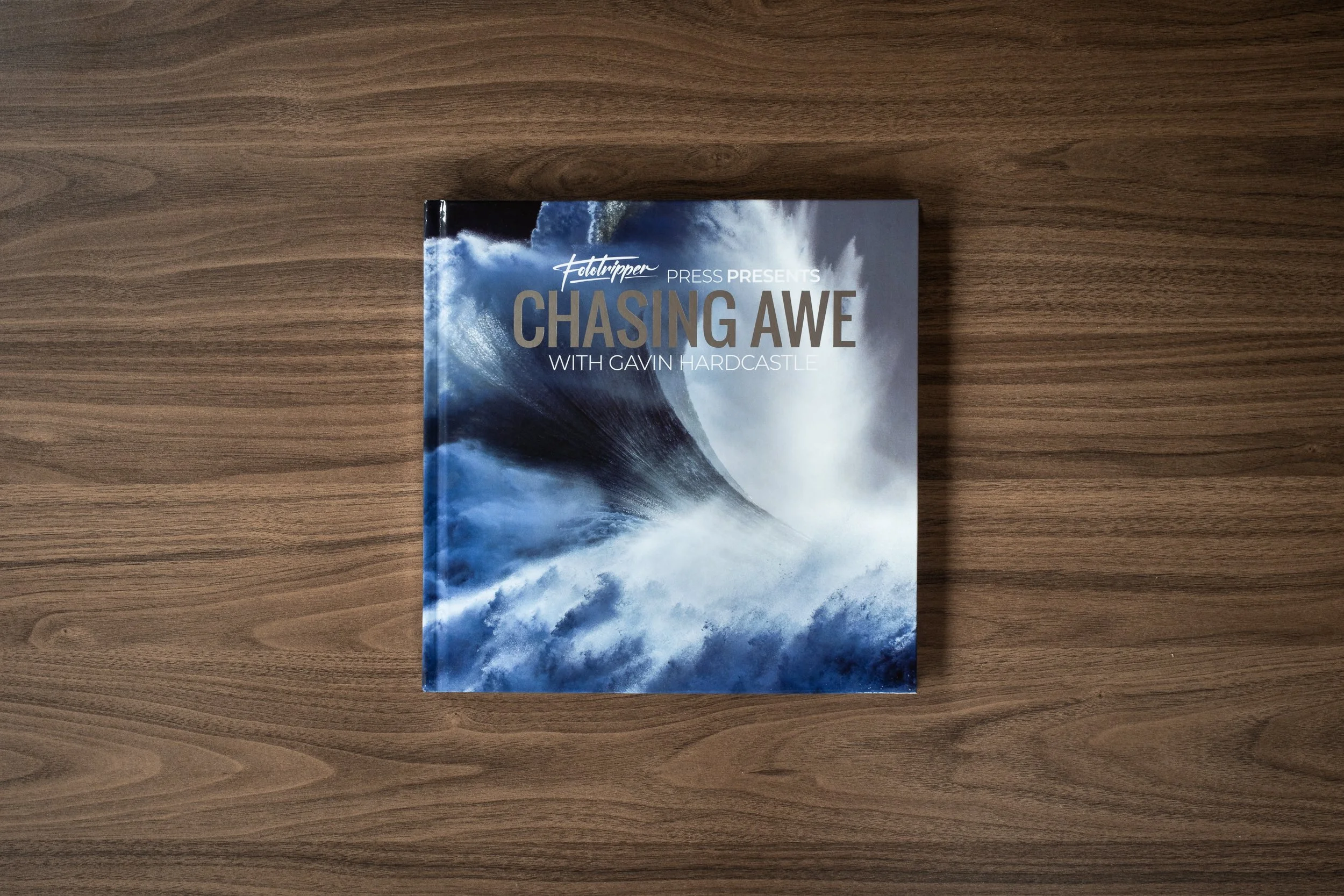
My thoughts about the book
Chasing Awe has a hard, glossy cover and a reassuringly tough feel to it, which it would need, judging by Gavin’s videos, where he takes a copy along on many of his adventures across a wide range of landscapes and conditions to promote it in his usual fun, light-hearted way. It makes a great first impression.
The book opens with a foreword by Gavin’s friend and fellow landscape photographer, Adam Gibbs. That connection feels particularly fitting for me, as it was through Adam’s YouTube videos that I was first introduced to Gavin, back when they regularly travelled and photographed together before Gavin moved across the country to Canada’s east coast. I certainly miss those collaborations. The foreword touches on how they originally connected, and their close friendship comes through clearly in Adam’s playful remarks — British mickey-taking humour at its best, and very much in keeping with the overall tone of the book.
Following Adam’s foreword is a brief introduction from Gavin himself before the book dives straight into the images. Each photograph is accompanied by a backstory, all written in Gavin’s familiar, approachable style. Photo books like this work particularly well for me, as I’m always drawn to the context and stories behind the image. In this case, Gavin’s ability to convey someone who is clearly serious about their craft through these entertaining, warts-and-all tales makes reading the book a genuinely enjoyable experience.
Throughout the book, Gavin shares the highs and lows of his adventures and, where appropriate, introduces some of the advanced techniques he used to capture the final images. Even with the technical information included, I feel the balance is just right, and there’s still plenty for readers who are less interested in the technical side of photography.
I particularly appreciate the variety of landscapes Gavin presents in the book. The images span locations all over the world, from picturesque cabins nestled in snowy forests to powerful waves crashing against rugged cliffs, and majestic Canadian mountains bathed in warm golden-hour light. With such diversity, there is genuinely something to enjoy on every page.
For anyone able to get hold of a copy, I would highly recommend doing so. While the physical edition is now sold out, Chasing Awe is still available as an ebook via Gavin’s website — the link is provided below.
Book Details
Hardback Foil Stamped Cover
Size: 10.5 x 10.5 inches
Pages: 120
Availability at the time of writing: All editions of the physical book are sold out, but an e-book edition is available from Gavin Hardcastle’s website https://www.fototripper.com/store/chasing-awe-with-gavin-hardcastle-photography-ebook/
Until next time.
Trevor
A three-day autumn journey through Snowdonia, capturing intimate woodland scenes, grand vistas, and fresh perspectives on this iconic landscape.