
Snowdonia in Autumn | On Location
Snowdonia in autumn has been on my to-do list for a few years now. I’ve visited in both the colder and warmer months, but never in between. As is always the case when trying to photograph seasonal change, timing is everything. Arrive too early, and the landscape still feels like late summer; too late and much of the colour has already faded. Added to that is the challenge of localised change, where higher ground may be showing autumnal tones while the valleys below remain stubbornly green.
That uncertainty is manageable if you live nearby and can return regularly to see how the season is progressing, but when you’re a good five-hour drive away, it becomes far more of a gamble. It’s also one of the reasons I often talk about the value of photographing locally, where being able to respond quickly to subtle changes in light, weather, and season can make a real difference to the work you produce.
In the end, I settled on a mid-October weekend, booked a hotel with easy access to several areas I wanted to explore, and set off cross-country for a three-day landscape photography trip to Snowdonia.
Fujifilm XT5 | XF16-55mm | 55mm | 1/10th Second | f/11 | ISO125
Fujifilm XT5 | XF16-55mm | 41mm | 1/25th Second | f/11 | ISO400
My first stop after arriving was to revisit the view of Llyn Gwynant. It’s a spot I’ve photographed a few times before, and while it requires a little more effort than the classic roadside viewpoints most people settle for, I think the extra hike is well worth it. On previous visits, I’d never been lucky enough to have favourable light, but this time, after a quick assessment of the conditions — including the sun’s position in the sky — I could see the potential, and I decided to make the short climb to the viewpoint.
One of my goals on this trip was to capture a mix of woodland scenes, intimate landscapes, and the grand vistas Snowdonia is famous for. Achieving that balance can be tricky, as it requires staying alert to opportunities even while making your way to a specific viewpoint. To give myself the best chance, I made a point of spending plenty of time at each location, slowing down, observing the environment, and letting the photos reveal themselves.
To reach the open ground above the hill, I passed through a small woodland filled with characterful trees, just starting to show the early signs of autumn. By taking my time and keeping my eyes open rather than marching head down, I was able to spot and compose the two woodland images shared above.
A small note for readers: for the best experience of these images, I recommend viewing this blog on a larger screen, as each photo can be selected to display a larger version, which doesn’t work quite as well on mobile devices.
DJI Mini 3 Pro | 24mm (effective) | 1/2500th Second | f/1.7 | ISO100
Fujifilm XT5 | XF16-55mm | 20mm | 1/60th Second | f/11 | ISO125
Fujifilm XT5 | XF16-55mm | 29mm | 1/60th Second | f/11 | ISO125
Reaching the viewpoint high above the tree line, I found a spot with uninterrupted views of Llyn Gwynant and the majestic mountains beyond. By this time, it was just after midday, and although the sun had climbed as high as it would go, the October light still fell at a gentle angle—not as low as in winter, but enough to cast soft, dappled patterns across the landscape.
I spent some time capturing images with my main camera on its tripod, and in between shots, launched the drone to gain a higher perspective and manoeuvre around the scene. This vantage point allowed me to use the trees as the main focal point, with the lake and surrounding valley forming a dramatic, almost cinematic backdrop—arguably my favourite shot from this location.
DJI Mini 3 Pro | 24mm (effective) | 1/8000th Second | f/1.7 | ISO100
After packing away the drone, I made my way back to the car, ready for the short drive over to the Ogwen Valley and keen to see what new compositions awaited me there.
Typically, when photographing in this area, I’ll hike up the north side of the valley along Afon Lloer to capture the classic view of Tryfan beside the cascades. This time, however, I wanted to explore a slightly different angle. The Ogwen Valley is such a popular spot for landscape photography in Snowdonia that truly unique compositions of the grand vistas are hard to come by. Still, I hoped that by climbing higher and keeping an open mind, I might uncover a fresh perspective—a more personal view of these familiar mountains. With that, I set off to see what the landscape would reveal.
Fujifilm XT5 | XF16-55mm | 16mm | 1/640th Second | f/10 | ISO125
It was getting on for late afternoon, and although the sunlight was still strong, I hadn’t seen anything worth photographing yet. I continued climbing the side of Pen Yr Ole Wen, thinking (or hoping) that the higher I got, the more chance I’d have of finding a good composition, and by then, the harsh light might have softened just a little more.
As I neared the top, the way the stone face of the mountain cut diagonally in front of Tryfan caught my attention. The light was softer now and still just enough to highlight the foreground. I wasn’t sure about the clouds on Tryfan’s peak as they were partly hiding the summit, but knowing how quickly conditions can change in Snowdonia, I set up the camera and took my first shot from this spot.
DJI Mini 3 Pro | 24mm (effective) | 1/8000th Second | f/1.7 | ISO100
I waited at this viewpoint for a while, hoping the light would continue to change. Eventually, the cloud atop Tryfan cleared just long enough for my vertical composition of the same scene, but before long, the cloud rolled back in and the light faded almost completely.
Before it disappeared entirely, I launched the drone. From a higher vantage point, away from Pen Yr Ole Wen, I was able to capture some central compositions of Tryfan, with Llyn Ogwen and the A5 snaking along the valley floor below.
DJI Mini 3 Pro | 24mm (effective) | 1/8000th Second | f/1.7 | ISO100
Fujifilm XT5 | XF16-55mm | 18mm | 1/320th Second | f/11 | ISO125
As the cloud rolled in and the light faded, I began my descent. I considered trying the classic composition of the waterfall with Tryfan, but the valley was now shrouded in low cloud, obscuring the mountain tops. Instead, staying true to my goal of capturing more intimate and unique scenes, I focused on a few compositions of Afon Lloer as it tumbled down the hillside. The ambient light had cooled considerably, giving the photos a softer, more neutral tone. These two square compositions are my favourites from the shots I captured on the way back down to the car.
Fujifilm XT5 | XF10-24mm | 10mm | 0.6 Seconds | f/9 | ISO125
Fujifilm XT5 | XF10-24mm | 14mm | 0.8 Seconds | f/14 | ISO125
The next day, I returned to the Gwynant Valley, this time exploring further along at Llyn Dinas. There were a few spots near the lake I wanted to revisit in the hope of capturing some autumnal tones—though I think it’s fair to say I had mixed success.
My first stop on the morning hike was to revisit the lone tree by the water. It’s a subject I always enjoy photographing here, full of character and, when the conditions are right, framed beautifully by the surrounding mountains.
Once again, I wasn’t blessed with dramatic light, and overall, the conditions were rather flat. Yet the tree’s shape and form are strong enough that it still stands out against an otherwise plain sky. Clutching at straws? Perhaps. But even if I was a little early for autumn colour, I genuinely like this photo.
In my view, getting a low vantage point is essential. It ensures that the lowest branch on the right of the trunk doesn’t overlap the horizon, while also incorporating the shrubbery across the forest floor, which adds texture and depth to the foreground.
Fujifilm XT5 | XF10-24mm | 11mm | 1/20th Second | f/8 | ISO125
Not far from the lake is a stone cottage I had discovered on a previous visit, and remember wondering back then how it might look in autumn. Being close by once again, I made a point of hiking to the spot to see for myself.
When I arrived, the light remained flat, and low cloud smothered the distant peaks. Thankfully, the landscape still offered plenty of warm, autumnal tones, so all was not lost. I set up my camera to frame the cottage at an angle, nestled into the hillside while still maintaining the valley views behind, and once satisfied with the composition, I captured the image below.
For transparency's sake, I should note that the cottage is regularly occupied and features a large solar panel on the roof. While this is great for the residents, it didn’t suit the tone I wanted to create, so—as I had done on a previous visit—I removed the panel in post-processing.
Before continuing my hike, I switched to my telephoto lens and focused on a smaller section of the landscape, highlighting some trees on the hillside adorned with subtle autumnal colour.
Fujifilm XT5 | XF16-55mm | 34mm | 1/6th Second | f/10 | ISO125
Fujifilm XT5 | XF70-300mm | 114mm | 1/4th Second | f/10 | ISO125
Making my way back down from the higher, open ground, I passed through a small woodland. After experimenting with a few compositions that didn’t quite work, I stumbled across the ruins of an old stone building, hidden among the trees. The structure was heavily overgrown and brimming with character, so I spent a few minutes exploring slightly elevated ground to find the best perspective.
This shot was as much about what I left out as what I included. The area was busy, full of textures and features, and I wanted to ensure the stone building remained the focal point without being lost in the woodland. Once I found the ideal spot, I carefully composed the image, keeping enough of the surrounding environment to convey the building’s setting, while trying to avoid unnecessary clutter.
Fujifilm XT5 | XF16-55mm | 27mm | 1/4th Second | f/10 | ISO125
By now, it was around 11 am, and as I walked back alongside Llyn Dinas, the wind had dropped, allowing reflections to form on the calm surface of the lake. Passing the lone tree I’d photographed earlier that morning, I noticed how it seemed to hover gracefully over the water. The smooth, reflective surface provided a clean background, making the tree really stand out in the frame.
I can’t claim this composition has never been photographed before, but it was new to me. Once again, slowing down and taking the time to observe the environment paid off, resulting in what may well be my favourite image from the trip—a subtle reminder of why patience and attention to detail are so important when photographing the landscapes of Snowdonia.
Fujifilm XT5 | XF70-300mm | 102mm | 1/3rd Second | f/13 | ISO125
Finishing up in the Gwynant Valley and before heading back over to the Ogwen Valley later that afternoon, I paid a relatively quick visit to Conwy Falls. It’s not a place I’d visited before, and being a sucker for a good waterfall, I made my way back through Betws-y-Coed to the car park at the Conwy Falls Cafe.
At this point, you might notice a distinct lack of waterfall photos here—and there’s a reason for that. Despite the falls being truly impressive, I struggled to find a composition that worked, so I took a step back, found a comfortable spot with my coffee, and simply enjoyed the view.
It wasn’t a total loss, though. While walking along the short path between the café and the falls, I spotted a couple of trees showing early autumn colour and managed to capture a few woodland shots I’m pleased with.
Even without the perfect waterfall images, I still highly recommend visiting Conwy Falls. They are easily accessible and make for an impressive spectacle, whether you’re photographing or just taking it all in.
Finishing my coffee by the falls and after a quick pit stop in Betws-y-Coed, I drove along the A5 to continue my day in the Ogwen Valley.
Fujifilm XT5 | XF16-55mm | 38mm | 1/5th Second | f/10 | ISO125
Fujifilm XT5 | XF16-55mm | 44mm | 1/13th Second | f/10 | ISO200
By now, it was getting close to mid-afternoon, and I had considered hiking the Glyderau Circular—much like on my previous trip. But, as time was getting on, I decided it was a bit too late to complete the full hike before dark without rushing my photography along the way, which, at the very least, would have made the experience stressful. Instead, I opted to hike up towards Y Garn, aiming to capture the valley from an elevated perspective.
As I set off from the car park, passing Llyn Idwal and climbing towards Y Garn, the weather was pleasant with a few broken clouds. But gradually, the clouds thickened, and before long I found myself walking in complete clag, with visibility reduced to barely ten metres.
I pressed on, hoping the cloud might clear and reveal the views again. And while it didn’t—at least initially—I was actually pleased. Higher up, the sky began to brighten, and within a few minutes, I broke through the cloud, greeted by one of the most incredible scenes I’ve ever witnessed.
Beneath me stretched a vast carpet of cloud, a vast cloud inversion, with only the tallest mountain peaks piercing through. For several minutes, I simply stood there, taking it all in, knowing I might never see such a sight again.
Eventually, I returned to photography mode, setting up my camera to capture the peaks that emerged above the clouds.
The photo here shows the view looking back down Y Garn towards the Ogwen Valley, highlighting the route I took up the mountain and the spot where I broke through the cloud. In the distance, the tips of Pen Yr Ole Wen and Carnedd Dafydd rise from the Carneddau range. I used the path along the ridge to lead the eye down towards the clouds below and the distant peaks—subtle, but hopefully effective.
Fujifilm XT5 | XF10-24mm | 17mm | 1/50th Second | f/11 | ISO125
Alongside taking photos with my main camera, I also sent the drone up to take in the view from an even higher vantage point and managed to take a couple of photos while doing so. My favourite is the one shown below, as the sun is behind the drone, illuminating the scene in front of the camera. It’s amazing to think there is an entire world underneath that thick layer of cloud, all probably existing in dark and gloomy conditions, and oblivious to the spectacular views being observed by people like me above the clouds.
also turned the drone towards the Snowdon range to the south, but the harsh sunlight created too much contrast, and the drone struggled to capture it cleanly, so I chose not to keep any of those shots.
DJI Mini 3 Pro | 24mm (effective) | 1/2000th Second | f/1.7 | ISO100
Fujifilm XT5 | XF16-55mm | 45mm | 1/50th Second | f/9 | ISO125
Fujifilm XT5 | XF16-55mm | 55mm | 1/125th Second | f/10 | ISO125
Fujifilm XT5 | XF16-55mm | 34mm | 1/80th Second | f/9 | ISO125
DJI Mini 3 Pro | 24mm (effective) | 1/2000th Second | f/1.7 | ISO100
Fujifilm XT5 | XF16-55mm | 47mm | 1/50th Second | f/10 | ISO125
After a truly memorable 90 minutes near the top of Y Garn, having experienced the best of the conditions up there, I packed my camera away and began the descent back towards Llyn Idwal. By now, the cloud had thickened considerably, and conditions down in the valley were gloomy. Even without dramatic light, I knew there was still the opportunity to create a few photos beside the lake, using the low cloud and cool tones to add atmosphere and mood.
For the shot below, I focused on making the large rocks a prominent foreground element, with the stone wall subtly leading the eye towards the mountainous walls of Cwm Idwal, forming a striking backdrop. I used an exposure of 0.8 seconds to introduce just a touch of movement in the flowing water, simplifying the areas between the rocks and helping them stand out. Overall, I’m really pleased with how this image turned out.
Fujifilm XT5 | XF10-24mm | 10mm | 0.8 Seconds | f/11 | ISO125
On the way back from climbing Y Garn, and before taking the previous photo, I had spotted this collection of partly submerged stones in the water. They seemed to line up, potentially usable as foreground interest, helping to lead the eye out, towards the imposing mountain range across the lake.
I used my circular polarising filter (CPL) to take some of the glare off the rocks, revealing some of the textures under the water, and with the winds calm, there were some nice reflections of the mountains on the lake’s surface. It all seemed to come together for me in that moment. Given how many people visit this lake, I’m certain I’m not the only one to photograph this composition, but it was genuinely new to me, so I’m pleased to have spotted it.
The last stop of the day was close to the car park, where I paused briefly to photograph this section of Afon Idwal as it tumbled down the hill towards me. I know this is a well-photographed cascade, but it’s such an accessible and easy photo to take that I will typically take a photo whenever I pass.
Without the low cloud, this composition can offer slightly better views of the Glyderau in the background, but unfortunately not today; however, with some nice contrast between the dark rock and white water and with a little tweaking of the shutter speed to achieve this look in the water, I still walked away with a photo I like.
Fujifilm XT5 | XF10-24mm | 10mm | 1/6th Second | f/10 | ISO125
Fujifilm XT5 | XF10-24mm | 10mm | 0.8 Seconds | f/11 | ISO125
Fujifilm XT5 | XF10-24mm | 13mm | 0.6 Seconds | f/8 | ISO400
For the first stop on my third and final day in North Wales, I visited Ffos Anoddun—better known to most as Fairy Glen, near Betws-y-Coed. The Welsh name, Ffos Anoddun, translates as “Deep Ditch,” though the location is far more enchanting than the name suggests. Fairy Glen (as I’ll call it from here on) is a narrow, tree-lined ravine, with the River Conwy flowing gracefully through it. I first visited this spot in late summer 2024 and had always planned to return, hoping to capture it adorned with autumnal colour.
You can see the original, summertime version I took in a previous post here, and I liked that composition, so I tried to recreate it. For a place like this, that might sound easy. But for some reason, I struggled to find the spot I took the photo from, but after a little trial and error, I got there and had my composition lined up.
As with a few other locations on this trip, the autumn colour hadn’t fully arrived, though there were subtle hints of the seasonal transition along the edges of the ravine. Not quite what I had hoped for, but enough to work with.
The long exposure works particularly well in this spot, as the foam created by the water cascading over the rocks forms interesting lines and textures as it travels downstream. Once in position, I mounted my Kase neutral density filter (10 or 6-stop—I can’t remember exactly) and began capturing the scene.
In the final versions shared further below, I also included a shorter exposure. While I slightly prefer the creative effect of the long exposure, the quicker shutter speed produces a more realistic view, and both work well. Photography is subjective, after all—and that’s exactly how it should be.
Fujifilm XT5 | XF50-140mm | 50mm | 8 Seconds | f/10 | ISO125
Having captured the composition I was after, I also experimented with a few different focal lengths. I’m particularly pleased with the result in the square crop below, where I went a little wider and arranged the river to flow diagonally through the frame, exiting towards the bottom right-hand corner. It’s a different take on this popular scene, and I’m quite pleased with the photo.
Fujifilm XT5 | XF16-55mm | 30mm | 8 Seconds | f/9 | ISO125
Fujifilm XT5 | XF50-140mm | 50mm | 60 Seconds | f/11 | ISO125
Fujifilm XT5 | XF50-140mm | 50mm | 1/10th Second | f/6.4 | ISO400
Fujifilm XT5 | XF16-55mm | 43mm | 1/3rd Second | f/16 | ISO125
Taking the slightly longer route along the river back to the car, I spotted this scene, which was interesting with the large rock, fallen tree and splash of seasonal colour in the trees.
I experimented with a few different focal lengths, taking in the wider scene as well as zooming in and isolating those autumnal colours with a closer crop. These were not necessarily up there with my favourite photos of the trip, but I still like them enough to share with you here.
My final stop of the day was at the Dinorwig Slate Quarry near Llanberis. I had planned to wander down to the Barics Dre Newydd (Anglesey Barracks), take a few photos there, and then explore the quarry before heading back to the car for the long drive home. However, the weather had other ideas.
The cloud cover that had been providing some soft, diffused light earlier quickly cleared after I arrived, leaving a bright, clear sky and harsh contrast—conditions that are far from ideal for the kind of photography I enjoy.
Fujifilm XT5 | XF50-140mm | 102mm | 1/6th Second | f/9 | ISO125
Before the cloud completely cleared, there were still occasional patches passing by, softening the light for brief moments. Wandering down the track towards the barracks, I noticed the trees showing much more autumnal colour than earlier, and I managed to stop and compose a couple of intimate woodland photos.
Once the sun broke through, I spent an hour or so exploring the quarry. It’s such an incredible place to roam, rich with history, and I thoroughly enjoyed my time there. Unfortunately, with the weather no longer cooperating, I didn’t take any more photos.
Fujifilm XT5 | XF16-55mm | 55mm | 0.4 Seconds | f/11 | ISO125
Fujifilm XT5 | XF16-55mm | 41mm | 1/4th Second | f/11 | ISO125
Overall, this was another successful trip, and I had an amazing time in such a stunningly epic landscape. Of course, things could have been better—more autumn colour on the trees, kinder light at Dinorwig Quarry, or improved conditions when photographing Tryfan on the first evening—but it would be unrealistic to expect everything to go perfectly. Let’s be honest, it could have been far worse; I could have battled strong winds and sideways rain, so I’m grateful for the conditions I did have.
As I mentioned at the start of this article, alongside revisiting some of my favourite spots in Snowdonia, my goal was to capture a mix of woodland, intimate landscapes, and wide vistas. To achieve this, I needed to slow down and give myself time to really observe the landscape and let the compositions reveal themselves. By doing so, I discovered some new, fresh perspectives and captured images I might have otherwise missed if I had been rushing around.
Thanks, as always, for sticking with these longer-form on-location articles. If you have any comments or questions, please feel free to leave them below.
Until next time,
Trevor
If you’ve enjoyed following this Snowdonia trip, you’ll find plenty more inspiration on my blog, where I share tips, insights, and photographs from across the region. From woodland scenes and intimate compositions to sweeping mountain vistas, it’s a celebration of the beauty and variety of landscape photography in Snowdonia.

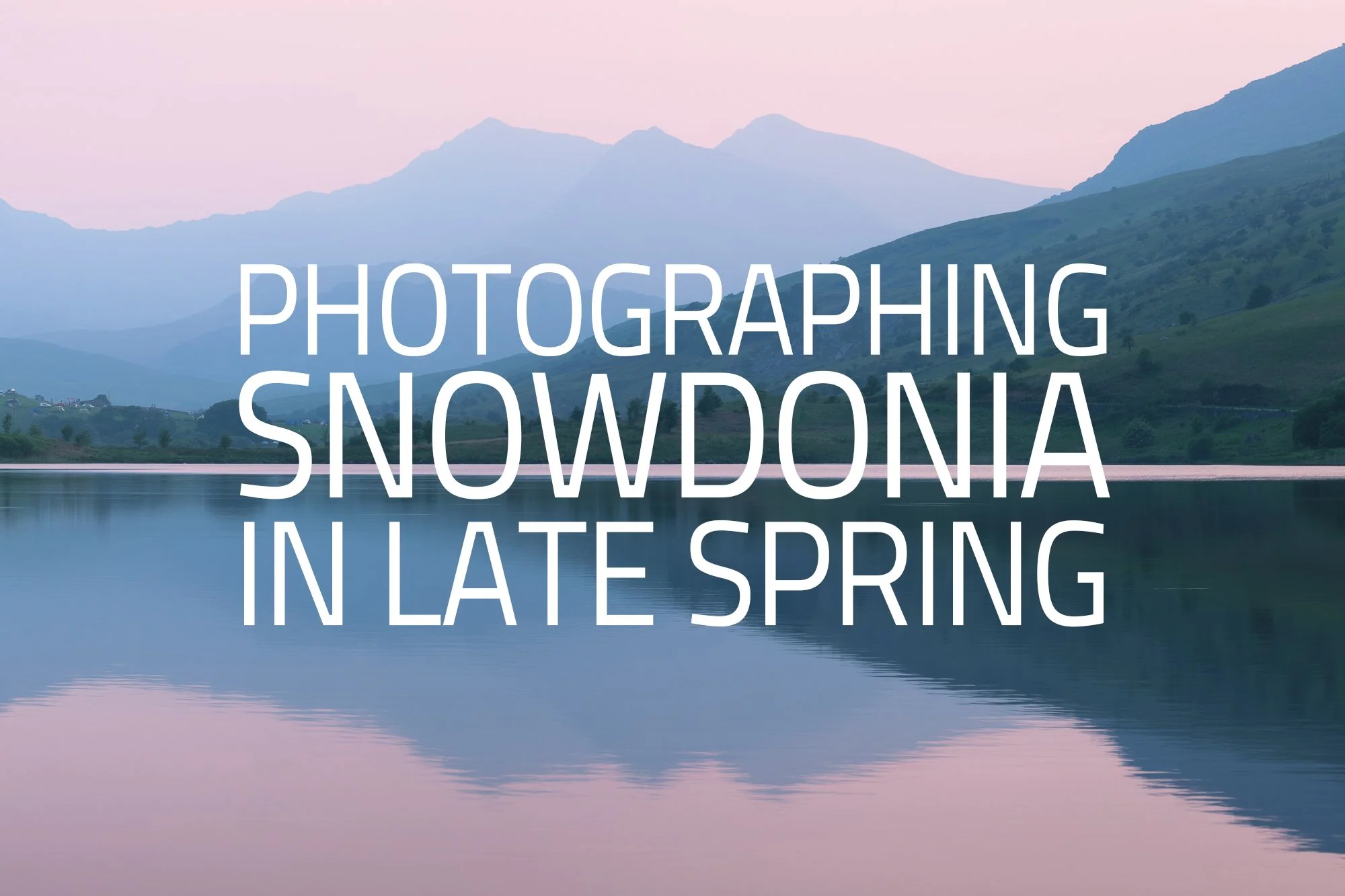


A three-day autumn journey through Snowdonia, capturing intimate woodland scenes, grand vistas, and fresh perspectives on this iconic landscape.