
Natural Landscape: Volume One | My Photo Bookshelf
I’ve lost count of how many competition-based photo book series there are, and being someone whose mind is wired in such a way that I can’t buy just one book in a series, for the sake of my wallet — and the space on my bookshelf — I’ve typically chosen not to buy them… well, until now.
For the last few years, I’ve been watching the Natural Landscape Photography Awards from the sidelines. I’ve never been tempted to enter, but I have admired the way the competition is run, its underlying ethos and, equally important, the calibre of work from the photographers who take part. Then, some time in 2025, after the fourth competition closed and the book was released, I decided enough was enough. I bought the first four editions, with the fifth soon to be ordered.
Having now finished the first edition, and before I get started on the second, it felt like the right time to add it to my photo bookshelf.
Synopsis
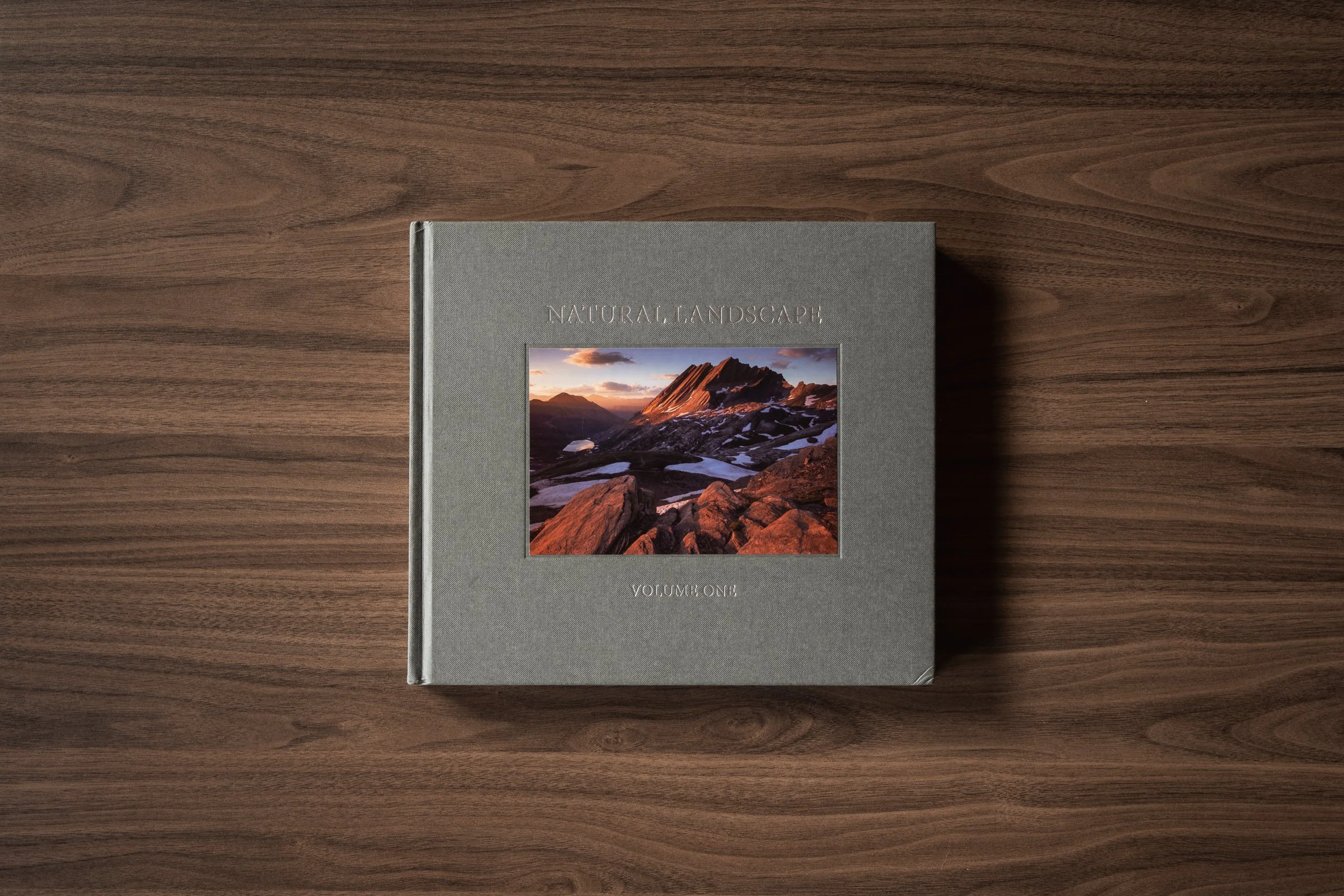
To commemorate the success of our first year running the awards, we have created what we think is one of the finest compilations of landscape photography ever printed (we’re biased, sorry). This 220 page, large-format fine art book contains the work of over 120 artists. We have also commissioned four essays which are included in the book, discussing aspects of the eyewitness tradition of photography, the idea of representing the world around us with truth and honesty.
My thoughts about the book
I wanted to start by explaining a little about the Natural Landscape Photography Awards (NLPA) and why this book series is, in my opinion, something of a game-changer for photography competition books. Run by Tim Parkin and Matt Payne, the NLPA is a landscape photography competition that values realism and authentic representations of the natural world.
In a society seemingly dominated by over-processed and, more recently, AI-generated imagery, this competition places its emphasis firmly on the beauty of the real world, accepting only work that meets a particularly strict set of editing rules. For me, it’s these submission rules that set the competition apart and give future readers of this book series the confidence that the photography they are gazing upon is a genuine view witnessed by the photographer standing there as they clicked the shutter — something I feel will become increasingly important as we move further into the AI age.First impressions were extremely positive. This book feels well-made, has a good weight to it with a cloth-bound hardcover and satisfyingly thick paper throughout. The print quality is great, with well-defined details throughout and nice handling of colour, providing punch and subtlety as and when appropriate.
The book begins with a Preface written by Tim Parkin, which explains how and why the competition started. The photos are then organised into the original competition categories, such as the grand landscape, projects, typologies and so on. Amongst the work are four essays by Eric Bennett, Tim Parkin, Joe Cornish and William Neill — quite a lineup, and all complement the book nicely.
The book concludes with a section introducing the competition judges and organisers. I think that’s a nice touch, as it provides some background and transparency about who is responsible for selecting the work and the kind of photographers they are. It really does help with the overall credibility of the competition.
This is the first in the NLPA book series I’ve read, and I thoroughly enjoyed the entire experience. The quality of the book, the essays, and, of course, the collection of beautiful photography all play a crucial role in making it one of my favourite books on my photo bookshelf.
To wrap up, I wanted to make a final point, related to what I said earlier about how this competition — and specifically the resulting books — will become increasingly important in a world dominated by overly processed and manufactured imagery. We all have to accept the inevitable: the world of photography has changed, which means that when we seek authenticity in the landscape photography we enjoy, we have to question everything, as we can no longer take an image at face value.
So when a competition comes along that does all of that heavy lifting for us — checking the raw files and validating the authenticity — I see it as something more than just a competition. It’s a service to the craft, providing lovers of natural landscape photography with a haven where the default reaction when gazing upon something beautiful isn’t immediate suspicion.
Book Details
Hardcover
Size: 300mm x 280mm
Pages: 220 pages
Availability at the time of writing: All physical book editions are sold out, but an e-book edition is available for all competition books on the Natural Landscape website: https://naturallandscapeawards.com/product-category/fine-art-photography-books.
Until next time.
Trevor