
Komorebi by Martin Rak | My Photo Bookshelf
I’m fairly sure — although not entirely certain — that I first came across Martin Rak on Instagram, and I quickly became a fan of his stunning landscape photography. Based in Prague, Martin’s work is beautifully atmospheric and often impactful, with a distinctive style that sets his images apart from his contemporaries.
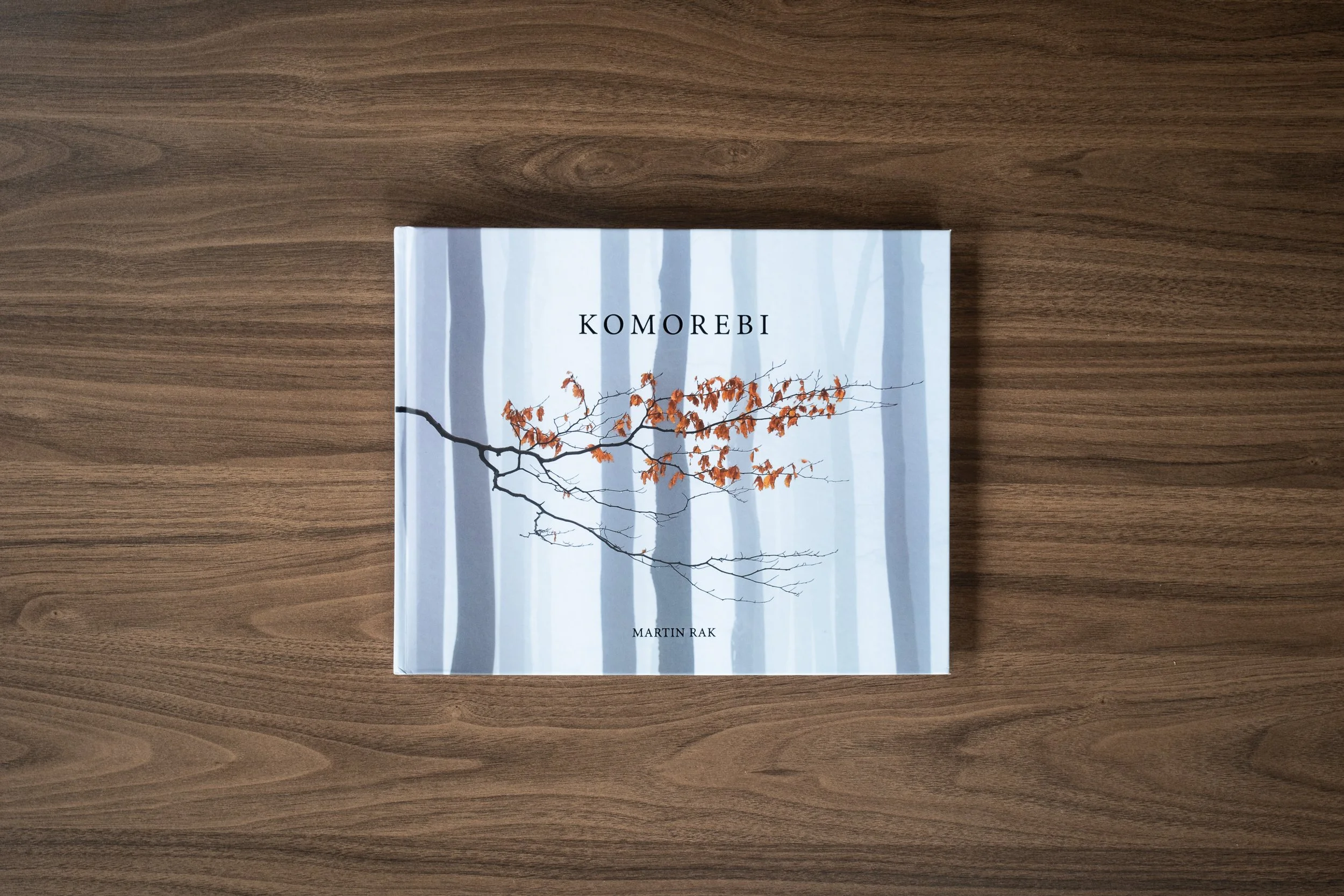
As a photographer who loves to explore woodland, I am always open to adding woodland photography books to my bookshelf, and when I came across Martin’s book Komorebi, I knew this was not one to miss.
Synopsis
“Standing on a cliff above the endless sea of clouds, waiting for the first light to touch the landscape, I feel more alive than ever. In the morning silence, it is as if the whole world was holding its breath in expectation. Then, the light comes and everything bursts into life.”
KOMOREBI shows images of trees and forests that I made during the last decade. I see the collection as a tribute to trees, which have always been my favourite motive. As a name for the book, I chose a Japanese word meaning “sunlight that filters through trees”. Why? Because it pretty much sums up my passion for photographing woodland and for landscape photography as such.
My thoughts about the book
Martin Rak’s book Komorebi is published by Kozu Books, and having already bought several of their previous releases, I felt confident I wouldn’t be disappointed. Like the others I own, Komorebi is a solidly made hardback with satisfyingly thick 170gsm satin pages. It opens with a foreword by Neil Burnell, another landscape and woodland photographer whose work I admire, followed by Martin’s own introduction, in which he reflects on his love for photographing woodland — the passion that ultimately inspired this book.
The book’s title is inspired: a Japanese word composed of three parts — 木 (ko), meaning “tree”; 漏れ (more), meaning “to escape from”; and 日 (bi), meaning “sun.” Together, Komorebi loosely translates as “sunlight filtering through trees.” The title feels perfectly suited to the work, as Martin demonstrates a remarkable ability to use light as a central compositional element in his photographs.
The book’s title is inspired: a Japanese word composed of three parts — 木 (ko), meaning “tree”; 漏れ (more), meaning “to escape from”; and 日 (bi), meaning “sun.” Together, Komorebi loosely translates as “sunlight filtering through trees.” The title feels perfectly suited to the work, as Martin demonstrates a remarkable ability to use light as a central compositional element in his photographs.
The sequencing shows the care and thought that went into pairing each image. Whether aligned by colour, shape, or subject, the photographs sit comfortably side by side on each spread. Beyond the pairing, the book flows effortlessly, and one aspect that particularly impressed me is how the seasonal progression — from spring to winter, a common approach in woodland and landscape books — is rendered so subtly. There’s no abrupt change, and as I moved from one season to the next, the transition felt almost seamless. It’s a wonderful example of a perfectly sequenced body of work.
This is a well-crafted book, brimming with beautifully presented photographs. Although it’s now sold out, if you have the chance to get hold of a copy, I sincerely recommend doing so — it’s a book that rewards time spent with it.
Book Details
Hardback Foil Stamped Cover
Size: 300mm x 240mm
Pages: 88 printed on Fedrigoni Symbol Freelife Satin 170gsm
Availability at the time of writing: Sold out from the publisher’s website (https://www.kozubooks.com/). Consider buying a used copy if available.
Until next time.
Trevor