
BLOG ARCHIVE
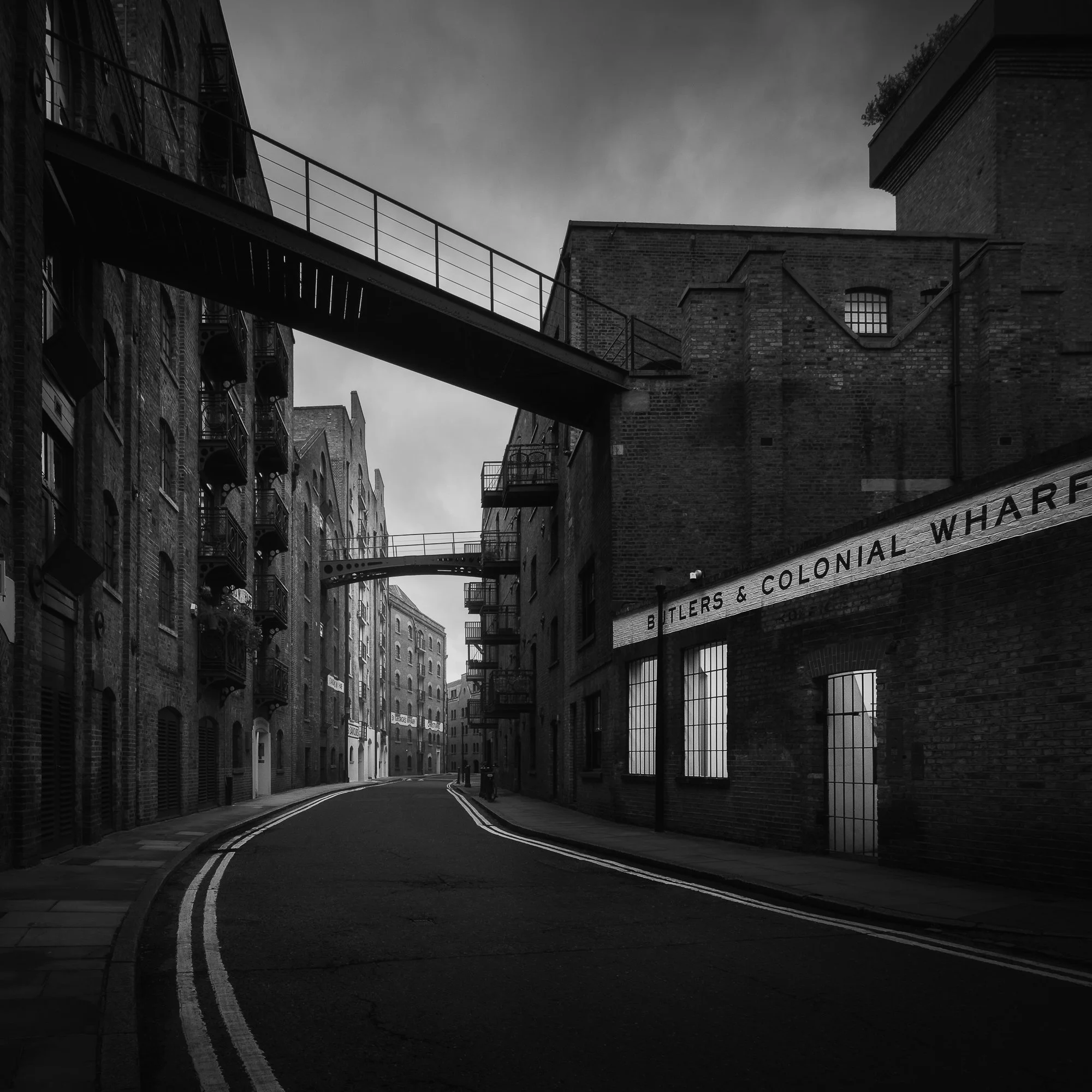
Colonial Echo
Exploring the history hidden among the warehouses of Shad Thames.
This article is part of Vignettes — Timeless City, a series of short reflections on individual photographs from my wider project. Each vignette looks beyond the finished image to explore the subject, inspiration, and ideas behind the work.
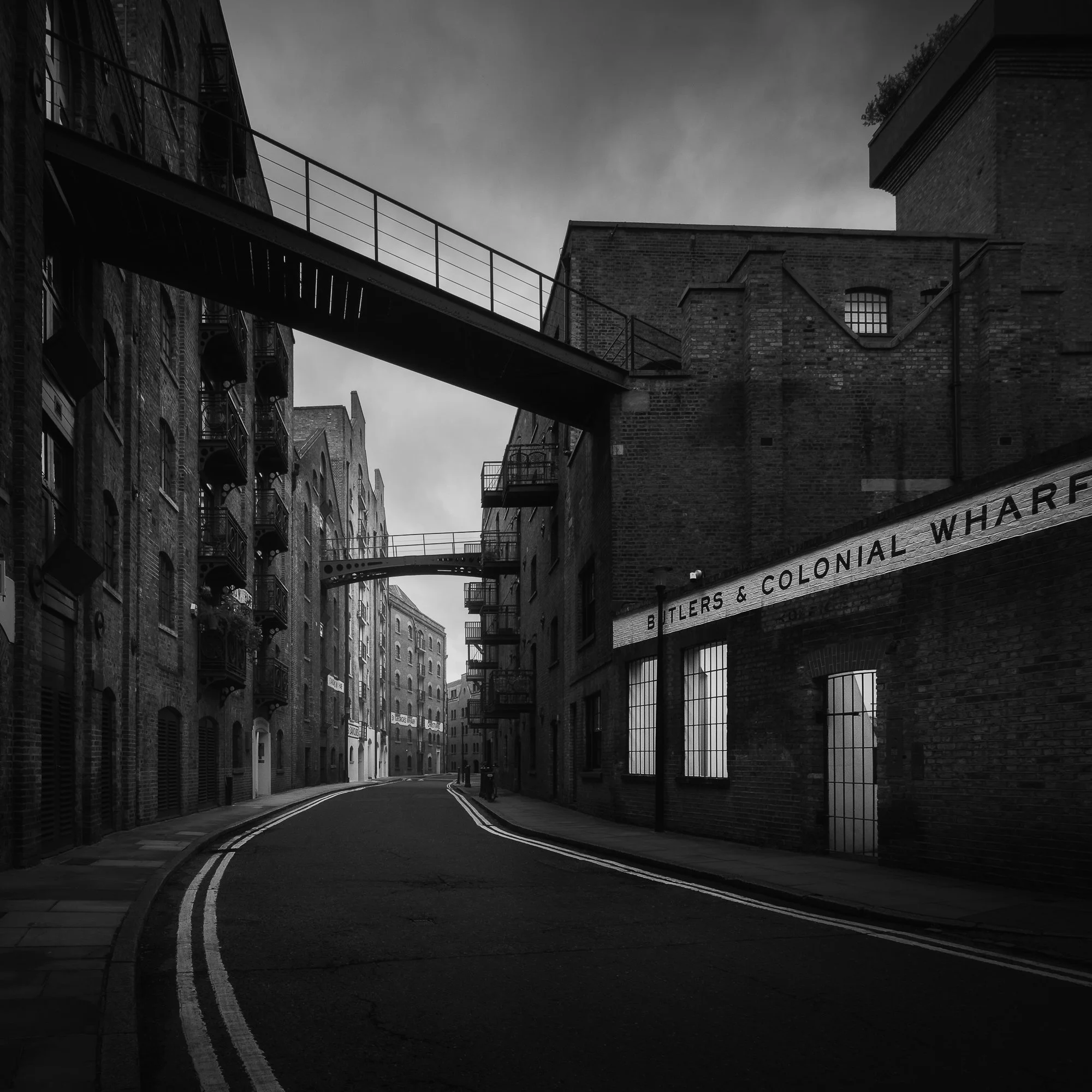
Much of Timeless City is about looking beyond the photograph itself and uncovering the stories woven into the city's fabric. Standing here in Shad Thames, it was easy to see why Colonial Echo felt like the right title for this image. The warehouses are quiet now, many having been converted into residential properties, but their former purpose still resonates through the architecture. Beneath the iron bridges and within this canyon of brick and steel remains an echo of the trade, industry and movement that once defined this corner of London.
While wandering along Shad Thames in search of a composition, it became clear that to capture some of the area's history, I needed to include those iron bridges overhead. Built to connect the warehouses on either side of the road, they were key to ensuring goods could move between the buildings with relative ease and, for me, offered the opportunity to significantly enhance the final image.
As I explored different viewpoints, I found myself lowering the camera to give greater prominence to the sweeping double yellow lines. Their gentle curve draws the eye into the frame, leading towards the warehouses and into the distance. Above, the iron bridge and the Butlers & Colonial Wharf sign reach in from opposite sides of the image, creating a balance that immediately caught my attention. Together, these elements give the photograph a sense of depth and flow, inviting the viewer to follow the scene along Shad Thames and into this historic corner of London.
Colonial Echo is a good example of what I hope to achieve with Timeless City. The photograph captures a visually interesting part of London, but understanding the history behind it adds another dimension to the image. For me, the project is about looking beyond the surface and taking the time to understand the places I photograph. In doing so, I often find that the story behind the photograph becomes just as interesting as the image itself.
Trevor
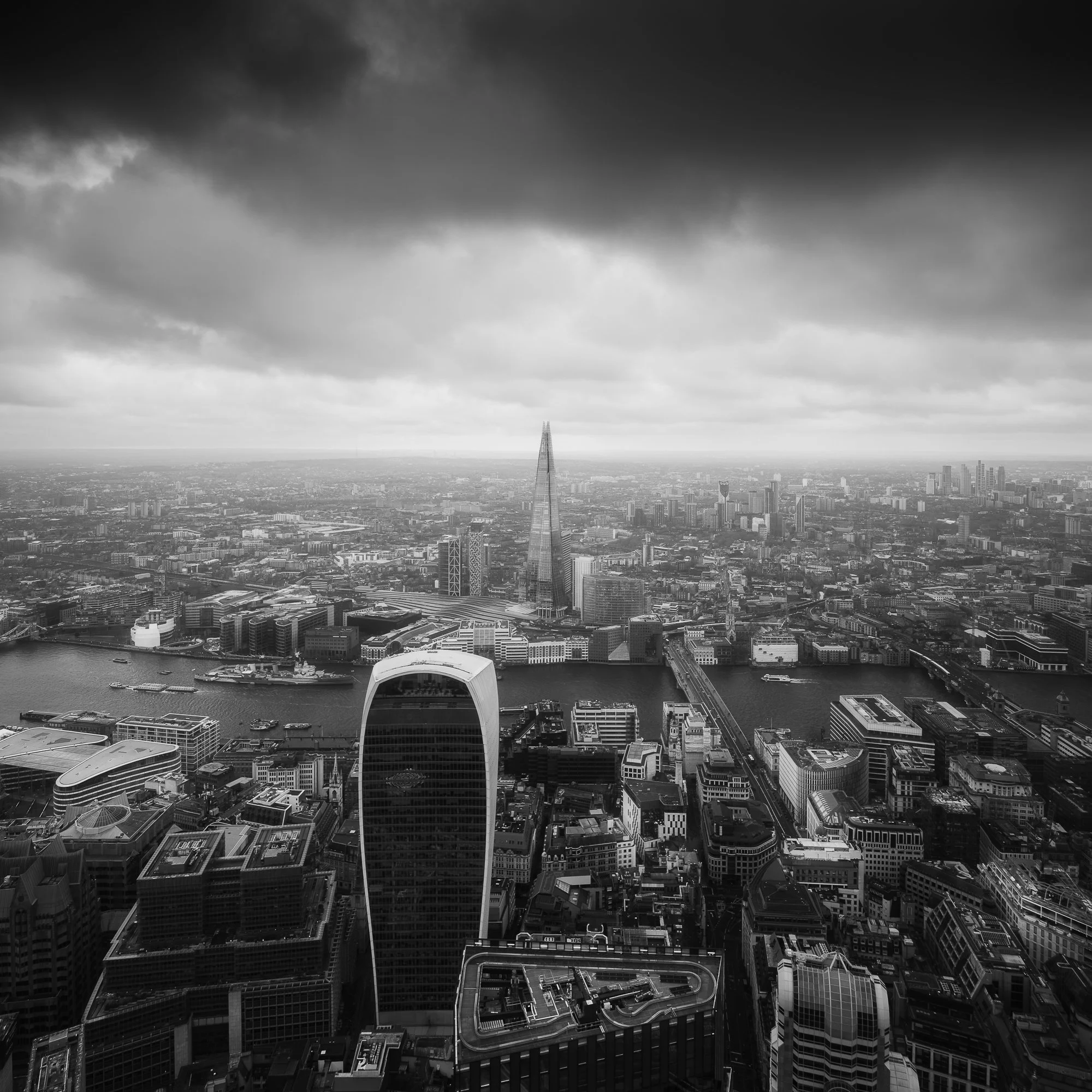
Distant Heights
Photographing London from high above, where cloud, rain and distance defined the view.
This article is part of Vignettes — Timeless City, a series of short reflections on individual photographs from my wider project. Each vignette looks beyond the finished image to explore the subject, inspiration, and ideas behind the work.
London is often experienced at street level. Its character is found in the details, in the contrast between old and new architecture, and in the unexpected views that appear while moving through the city.
But from above, things change. Individual buildings lose some of their dominance, and the contrast between architectural styles becomes part of a much larger landscape. From this height, the true scale of London begins to reveal itself, not only in its physical size, but in the visual diversity spread out across the city.
London’s modern skyline continues to divide opinion, but one of the more positive decisions made as the city has grown upwards, in my view, has been the encouragement for tall buildings to include publicly accessible spaces. These viewpoints turn the height of such structures into something shared, offering a different perspective on the city that would otherwise belong only to those who work within them.
Located on the 58th floor of 22 Bishopsgate, Horizon 22 is one of the more recent additions to London’s growing collection of high-rise public viewing galleries. On a rainy day in February 2026, I visited with my camera to explore this elevated view across London.
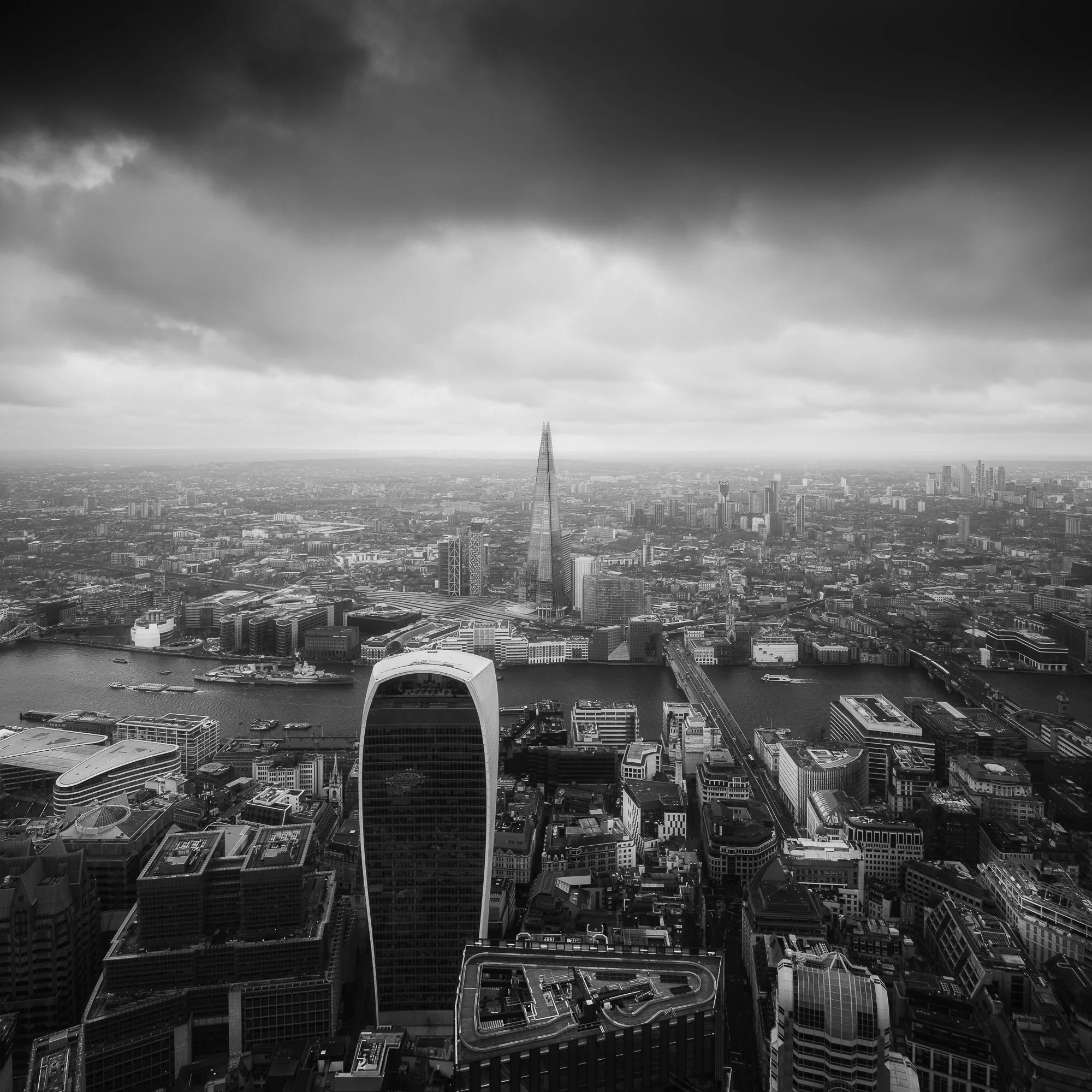
It will probably come as no surprise that the dark, heavy rain clouds were exactly the kind of conditions I was hoping for. They suit the atmosphere I aim for within this project, and the moisture in the air helped create a softened, diffused feeling as the eye moves beyond the skyline and towards the distance. I used a wide-angle lens to give a sense of scale to the landscape in front of me, allowing the scene space to breathe while still including both the weight of the clouds above and the detail of the city below.
Compositionally, I chose to place The Shard in the centre of the frame, with the Walkie Talkie building just to its left, giving each of them a little separation while keeping the overall composition balanced. The viewpoint offers a vast sweep of London, yet the image still needed a clear structure — something to hold the eye before allowing it to drift further into the distance.
Although it is great for visitors, photographically, this location is quite challenging. You have to contend with some particularly dirty glass, and even with a lens hood pressed up against the window, the deep cavity between the layers of glazing makes it almost impossible to exclude reflections from the final image. It is a location that makes you work for the photograph, and a reminder that even from a viewpoint designed to make the city feel open and accessible, creating an image still comes with its own challenges.
After making the photograph, I spent a little longer at the window, looking out across the city and watching the rain clouds move slowly over London. With the image made, I packed away my camera and made my way back down to street level.
Trevor
Guardian
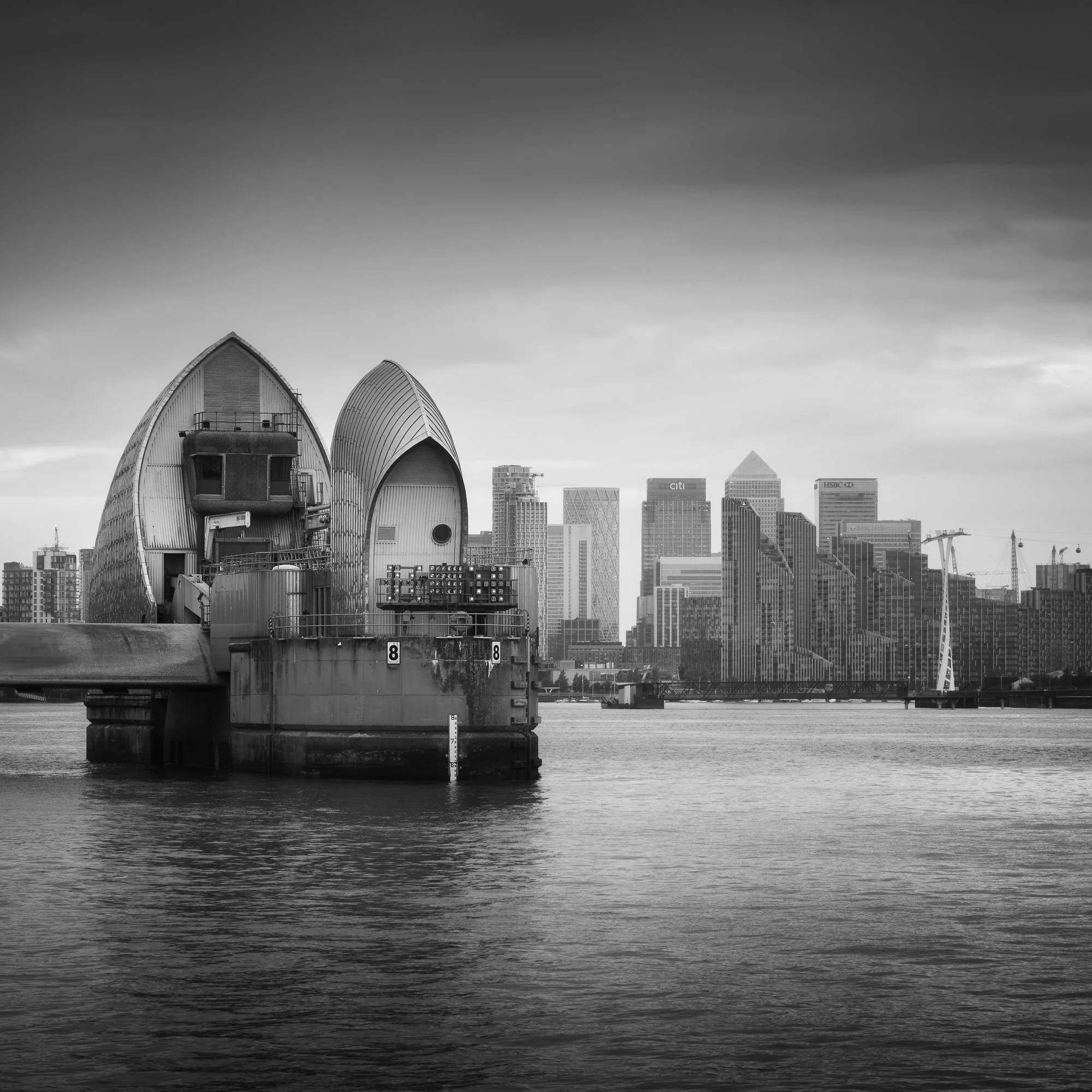
The Thames Barrier, standing between London and the river that shaped its existence.
This article is part of Vignettes — Timeless City, a series of short reflections on individual photographs from my wider project. Each vignette looks beyond the finished image to explore the subject, inspiration, and ideas behind the work.
The Thames has always been central to London’s identity. It has shaped the city’s growth, supported its trade, and connected it to the wider world. Yet the same river that helped London flourish has also carried the potential for destruction, with the threat of flooding remaining a constant concern for a city built along its banks.
In May 2024, I decided to head east along the river to photograph the Thames Barrier, a huge structure made up of nine piers spanning the width of the river. Located downstream from the Isle of Dogs, the barrier stands ready to rise when needed, protecting the many built-up areas further upstream from the threat of flooding.
It was my second visit to this part of London, and after photographing the line of structures side on (which I may well share in this series one day), I continued a little further downstream to see if these fascinating structures could offer any other compositions looking back towards the city.
As I walked further east, I found myself drawn to the relationship between the barrier and the city beyond. Standing in front of the financial district of Canary Wharf, this vast piece of engineering appeared almost like a silent guardian, watching over the modern skyline behind it. I had my composition.
Carefully composing the image, I wanted to make sure pier number 8 remained the primary subject, while still allowing the high-rise buildings of the Isle of Dogs, sitting two miles upstream, to appear behind it. This was the story I had in mind.
I’ve written before about how the square crop can be more forgiving when it comes to balance, as no single side of the image dominates and the viewer’s eye can move naturally around the scene. This gave me the freedom to place the pier further towards the edge of the frame without the left side feeling visually unbalanced.
There was a subtle mood within the clouds that I was able to emphasise in post-processing, and by choosing a slightly faster shutter speed, I was able to capture some of the texture offered by the relatively calm water.
The Thames Barrier reflects the idea that it is not a monument built to celebrate London, but a structure designed to preserve it. These guardians stand between the river and the city, protecting generations of Londoners and allowing the skyline beyond to continue evolving.
With a photograph that helped tell that story, I made my way upstream, back towards the city it protects.
Trevor
Enduring Eminence
The first image in my Timeless City project, and the enduring presence of a landmark that continues to shape London’s identity.
This article is part of Vignettes — Timeless City, a series of short reflections on individual photographs from my wider project. Each vignette looks beyond the finished image to explore the subject, inspiration, and ideas behind the work.
“The longest-lasting buildings are those that touch the human spirit.”
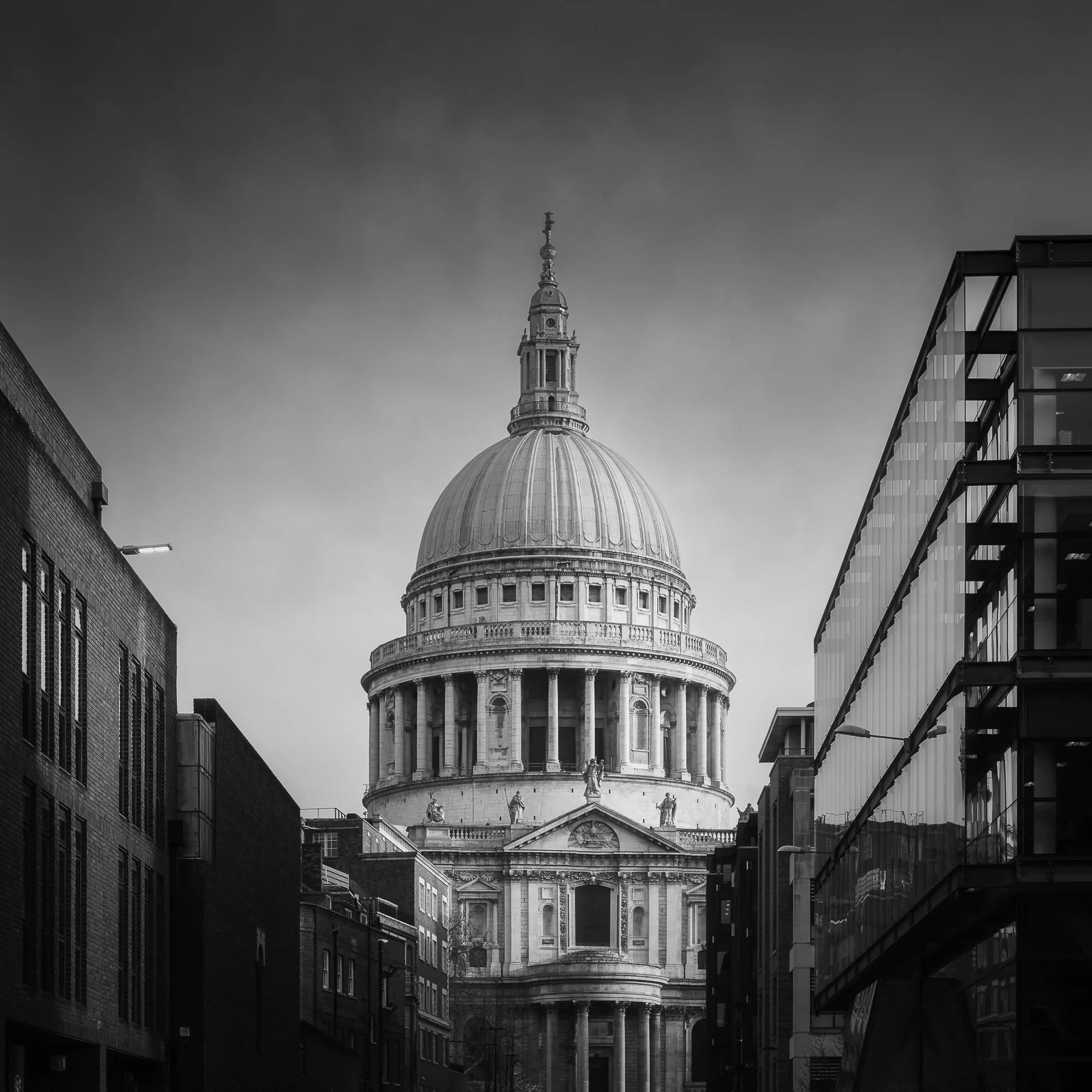
It feels fitting that the first entry in Vignettes begins here, with St Paul’s Cathedral. Not only is it one of London’s most recognisable and enduring landmarks, but this photograph is the earliest in the project, making it a fitting starting point.
I’ve wandered along the Thames with my camera countless times, and this is the view that greets you as you head north across the Millennium Bridge towards St Paul’s Cathedral. On this particular morning back in April 2018, conditions were just about perfect, and after leaving London Bridge Station at around 6am, I made my way towards the river to enjoy another walk along the Thames with my camera.
After a few stops along the way, I found myself on the south side of the river, looking across towards St Paul’s Cathedral, which stood in quiet eminence above the surrounding city. With a faint veil of cloud to the north providing a subtly textured backdrop and soft diffused light from the east illuminating the magnificent dome, this enduring icon of London looked particularly beautiful in that moment.
At the time, I wasn’t shooting specifically for this Timeless City project; that idea came a little later. I’m grateful, however, to have composed the photograph in a way that suited the square crop, and by placing the cathedral centrally in the frame, it emphasised the idea of St Paul’s continuing to hold prominence in this ever-changing city.
Looking back at this photograph now, it feels even more fitting that it became the first image in the collection. At the time, I was simply drawn to the balance of the scene — the familiar shape of the cathedral, the atmosphere created by the light, and the calmness of the moment. It was only later, as the idea behind Timeless City developed, that I began to see how this photograph represented something much broader: the way certain places become woven into the identity of a city.
The title Enduring Eminence reflects that idea. St Paul’s is not only prominent because of its position above London’s skyline, but because it has continued to hold meaning through generations of change, becoming part of the story of the city itself.
Trevor