
Colonial Echo
This article is part of Vignettes — Timeless City, a series of short reflections on individual photographs from my wider project. Each vignette looks beyond the finished image to explore the subject, inspiration, and ideas behind the work.
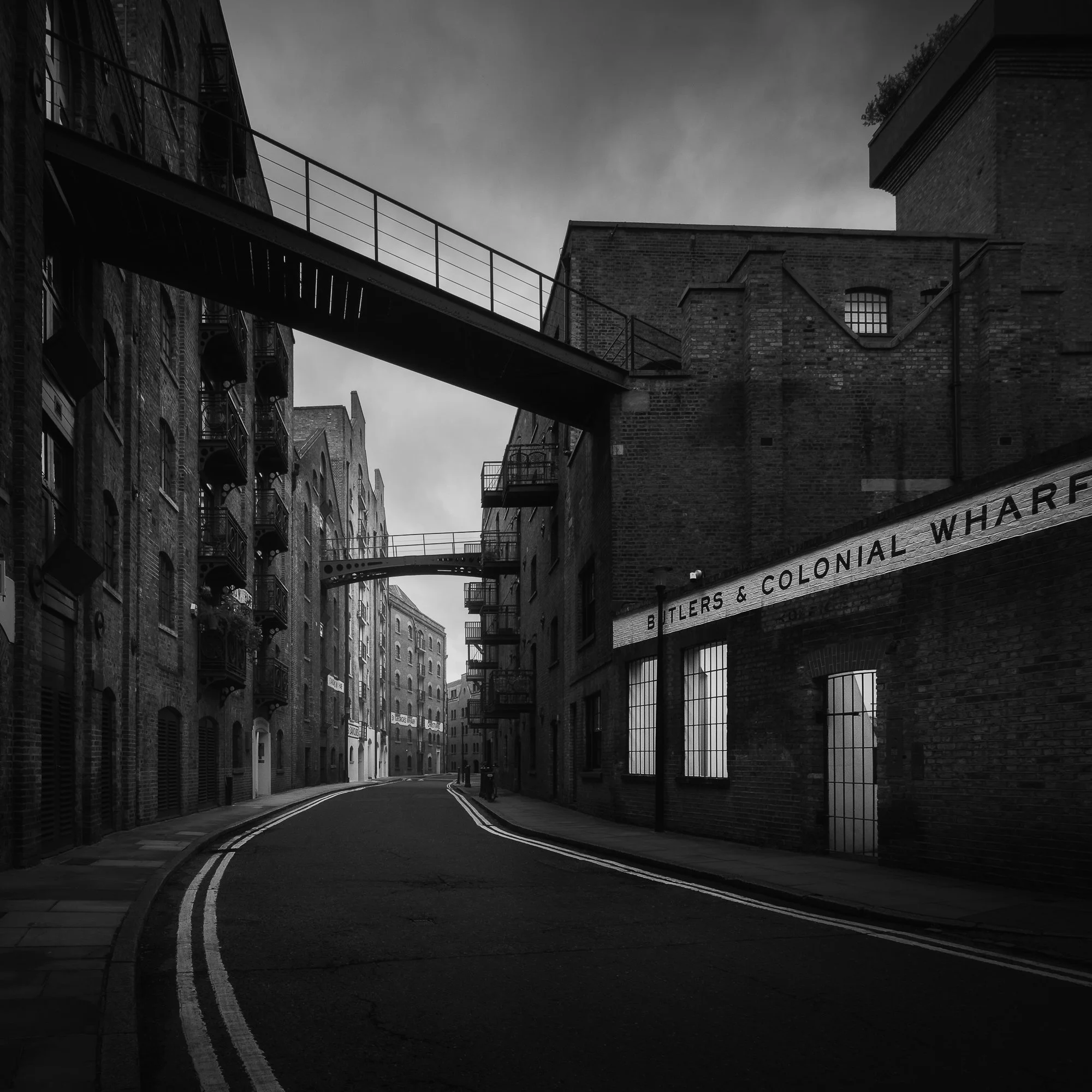
Much of Timeless City is about looking beyond the photograph itself and uncovering the stories woven into the city's fabric. Standing here in Shad Thames, it was easy to see why Colonial Echo felt like the right title for this image. The warehouses are quiet now, many having been converted into residential properties, but their former purpose still resonates through the architecture. Beneath the iron bridges and within this canyon of brick and steel remains an echo of the trade, industry and movement that once defined this corner of London.
While wandering along Shad Thames in search of a composition, it became clear that to capture some of the area's history, I needed to include those iron bridges overhead. Built to connect the warehouses on either side of the road, they were key to ensuring goods could move between the buildings with relative ease and, for me, offered the opportunity to significantly enhance the final image.
As I explored different viewpoints, I found myself lowering the camera to give greater prominence to the sweeping double yellow lines. Their gentle curve draws the eye into the frame, leading towards the warehouses and into the distance. Above, the iron bridge and the Butlers & Colonial Wharf sign reach in from opposite sides of the image, creating a balance that immediately caught my attention. Together, these elements give the photograph a sense of depth and flow, inviting the viewer to follow the scene along Shad Thames and into this historic corner of London.
Colonial Echo is a good example of what I hope to achieve with Timeless City. The photograph captures a visually interesting part of London, but understanding the history behind it adds another dimension to the image. For me, the project is about looking beyond the surface and taking the time to understand the places I photograph. In doing so, I often find that the story behind the photograph becomes just as interesting as the image itself.
Trevor