
First Light by Joe Cornish | My Photo Bookshelf
I feel it is important that anyone seeking to explore and educate themselves in the art and craft of landscape photography should spend time studying both contemporary work and the photographers who helped shape the genre. While Joe Cornish remains very much active today, he is widely regarded as one of the most influential figures in British landscape photography. His photographs, writings, and teaching have inspired countless photographers over the years, and whenever the opportunity arises, I find myself adding his books to my collection in an effort to better understand not only how he photographs the landscape, but also the philosophy and approach that underpin his work. One such book is First Light: A Landscape Photographer's Art, which draws upon more than two decades of Joe's photographic experience and offers a fascinating insight into both his images and the thought processes behind them.
Author’s synopsis
Drawing on decades of experience, Joe Cornish, one of Britain’s most distinguished landscape photographers, has distilled the key elements of his craft into a collection of thought-provoking essays accompanied by a stunning selection of his photographs.
From his beloved North Yorkshire, to the rocky canyons of the Colorado Plateau, the photos in First Light have been chosen to reflect the breadth of Joe’s work and to illustrate how he puts his working philosophy into practice.
Each picture is accompanied by text describing the conditions that must be taken into consideration before taking a photo; the composition of the image, including viewpoint, selection of film and filters; and post production treatments.
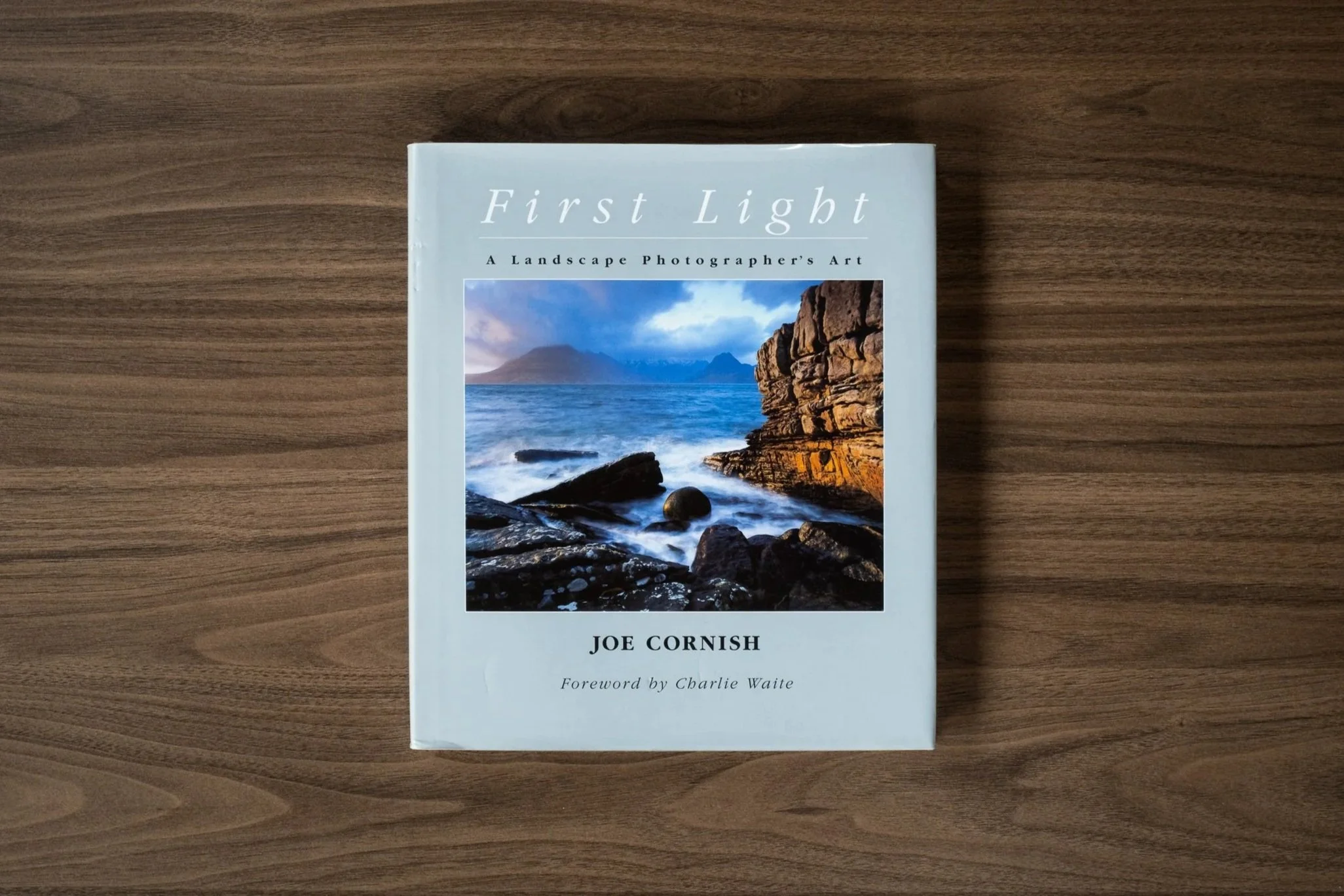
First Light is replete with supporting technical data and Joe’s own explanations of the thought processes that lay behind the creation of each of these wonderful photographs. These fluent and very personal accounts are full of practical advice on subjects ranging from anticipating changes in the weather or lighting conditions, to the relative advantages of using colour filters.
My thoughts about the book
First Light starts with a foreword by another of the UK's landscape photography greats, Charlie Waite, followed by the book's introduction, where Joe discusses the concept of light. It was here that the book's double meaning is explained. In landscape photography, "first light" refers to the first light of the day, one of the most sought-after times for making photographs. However, Joe introduces a different interpretation. Beyond the practical benefits of photographing at sunrise, he suggests that light should come before everything else; that it is the foundation upon which all successful landscape photography is built. First, light.
From the introduction, the book moves into the first of seven chapters, each exploring a different theme, technique, or influence that helps shape Joe's photographic craft and informs the way he approaches photography in the field. Amongst other topics, the chapters cover the importance of light, place, weather, composition, and visual design, with each section opening with an introductory essay before moving into the photographic work.
Within each chapter is a collection of photographs, each accompanied by a short essay. Depending on the image, Joe may discuss the location, conditions, compositional choices, or challenges involved in making the photograph. While image-led photobooks certainly have their place, I particularly enjoy books like this, where the photographer shares the thinking behind the work. For me, understanding the circumstances and decisions that shaped an image only deepens my appreciation of it.
What makes First Light even more valuable is that Joe doesn't simply present the finished photograph. Alongside each main image is a smaller alternative version, often one he considers less successful, together with an explanation of why. These comparisons offer a fascinating insight into how the photograph evolved and the decisions that led to the final result, providing lessons that are every bit as valuable as the images themselves.
The book concludes with an essay about the equipment Joe was using at the time, providing an interesting glimpse back to when film still offered the highest image quality available to landscape photographers. He discusses the cameras, lenses, and films used throughout the book and, despite the title First Light, there was certainly nothing lightweight about much of the equipment. The final pages include thumbnail versions of every image together with the technical information used to create them.
What I particularly like about First Light is that it feels less like a book showcasing Joe Cornish's photography and more like a book sharing the knowledge, experience, and thought processes behind it. While the photographs are reason enough to own a copy, it is the accompanying essays that make it such a valuable read. Despite being published in 2002, the lessons within remain just as relevant today. Cameras and technology may have changed, but the importance of light, composition, observation, and patience has not. As a result, I think First Light remains essential reading for any landscape photographer looking to grow their craft.
Book Details
Hardcover
Size: 252mm x 290mm
Pages: 160
Availability at the time of writing: No longer in print. Consider buying a used copy.
Until next time.
Trevor