
PhotoWork by Sasha Wolf | My Photo Bookshelf
I discovered PhotoWork: 40 Photographers on Process and Practice some time ago, perhaps even a few years back. I’m not entirely sure who first introduced me to the book, but alongside my curiosity about how others approach their craft, I’ve found myself leaning more heavily towards photographing in projects and with project work being a key focal point of the book, I figured it was about time I finally picked up a copy.
Synopsis
PhotoWork is a collection of interviews by forty photographers about their approach to making photographs and, more importantly, a sustained body of work. Curator and lecturer Sasha Wolf was inspired to seek out and assemble responses to these questions after hearing from countless young photographers about how they often feel adrift in their own practice, wondering if they are doing it the “right” way. The responses, from both established and newly emerging photographers, reveal there is no single path. Their advice is wildly divergent, generous, and delightful: Justine Kurland discusses the importance of allowing a narrative to unravel; Doug DuBois reflects on the process of growing into one’s own work; Dawoud Bey evokes musicians such as Miles Davis as his inspiration for never wanting to become “my own oldies show.”
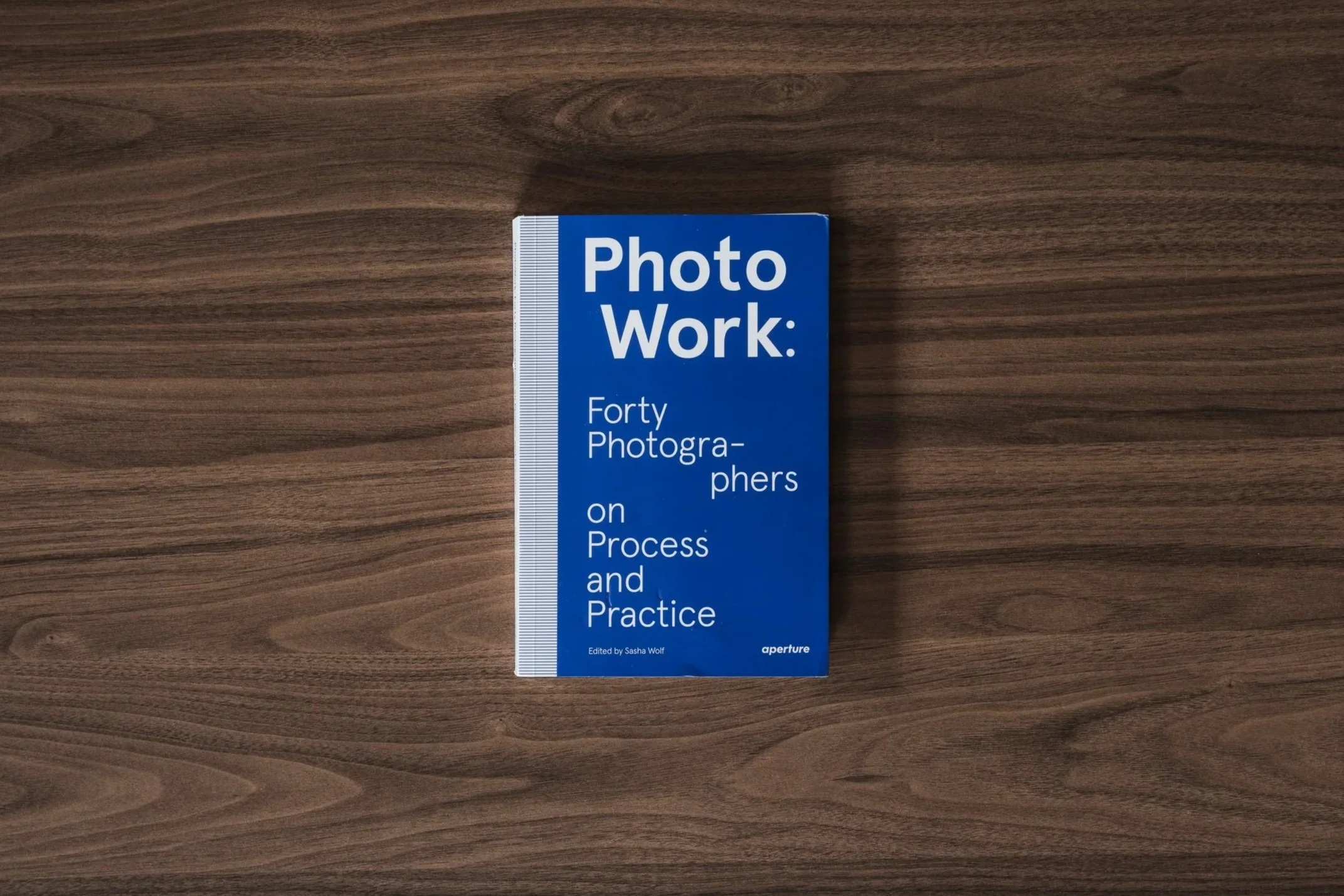
The book is structured through a Proust-like questionnaire, in which individuals are each asked the same set of questions, creating a typology of responses that allows for an intriguing compare and contrast.
My thoughts about the book
As the synopsis explains, the author, Sasha Wolf, has assembled responses to 12 specific questions sent to 40 established photographers. Coming from different backgrounds, with varying levels of experience, and practising across a range of photographic genres, the intention is to demonstrate to younger and/or less experienced photographers that there is no single way, no single approach, and most certainly no right or wrong when it comes to the craft of photography and choosing your own path.
The book opens with the list of the 12 questions asked of all the photographers, followed by an introduction from Sasha Wolf. Here, she talks about the story behind the project and her motivation to help younger, less established photographers who feel adrift in their own photographic journey. Each subsequent chapter then presents the questions alongside the responses from the 40 photographers featured in the book.
If you’re a regular reader of my Photo Bookshelf series, you’ll know that I try to inject some variety into the types of books I feature, but they typically align with my own interest in landscape photography. As a result, it may come as a slight surprise that this book is not about landscape photographers and instead leans more towards social documentary photography. That said, I feel that if you focus too much on the photographers featured and the types of images they usually make, you risk missing the entire point of the book.
Regardless of each creator’s artistic focus, this book is about how they approach their craft. It explores opinions on topics such as the single image versus a body of work, and how projects are born—whether from conceptual ideas or through inspiration drawn from existing work. It highlights the vast chasm of opinion that exists within the photographic world, and if the aim of the book is to encourage people, young and old, to understand that there are infinite paths and countless outcomes—and that, provided they remain true to their own artistic convictions, there is no right or wrong—then I think this book succeeds.
In a world where established YouTube creators with huge followings are often keen to tell us what is right and wrong, with headlines such as “pros do this” or “only amateurs do that”, it’s refreshing that this book attempts to send a different message. The message I take from it is to ignore those telling you what to do, listen instead to those who inspire you, and remember that the person with the vision—the person creating the work—is the only one who truly knows what is right for them. They just need to believe it.
Book Details
Softcover/Paperback
Size: 6x9 inches
Pages: 256 pages
Availability at the time of writing: Still in print and available from places such as Aperture’s website or by requesting a copy from your local independent bookshop.
Until next time.
Trevor